CM Fadnavis Backs Tata Motors Foundation-NITI Aayog Rural Push
Synopsis
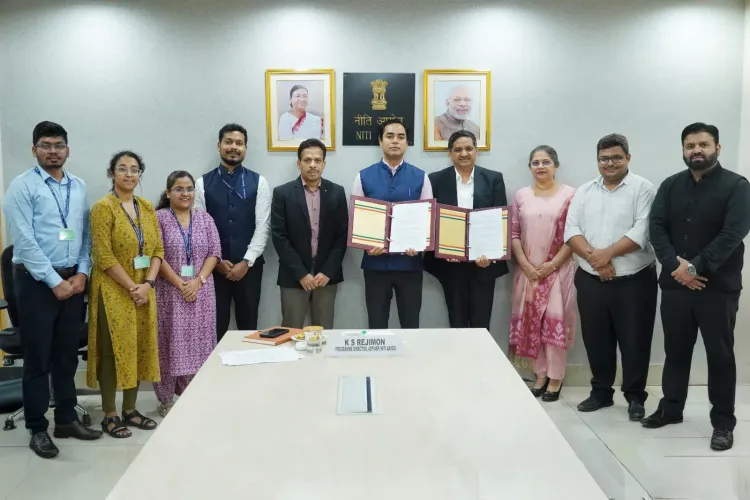
The Chief Minister's Office of Maharashtra has announced state support for Tata Motors Foundation's Integrated Village Development Project, implemented in partnership with NITI Aayog under the Aspirational Blocks Programme to drive convergence-based rural transformation.
Key Takeaways
The Chief Minister's Office of Maharashtra announced on 12 July 2026 that the state will facilitate the Integrated Village Development Project by Tata Motors Foundation .
The project is implemented in partnership with NITI Aayog under the Aspirational Blocks Programme , which targets backward sub-district blocks for focused development.
The Aspirational Districts Programme , the predecessor initiative, was launched by NITI Aayog in January 2018 .
The project uses a convergence model , aligning government, corporate and civil society interventions in health, education and infrastructure.
Primary beneficiaries are rural communities and village panchayats in identified aspirational blocks within Maharashtra .
Chief Minister Devendra Fadnavis was directly tagged in the post, underlining high-level political endorsement of the partnership.
The Chief Minister's Office of Maharashtra on Sunday, 12 July 2026 announced the state government's support for an Integrated Village Development Project being implemented by Tata Motors Foundation in partnership with NITI Aayog under the Aspirational Blocks Programme, signalling a concerted public-private push to accelerate grassroots development in the state.
The post, attributed to the office of Chief Minister Devendra Fadnavis, stated in both English and Marathi: 'विकासाचे खरे मोजमाप हे सर्वसामान्य नागरिकांच्या जीवनात घडणाऱ्या सकारात्मक बदलांमधूनच प्रत्ययास येते' ('The true measure of development is seen in the positive changes in the lives of ordinary citizens'). The office added that it is 'happy to facilitate' the project, which strives for 'transformation through convergence.'
Context
The Aspirational Blocks Programme is a NITI Aayog initiative that extends the logic of the earlier Aspirational Districts Programme — launched in January 2018 — to the sub-district level, targeting backward administrative blocks for focused socio-economic improvement. By drilling down to the block level, the programme aims to address pockets of deprivation that district-level averages can obscure. Maharashtra, despite its industrial strength, contains several such blocks with lagging indicators in health, education and infrastructure.Policy Backdrop
Tata Motors Foundation, the corporate social responsibility arm of Tata Motors, has been active in rural development, education and health interventions across multiple Indian states. Its Integrated Village Development Project adopts a convergence model, aligning multiple stakeholders — government departments, panchayati raj institutions and civil society — around shared development targets within a defined geography. This mirrors the broader national trend of channelling corporate CSR resources through structured NITI Aayog frameworks to supplement public expenditure in aspirational geographies. The Maharashtra government's role as a facilitator positions the state as a bridge between the central policy architecture and on-ground implementation.Stakeholders and Impact
Rural communities and village panchayats in the identified blocks stand to be the primary beneficiaries, with interventions expected to span health, education and livelihood sectors. The convergence approach is designed to prevent siloed delivery, ensuring that infrastructure, social services and economic opportunity are developed in tandem rather than in isolation. For Tata Motors Foundation, the partnership with NITI Aayog lends institutional credibility and access to government data systems that can sharpen targeting and impact measurement.What's Next
Attention will now turn to the rollout of the Integrated Village Development Project across the selected Maharashtra blocks, with baseline and endline indicator assessments expected to measure progress in areas such as nutrition, school enrolment, sanitation and income levels. The Maharashtra government's active facilitation role suggests that state machinery — including district collectors and block-level officers — will be aligned to support the initiative. If the convergence model demonstrates measurable gains, it could serve as a template for scaling similar public-private collaborations to other aspirational blocks across the state and beyond.Point of View
More a convener that brings private capital and state capacity onto a shared implementation platform. If block-level indicators improve, this Maharashtra experiment could be cited as evidence for deepening the aspirational block framework nationally.
NationPress
11 Oct 2026
Frequently Asked Questions
What is the Aspirational Blocks Programme by NITI Aayog?
The Aspirational Blocks Programme is a NITI Aayog initiative that extends the Aspirational Districts Programme — launched in January 2018 — to the sub-district block level, targeting the most backward blocks in India for concentrated improvements in health, education, infrastructure and livelihoods.
What is the Integrated Village Development Project by Tata Motors Foundation?
The Integrated Village Development Project is a rural development initiative by Tata Motors Foundation, the CSR arm of Tata Motors, that uses a convergence approach to align multiple stakeholders — government, panchayats and civil society — around shared development goals within identified backward blocks.
What is Maharashtra's role in the Tata Motors Foundation-NITI Aayog partnership?
The Maharashtra government, through the Chief Minister's Office, has announced it will act as a facilitator for the Integrated Village Development Project, helping align state machinery such as district and block-level officials to support implementation on the ground.
Who is Devendra Fadnavis and why is he associated with this project?
Devendra Fadnavis is the Chief Minister of Maharashtra. His office posted about the project and he was directly tagged, indicating high-level political endorsement of the public-private partnership for grassroots rural development in the state.
How does the convergence model in rural development work?
The convergence model brings together government departments, corporate CSR resources and civil society organisations to deliver health, education, livelihood and infrastructure interventions in a coordinated manner within a defined geography, avoiding the siloed delivery that often reduces the impact of individual schemes.