CM Fadnavis Distributes Free Tirtha Darshan Rail Tickets in Nagpur
Synopsis
Chief Minister Devendra Fadnavis distributed free railway tickets to 800 pilgrims in Nagpur on 11 July 2026 under the Mukhyamantri Tirtha Darshan Yojana, flagging off a dedicated train journey to the Buddhist pilgrimage site of Bodh Gaya in Bihar.
Key Takeaways
Chief Minister Devendra Fadnavis distributed free rail tickets to 800 pilgrims in Nagpur on 11 July 2026 .
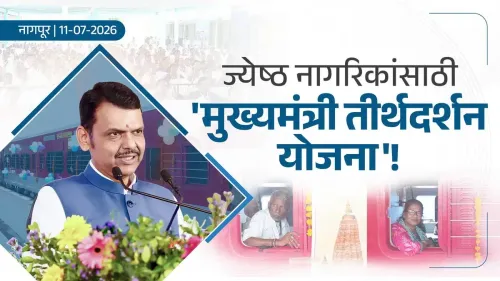
The tickets were issued under the Mukhyamantri Tirtha Darshan Yojana , Maharashtra's subsidised pilgrimage travel scheme.
The train journey is destined for Bodh Gaya , Bihar — a major Buddhist pilgrimage site marking the site of Gautama Buddha's enlightenment.
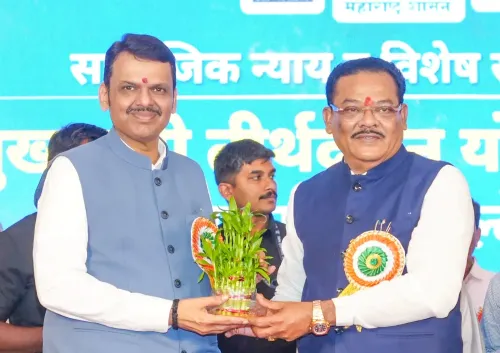
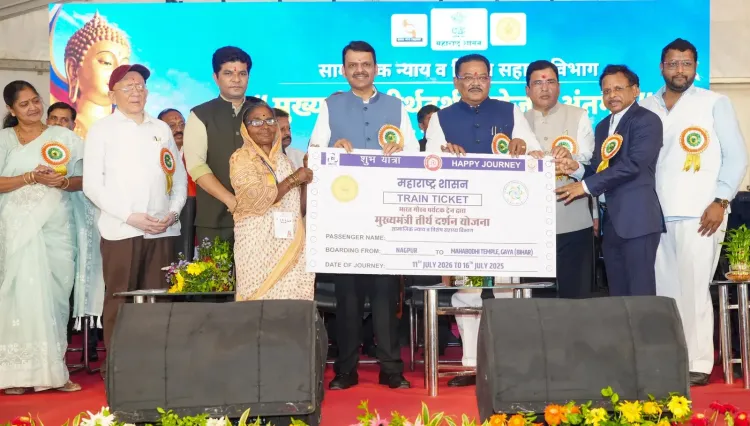
The ticket distribution was held in a ceremonial format with the Chief Minister personally handing over representative tickets.
The scheme spans multiple faiths and follows similar pilgrim-travel programmes operating in other Indian states.
Local leaders from the Nagpur region participated, indicating coordinated district-level implementation.
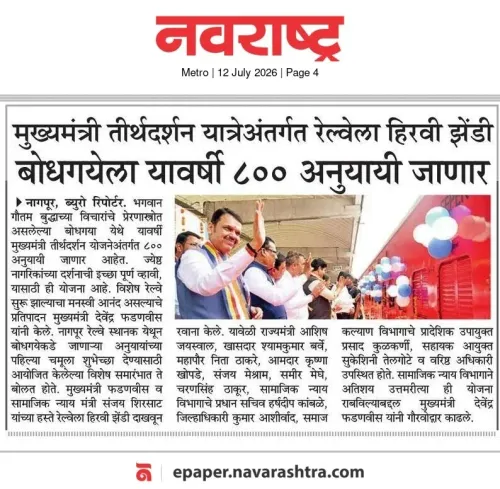
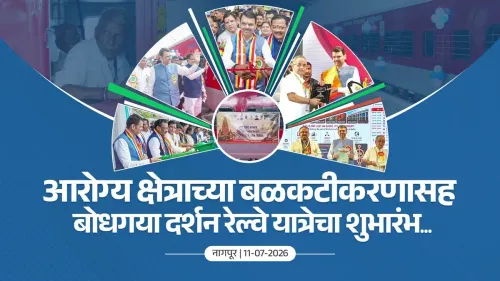
The Chief Minister's Office of Maharashtra announced on Saturday, 11 July 2026, that Chief Minister Devendra Fadnavis distributed free railway travel tickets to 800 pilgrims in Nagpur under the state's Mukhyamantri Tirtha Darshan Yojana, flagging off a dedicated train journey to the Buddhist pilgrimage site of Bodh Gaya in Bihar.
Context
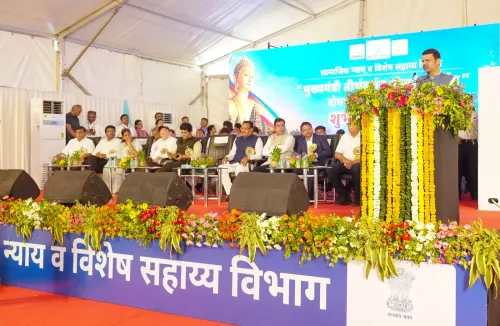
The official post from the Chief Minister's Office stated that Fadnavis personally handed over representative free travel tickets to the 800 pilgrims undertaking the Bodhgaya Darshan Rail Yatra (Bodh Gaya pilgrimage train journey) under the scheme. The distribution was held in a ceremonial format in Nagpur, the winter capital of Maharashtra, underlining the programme's reach into the state's eastern heartland.
Bodh Gaya, located in Bihar, is one of the most revered Buddhist pilgrimage sites in the world, marking the spot where Gautama Buddha is believed to have attained enlightenment. It draws millions of devotees from across India and abroad every year.
Policy Backdrop
The Mukhyamantri Tirtha Darshan Yojana is a Maharashtra government welfare initiative designed to provide free or heavily subsidised rail travel to state residents wishing to undertake religious pilgrimages to major sacred destinations across India. The scheme spans multiple faiths, making it broadly inclusive in its design.
Maharashtra governments have periodically expanded such tirtha darshan programmes since the mid-2010s, following a pattern established by states including Madhya Pradesh and Delhi, which operate similar pilgrim-travel schemes. These programmes combine direct welfare support with a broader push to encourage domestic religious tourism.
Stakeholders and Impact
The immediate beneficiaries are the 800 pilgrims who received tickets for the Bodh Gaya train journey, many of whom are likely Buddhist devotees and senior citizens for whom the cost of long-distance rail travel can be prohibitive. By covering travel expenses, the scheme removes a significant economic barrier to religious participation.
Chief Minister Fadnavis, who represents Nagpur in the state legislature, has made the city a visible venue for such welfare announcements, reinforcing both the programme's outreach and his own political connect with the region. The involvement of multiple local leaders — including Ashish Jaiswal, Sameer Meghe, and Nita Thakre — signals coordinated district-level implementation.
What's Next
Attention will now turn to whether the state government announces additional train batches under the Mukhyamantri Tirtha Darshan Yojana for Bodh Gaya or expands the list of eligible pilgrimage destinations. Any forthcoming state budget provisions that scale up beneficiary numbers or introduce new religious circuits will be closely watched by welfare advocates and religious communities alike.
The Bodh Gaya train yatra also positions Maharashtra as an active participant in the national push to deepen Buddhist heritage tourism, a priority that has gained renewed momentum in recent years at both the state and central government levels.
Point of View
The Nagpur venue is politically deliberate: it reinforces his identity as a hands-on administrator in the Vidarbha region ahead of any future electoral cycle. The inclusion of Buddhist heritage sites like Bodh Gaya also aligns Maharashtra's welfare agenda with the central government's broader push to develop Buddhist circuit tourism across India.
NationPress
9 Oct 2026
Frequently Asked Questions
What is the Mukhyamantri Tirtha Darshan Yojana in Maharashtra?
The Mukhyamantri Tirtha Darshan Yojana is a Maharashtra government welfare scheme that provides free or subsidised railway tickets to state residents for religious pilgrimages to major sacred sites across India, covering multiple faiths.
Who received free tickets under the Bodh Gaya train yatra in Nagpur?
A total of 800 pilgrims received free travel tickets in Nagpur on 11 July 2026, distributed personally by Chief Minister Devendra Fadnavis in a ceremonial event under the Mukhyamantri Tirtha Darshan Yojana.
Why is Bodh Gaya significant for pilgrims?
Bodh Gaya, located in Bihar, is one of the holiest Buddhist sites in the world. It marks the spot where Gautama Buddha is believed to have attained enlightenment and draws millions of devotees from India and abroad annually.
Is the Mukhyamantri Tirtha Darshan Yojana only for Buddhist pilgrims?
No, the scheme is multi-faith in design and covers pilgrimage destinations associated with various religions. The Bodh Gaya train journey is one of several routes offered under the programme.
Which other states have similar free pilgrimage travel schemes?
States including Madhya Pradesh and Delhi have operated comparable tirtha yatra or pilgrimage travel schemes offering subsidised or free rail journeys to religious sites, a model Maharashtra's programme closely follows.