CM Pema Khandu: Rare Himalayan Plant Rediscovered in Arunachal
Synopsis
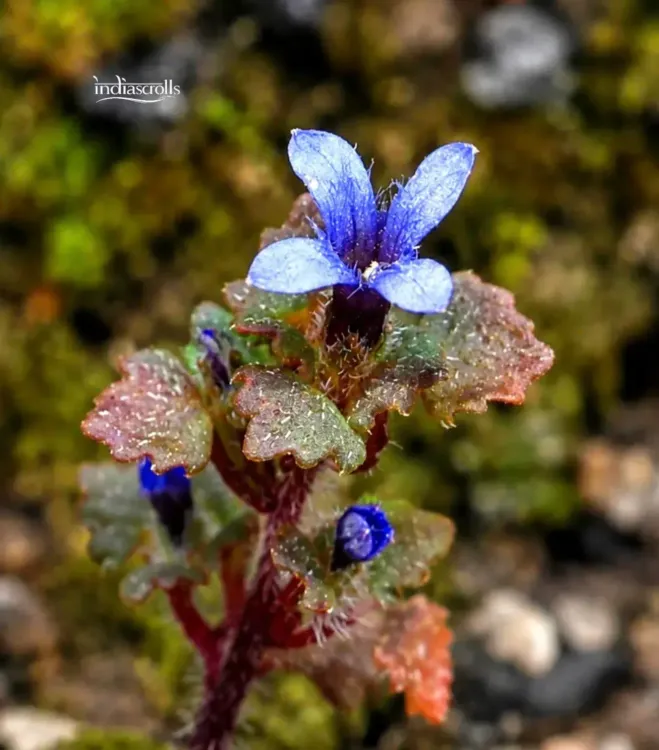
A rare purple-flowered Himalayan plant, Cyananthus hookeri, has been recorded in India for the first time in 158 years, found in Tawang's Chuna Valley. CM Pema Khandu hailed the find as a major botanical milestone, extending the species' known range beyond Sikkim where it was last documented in 1867.
Key Takeaways
Cyananthus hookeri has been recorded in India for the first time in 158 years , rediscovered in Chuna Valley, Tawang district, Arunachal Pradesh .
The species was previously documented only from Sikkim in 1867 by British botanist Sir Joseph Dalton Hooker .
This is the first confirmed record of the plant in Arunachal Pradesh , expanding its known range in the Eastern Himalayas.
Arunachal Pradesh Chief Minister Pema Khandu announced the rediscovery on 11 July 2026 , calling it 'a significant milestone for botany.' The find highlights the Eastern Himalayas' status as a biodiversity hotspot with significant undocumented flora.
Follow-up surveys and peer-reviewed publication by institutions such as the Botanical Survey of India are expected.
Arunachal Pradesh Chief Minister Pema Khandu announced on Saturday, 11 July 2026, that the rare purple-flowered Himalayan plant Cyananthus hookeri has been recorded in India for the first time in 158 years, this time from the pristine Chuna Valley in Tawang district of Arunachal Pradesh. The species was previously documented only from Sikkim in 1867 by the celebrated British botanist Sir Joseph Dalton Hooker, making this the first confirmed record of the plant in Arunachal Pradesh.
Context
The announcement, shared by CM Khandu on his official X account, describes the find as 'a significant milestone for botany' that 'highlights Arunachal Pradesh's extraordinary biodiversity.' The rediscovery closes a gap of more than a century and a half in the documented range of Cyananthus hookeri, a species known for its distinctive purple flowers and high-altitude Himalayan habitat. The plant had effectively vanished from India's botanical records since its sole prior documentation nearly 160 years ago.
Chuna Valley in Tawang district sits in the far northwestern corner of Arunachal Pradesh, bordering Bhutan and China, at elevations that sustain some of the Eastern Himalayas' most fragile and least-disturbed ecosystems. Its remoteness has historically limited systematic botanical surveys, meaning significant species may have persisted there undetected for generations.
Policy Backdrop
The Eastern Himalayas are globally recognised as a biodiversity hotspot, and Arunachal Pradesh holds one of India's largest tracts of this zone. Much of the foundational floristic record for this region was established during British-era expeditions, including Sir Joseph Dalton Hooker's landmark Himalayan surveys of the 1860s, which produced species records that Indian botanists still cite as primary references today. The gap between Hooker's original 1867 documentation and the current find underscores how dependent India's flora inventory remains on field-based taxonomic work to update colonial-era baselines.
The Botanical Survey of India (BSI), the country's apex body for plant taxonomy, periodically conducts surveys across the Northeast, and rediscoveries of this kind typically prompt follow-up documentation for peer-reviewed botanical journals. Such records also feed into national and global databases used to assess species conservation status.
Stakeholders and Impact
The immediate beneficiaries of this rediscovery are the botanical and conservation research communities, for whom a confirmed new state record of a species unseen for 158 years is a significant data point. It expands the known distribution of Cyananthus hookeri beyond Sikkim into Arunachal Pradesh, potentially prompting reassessment of the species' range and resilience across the Eastern Himalayas.
Local communities in Tawang and conservation advocates working in the region also stand to benefit, as high-profile botanical finds can strengthen the case for habitat protection in areas under development or land-use pressure. For Arunachal Pradesh as a state, the rediscovery adds to a growing body of evidence positioning it as one of India's most botanically significant territories.
What's Next
The scientific community will look toward a peer-reviewed publication formally establishing the record, with institutional backing expected from bodies such as the Botanical Survey of India. Follow-up field surveys in Chuna Valley and surrounding high-altitude zones in Tawang district are likely, aimed at assessing the population size and ecological status of Cyananthus hookeri in its newly confirmed range. If the species is found to be rare or threatened within Arunachal Pradesh, it could inform state-level biodiversity conservation plans and contribute to India's commitments under international biodiversity frameworks. The find is a reminder that the Eastern Himalayas, despite decades of research, continue to yield surprises that reshape the map of India's natural heritage.
Point of View
The rediscovery exposes the thin coverage of India's floristic surveys in high-altitude Northeast territories, most of which still rest on 19th-century British baselines. As India deepens its commitments under global biodiversity agreements, politically endorsed field discoveries like this one may increasingly drive the case for dedicated survey funding in under-documented Himalayan corridors.
NationPress
11 Jul 2026
Frequently Asked Questions
What is Cyananthus hookeri and why is its rediscovery significant?
Cyananthus hookeri is a rare purple-flowered plant native to the high-altitude Himalayas. Its rediscovery in Arunachal Pradesh is significant because it had not been recorded in India for 158 years — the only prior documentation was from Sikkim in 1867 by British botanist Sir Joseph Dalton Hooker .
Where exactly was Cyananthus hookeri rediscovered in India?
The plant was found in Chuna Valley in Tawang district , Arunachal Pradesh — a remote, high-altitude area bordering Bhutan and China.
Who first documented Cyananthus hookeri?
Sir Joseph Dalton Hooker , the renowned 19th-century British botanist, first documented the species in Sikkim in 1867 during his Himalayan expeditions.
Who announced the rediscovery of the rare Himalayan plant?
Arunachal Pradesh Chief Minister Pema Khandu announced the rediscovery on his official X account on 11 July 2026 , describing it as a significant milestone for botany.
What happens after a rare plant species is rediscovered in India?
Typically, the find is submitted for peer-reviewed publication in a botanical journal, and institutions such as the Botanical Survey of India may conduct follow-up field surveys to assess the species' population size, habitat extent, and conservation status.