Tharoor Addresses Jindal Global London Colloquium on India's Constitution
Synopsis
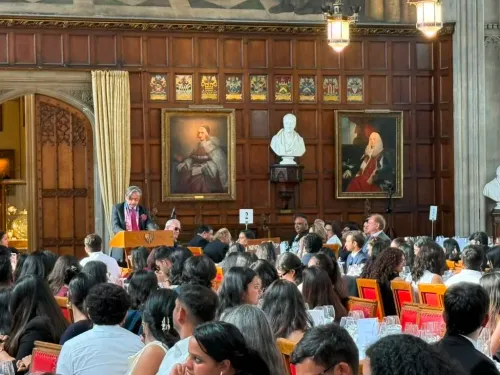
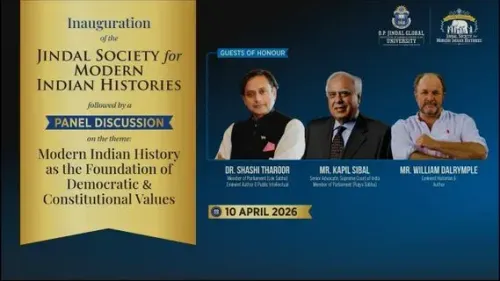
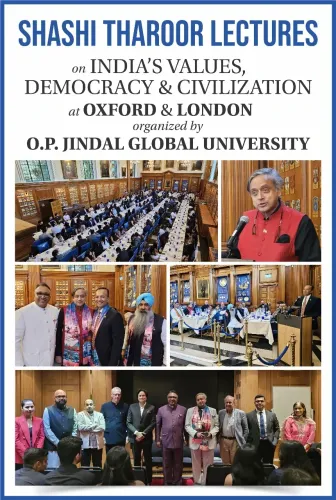
Congress MP Dr. Shashi Tharoor addressed the O.P. Jindal Global University London Colloquium on 11 July 2026, speaking on 'The Soul of the Republic: The Constitution and India's Democratic Future,' reflecting on the founders' constitutional vision and each generation's duty to safeguard democratic ideals.
Key Takeaways
Shashi Tharoor addressed the Jindal Global University London Colloquium on 11 July 2026 .
The colloquium theme was 'The Soul of the Republic: The Constitution and India's Democratic Future.' Tharoor reflected on the constitutional vision of India's founders and the resilience of Indian democracy.
The event was organised by O.P.
Jindal Global University , established in 2009 and known for international academic programmes.
The Constitution of India was adopted on 26 November 1949 and came into force on 26 January 1950 , drafted under Dr.
Ambedkar's chairmanship.
The address is part of a broader pattern of Indian political figures engaging diaspora and international audiences on constitutional values.
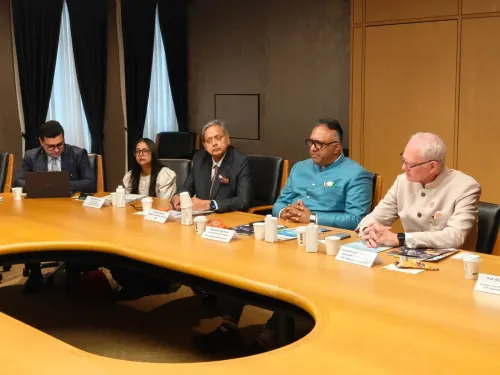
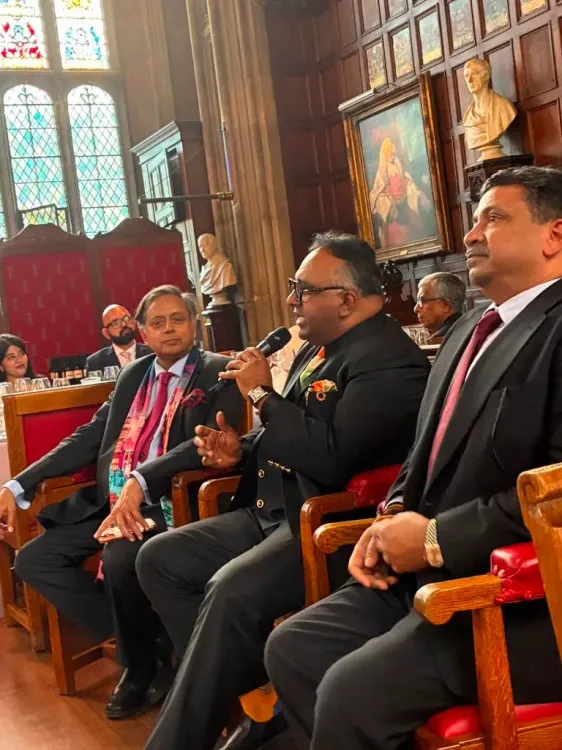
Congress MP Dr. Shashi Tharoor addressed the O.P. Jindal Global University London Colloquium on Saturday, 11 July 2026, speaking on the theme 'The Soul of the Republic: The Constitution and India's Democratic Future.' The Thiruvananthapuram MP used the occasion to reflect on the constitutional vision of India's founding generation, the resilience of Indian democracy, and the duty each successive generation carries in protecting the republic's core ideals.
Context
Dr. Tharoor, a former Union Minister and former UN Under-Secretary-General, is among the more prominent Indian parliamentarians who regularly engage international academic audiences on questions of governance and constitutional values. Speaking before what he described as a 'thoughtful audience,' he engaged with questions that, in his words, 'go to the very soul of our constitutional democracy.' The event was organised by O.P. Jindal Global University, a private Indian institution established in 2009 that has built a reputation for hosting overseas colloquia bridging Indian and international scholarship.
Policy Backdrop
The Constitution of India was adopted by the Constituent Assembly on 26 November 1949 and came into force on 26 January 1950, with Dr. B.R. Ambedkar serving as Chairman of its Drafting Committee. The document has since been amended over a hundred times, with the landmark 42nd Constitutional Amendment of 1976 inserting the words 'socialist' and 'secular' into the Preamble and codifying fundamental duties. These foundational choices remain live points of debate in contemporary India, particularly around questions of federalism, judicial independence, and the scope of fundamental rights.
Indian political figures addressing foreign university audiences on constitutional themes has become a recognisable pattern, especially as domestic conversations around institutional checks and balances intensify. London, home to a large and engaged Indian diaspora, provides a receptive forum for such discussions.
Stakeholders and Impact
The audience at the London Colloquium would have included law students, academics, and members of the Indian diaspora in the United Kingdom — communities that follow India's democratic trajectory closely and often contribute to transnational conversations about its direction. For Jindal Global University, such events serve a dual purpose: elevating its international academic profile and creating platforms where Indian constitutional thought is examined in a global comparative context.
Dr. Tharoor's participation lends the event political as well as intellectual weight. As a sitting MP and a prolific commentator on India's democratic health, his framing of the constitution as a living obligation — something each generation must actively 'safeguard' — carries resonance beyond the lecture hall.
What's Next
With India's monsoon parliamentary session approaching, constitutional questions — including potential debates on amendments and judicial review of federal powers — are likely to return to the floor of Parliament. Dr. Tharoor's London address signals that the Opposition intends to keep the constitutional conversation prominent, both at home and in international forums. The broader pattern of Indian politicians engaging diaspora communities abroad on democratic values suggests this is part of a sustained effort to shape the global narrative around India's republican future.
Point of View
Where the framing of democratic resilience and institutional safeguards can reach diaspora communities and global academics simultaneously. By anchoring the discussion in the founders' vision, he implicitly positions the current political moment as a test of that inheritance — without naming adversaries directly. Such overseas engagements also serve a soft-power function for the speaker, reinforcing credentials as a statesman rather than a purely partisan figure. With the monsoon session looming, the themes raised in London are likely to resurface in parliamentary debate.
NationPress
11 Jul 2026
Frequently Asked Questions
What did Shashi Tharoor speak about at the London Colloquium?
Dr. Shashi Tharoor spoke on 'The Soul of the Republic: The Constitution and India's Democratic Future' at the O.P. Jindal Global University London Colloquium on 11 July 2026, reflecting on the founders' constitutional vision and each generation's responsibility to protect democratic ideals.
What is the Jindal Global University London Colloquium?
The London Colloquium is an overseas academic event organised by O.P. Jindal Global University, a private Indian institution established in 2009, designed to engage diaspora communities and international scholars on topics relevant to India.
Why does Shashi Tharoor speak at international university events?
As a former UN Under-Secretary-General, former Union Minister, and sitting Congress MP, Dr. Tharoor regularly addresses international academic audiences on Indian governance, constitutional values, and foreign policy, reflecting his dual profile as parliamentarian and public intellectual.
When was the Indian Constitution adopted?
The Constitution of India was adopted by the Constituent Assembly on 26 November 1949 and came into force on 26 January 1950. It was drafted under the chairmanship of Dr. B.R. Ambedkar.
What constitutional debates are currently active in India?
Ongoing debates in India touch on federalism, secularism, judicial independence, and the scope of fundamental rights — themes that are expected to surface again in Parliament during the monsoon session.