CM Fadnavis: Gadchiroli Will Be Maharashtra's First District, Not Last
Synopsis
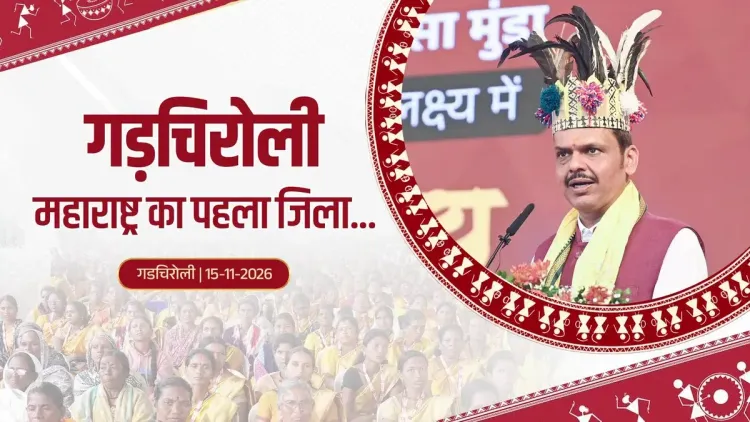
On Janjatiya Gaurav Diwas, CM Devendra Fadnavis inaugurated the Rashtriya Adivasi Sanskritik Mahotsav in Gadchiroli and pledged to transform the tribal district into Maharashtra's foremost — not last — district through conservation-led sustainable development.
Key Takeaways
CM Devendra Fadnavis spoke at the inauguration of the Rashtriya Adivasi Sanskritik Mahotsav in Gadchiroli on 15 November 2026 .
He declared Gadchiroli would become Maharashtra's ' first district, not its last ' through sustainable development.
The commitment centres on conserving water, forest, and land — resources historically tied to Adivasi rights movements.
Janjatiya Gaurav Diwas is observed annually on 15 November , the birth anniversary of tribal icon Birsa Munda , since 2021.
Fadnavis tagged Prime Minister Narendra Modi , signalling Centre-state alignment on tribal development priorities.
The hashtag #DiscoverGadchiroli points to a parallel push to reposition the district's national image.
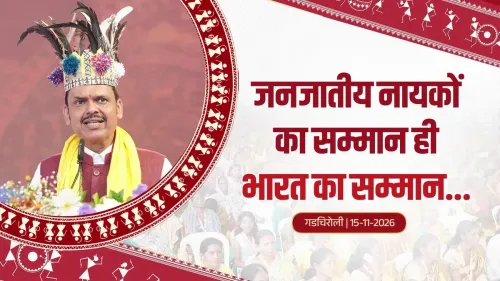
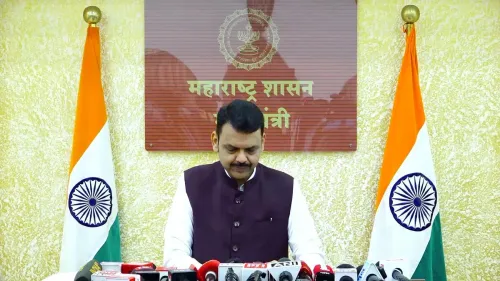
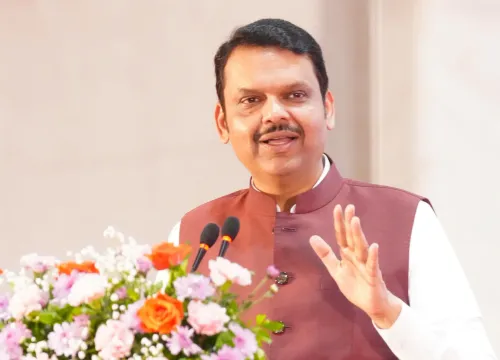
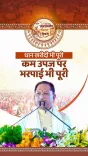
On Janjatiya Gaurav Diwas, Maharashtra's most remote tribal district became the stage for a bold political and developmental promise. Maharashtra Chief Minister Devendra Fadnavis, speaking at the inauguration of the Rashtriya Adivasi Sanskritik Mahotsav in Gadchiroli on 15 November 2026, declared that the district would be transformed — not left behind.
Addressing the gathering in both Marathi and Hindi, Fadnavis declared: 'Jal, jungle aani jaminicha sanvardhan karat shashwat vikasachya madhyamatun Gadchiroli Maharashtracha shevatacha nahi, tar pahila jilha banel!' — 'By conserving water, forest, and land through sustainable development, Gadchiroli will become Maharashtra's first district, not its last!' The parallel Hindi rendering underlined that the message was aimed squarely at a national audience gathered for the tribal festival.
Gadchiroli: From Forgotten Frontier to Development Flagship
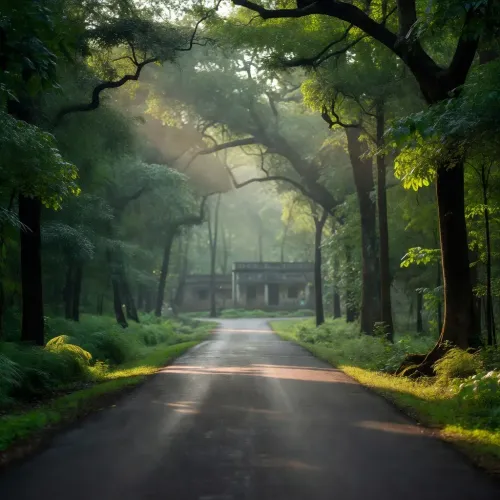
Gadchiroli sits in the far east of Maharashtra, bordering Chhattisgarh and Telangana. The district is densely forested, home to significant Adivasi populations, and has historically been tagged as one of the state's most underdeveloped regions — defined in public discourse more by insurgency challenges than by its rich ecological and cultural wealth. Fadnavis's framing flips that narrative entirely: water, forest, and land — the very resources that made Gadchiroli seem 'peripheral' — are recast as the engines of its ascent.
The triple formulation 'jal, jungle, jameen' (water, forest, land) carries particular resonance in tribal discourse. These three resources have been at the heart of Adivasi rights movements for decades. By centering them as conservation assets driving sustainable development rather than obstacles to it, the CM aligned state policy language with the vocabulary Adivasi communities themselves use — a deliberate rhetorical choice on a day built around tribal dignity.
Janjatiya Gaurav Diwas and the Festival's Significance
Janjatiya Gaurav Diwas falls on 15 November every year — the birth anniversary of tribal icon Birsa Munda — and has been observed nationally since 2021 to spotlight tribal heritage and welfare. The choice of Gadchiroli as the host for the Rashtriya Adivasi Sanskritik Mahotsav this year is itself a signal: the Centre and state governments are using the occasion to draw national attention to a district they want repositioned in the public imagination.
Fadnavis tagged Prime Minister Narendra Modi in the post, underscoring the political alignment between the state and the Centre on tribal development policy. The hashtags #JanjatiyaGauravDiwas and #DiscoverGadchiroli together suggest a dual ambition — marking the cultural occasion while simultaneously launching a soft-power narrative around the district's potential.
Conservation as the Core of the Development Pitch
The specific phrase 'sustainable development' placed alongside forest, water, and land conservation is not incidental. It signals an approach that seeks to avoid the conventional trade-off between resource extraction and ecological preservation — a tension that has defined conflict in tribal districts across central India for generations. Whether Gadchiroli's development architecture will be built around forest-based livelihoods, eco-tourism, or conservation-linked infrastructure remains the key question going forward.
The ambition is explicit and the symbolism carefully constructed. The hardest test, as always with Gadchiroli, will be execution on the ground.
Point of View
Not last' formulation is a sharp rhetorical inversion designed to shift how voters and policymakers perceive Gadchiroli's trajectory. Tagging the Prime Minister publicly reinforces Centre-state convergence on tribal welfare ahead of potential scheme announcements. The real test is whether conservation-linked development translates into verifiable ground-level change, or remains an aspirational frame repeated across successive Janjatiya Gaurav Diwas cycles.
NationPress
15 Nov 2026
Frequently Asked Questions
What did CM Devendra Fadnavis say at the Gadchiroli tribal festival on 15 November 2026?
CM Fadnavis declared that Gadchiroli will become Maharashtra's first district — not its last — through sustainable development centred on conserving water, forest, and land, speaking at the Rashtriya Adivasi Sanskritik Mahotsav on Janjatiya Gaurav Diwas.
What is Janjatiya Gaurav Diwas and why is it celebrated on 15 November?
Janjatiya Gaurav Diwas is an annual national observance on 15 November — the birth anniversary of tribal freedom fighter Birsa Munda — introduced in 2021 to honour tribal heritage and highlight welfare schemes for Adivasi communities.
What is the Rashtriya Adivasi Sanskritik Mahotsav?
The Rashtriya Adivasi Sanskritik Mahotsav is a National Tribal Cultural Festival that celebrates Adivasi traditions and serves as a platform to announce or highlight development themes related to tribal communities.
Why is Gadchiroli considered underdeveloped and what is the government's plan?
Gadchiroli is a heavily forested tribal district in eastern Maharashtra historically marked by poor infrastructure and insurgency challenges. The state government's stated plan is conservation-led sustainable development using the district's water, forest, and land resources as economic assets.
What does 'jal, jungle, jameen' mean in the context of tribal politics?
'Jal, jungle, jameen' — water, forest, land — is a long-standing rallying phrase in Adivasi rights movements signifying the three resources most central to tribal livelihoods and identity; CM Fadnavis used it to frame conservation as the foundation of Gadchiroli's development.