CM Fadnavis Hails Historic Step for Women Farmers in Maharashtra
Synopsis
Maharashtra Chief Minister Devendra Fadnavis on 8 July 2026 announced a 'historic step' for women farmers in the state, citing goals of dignity, equal opportunity, and empowerment. The move signals a new state-level policy initiative building on national rural livelihood frameworks targeting gender gaps in agriculture.
Key Takeaways
CM Devendra Fadnavis announced on 8 July 2026 what he described as a 'historic step' for women farmers in Maharashtra .
The initiative is framed around three pillars: dignity, equal opportunity, and empowerment of women in agriculture.
Maharashtra has a large agricultural workforce in which women form a significant share, facing structural gaps in land ownership and credit access.
The announcement builds on the national Mahila Kisan Sashaktikaran Pariyojana (MKSP) , launched in 2011 under DAY-NRLM .
Specific scheme details, budgetary allocations, and legislative changes are yet to be officially released.
The move reflects a broader pattern of Indian states pursuing targeted interventions to close gender disparities in the farm sector.
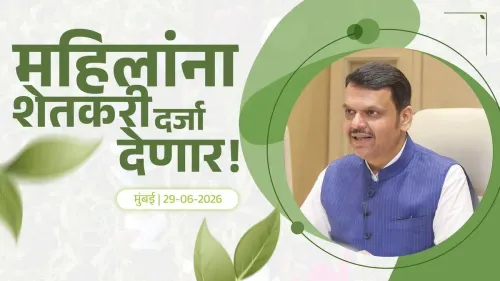
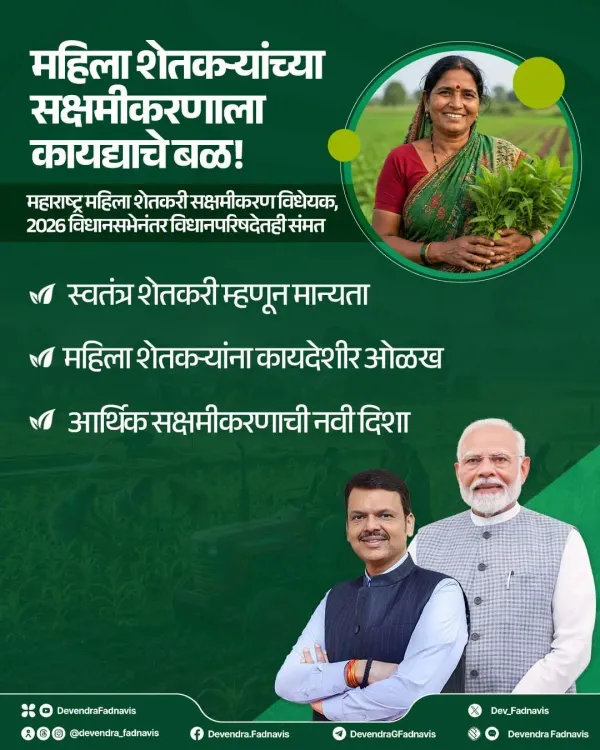
Maharashtra Chief Minister Devendra Fadnavis on Wednesday, 8 July 2026 called a new state initiative a 'historic step' toward the dignity, equal opportunity, and empowerment of women farmers in Maharashtra, announcing the move through a post on X that carried the hashtags #महिला_शेतकरी_सक्षमीकरण (Women Farmer Empowerment) and #MahilaShetkariSakshamikaran.
Context
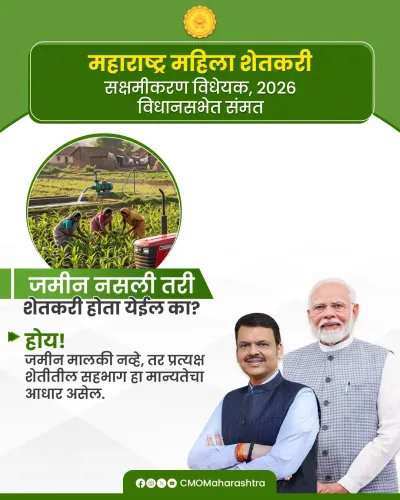
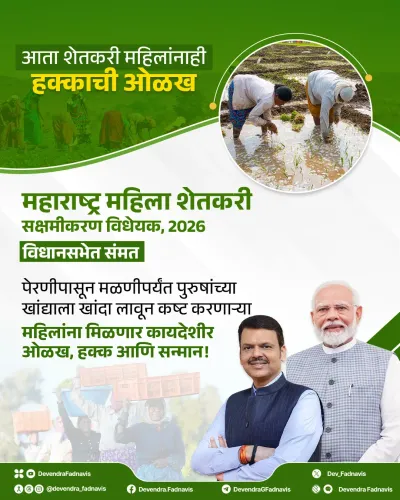
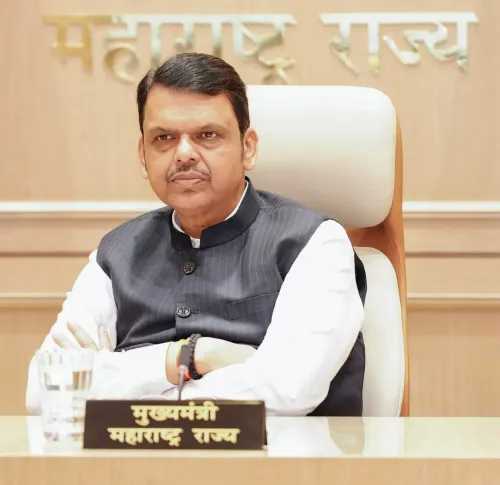
Fadnavis described the initiative in Marathi as 'महिला शेतकऱ्यांच्या सन्मान, समान संधी आणि सक्षमीकरणाच्या दिशेने महाराष्ट्राचे ऐतिहासिक पाऊल' — translated: 'Maharashtra's historic step toward the honour, equal opportunity, and empowerment of women farmers.' The post, accompanied by an image, signals a formal policy move by the state government, though the specific scheme name and budgetary details are yet to be officially released in full.
Maharashtra is one of India's largest agricultural states, and women constitute a substantial share of its farm labour force. Gender gaps in land ownership, access to institutional credit, and agricultural extension services have long been identified as structural barriers to rural women's economic participation.
Policy Backdrop
The announcement builds on a layered policy lineage. At the national level, the Mahila Kisan Sashaktikaran Pariyojana (MKSP), launched in 2011 under the Deendayal Antyodaya Yojana – National Rural Livelihoods Mission (DAY-NRLM), has been the primary central framework for skill development and livelihood support targeting women in agriculture.
Maharashtra has periodically aligned its state programmes with national rural livelihood frameworks. The state's move, framed around 'dignity' and 'equal opportunity', suggests an intent to go beyond income support toward addressing land rights and decision-making access — areas where gender disparity in Indian agriculture remains pronounced.
Several other Indian states have in recent years pursued targeted interventions including joint land titling, women-only farmer producer organisations, and dedicated credit lines, reflecting a broader national trend sometimes described as a policy response to the 'feminisation of agriculture.'
Stakeholders and Impact
Women farmers and rural households across Maharashtra stand as the primary beneficiaries of any scheme flowing from this announcement. Improved access to land titles, institutional credit, and government extension services could directly affect agricultural productivity and household incomes in the state's rural districts.
Self-help groups, farmer producer organisations, and rural livelihood missions operating in Maharashtra are likely to serve as implementation channels. The emphasis on 'equal opportunity' in Fadnavis's framing may also have implications for how land inheritance and tenancy rights are addressed in upcoming legislative or executive actions.
What's Next
Specific scheme guidelines, budgetary allocations, and any proposed legislative changes are expected to be detailed in forthcoming official announcements or in the next session of the Maharashtra Legislative Assembly. Observers will watch whether the state introduces new provisions on women's land rights, dedicated agricultural credit windows, or expanded skilling mandates tied to this initiative.
If the state follows through with substantive structural reforms — particularly on land titling and credit access — it could set a benchmark for other large agricultural states grappling with similar gender gaps in the farm sector.
Point of View
Positioning the BJP-led Maharashtra government as a champion of rural women's rights ahead of any future electoral cycle. The choice of language — dignity, equal opportunity, empowerment — mirrors the vocabulary of national gender-equity policy, suggesting the state intends to claim credit for advancing a central agenda on its own terms. The announcement is light on specifics, which is typical of a first-stage political rollout designed to build narrative before operational details follow. How substantive the eventual scheme turns out to be — particularly on the harder questions of land titling and credit access — will determine whether this marks genuine policy progress or remains a symbolic gesture.
NationPress
8 Jul 2026
Frequently Asked Questions
What did CM Devendra Fadnavis announce for women farmers in Maharashtra?
On 8 July 2026, CM Fadnavis announced what he called a 'historic step' toward the dignity, equal opportunity, and empowerment of women farmers in Maharashtra, though specific scheme details are yet to be officially released.
What is the Mahila Kisan Sashaktikaran Pariyojana?
The Mahila Kisan Sashaktikaran Pariyojana (MKSP) is a central government scheme launched in 2011 under DAY-NRLM to promote skill development and livelihood support for women farmers across India.
How many women farmers are there in Maharashtra?
Women constitute a significant share of Maharashtra's agricultural labour force, though exact current figures depend on the latest census and NSSO surveys. Gender gaps in land ownership and credit access remain a recognised policy challenge in the state.
What does 'feminisation of agriculture' mean in the Indian context?
The 'feminisation of agriculture' refers to the growing proportion of women taking on farm labour and management roles in India, often without corresponding access to land rights, credit, or extension services, creating structural gender disparities in the sector.
What are the next steps after Fadnavis's women farmer empowerment announcement?
Observers expect specific scheme guidelines, budgetary allocations, and possible legislative changes to be detailed in forthcoming official announcements or in the next Maharashtra Legislative Assembly session.