CM Fadnavis inaugurates Marathi Bhasha Saptah 2026
Synopsis
Maharashtra CM Devendra Fadnavis inaugurated Marathi Bhasha Saptah 2026 on Classical Marathi Language Honour Day, celebrating the Modi government's 2024 decision granting Marathi classical language status and calling for its promotion in the digital age.
Key Takeaways
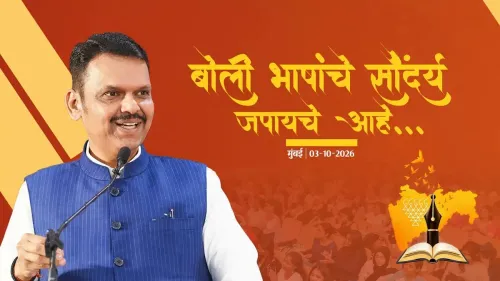
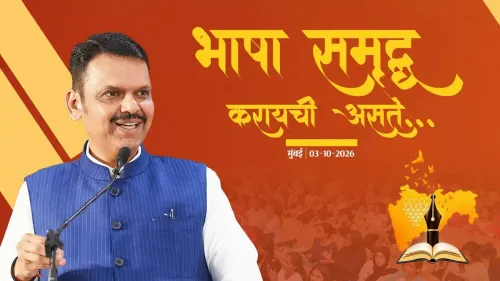
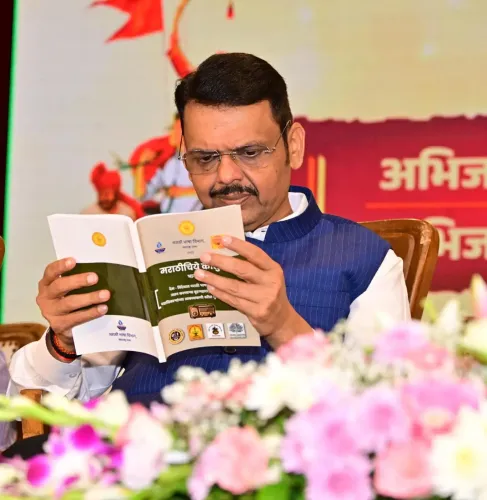
CM Devendra Fadnavis inaugurated Marathi Bhasha Saptah 2026 on 3 October 2026 , observed as Abhijat Marathi Bhasha Sanman Divas .
The celebration is anchored in the Modi government's 2024 decision to confer Classical Language status on Marathi.
Fadnavis traced Marathi's literary lineage from the Lilacharitra and Dnyaneshwari to the shahiri tradition and Tukaram Maharaj's abhangas .
He highlighted seven dialects — including Kokani, Varhadi, Malvani, and Zhadiboli — as enriching Marathi's cultural universe.
The CM called for Marathi's active promotion on OTT platforms, social media, and digital media to give it a global reach.
Classical Language recognition carries benefits including central government funding for research, national awards for scholars, and university chairs.
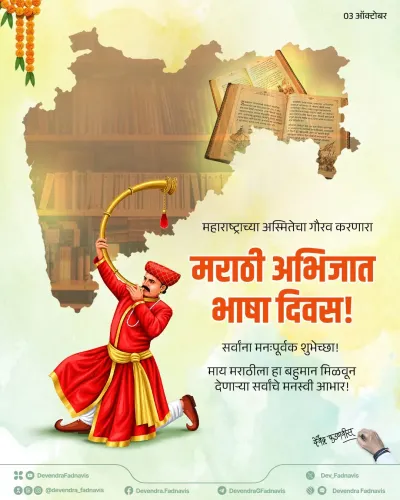
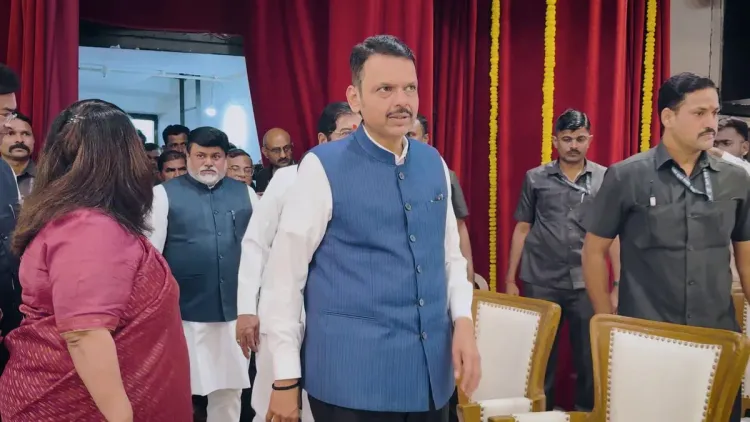
A language spoken by over 83 million people got its moment of formal pride in 2024 — and on Saturday, 3 October 2026, Maharashtra Chief Minister Devendra Fadnavis marked that milestone by inaugurating Marathi Bhasha Saptah 2026 (Marathi Language Week) on the occasion of Abhijat Marathi Bhasha Sanman Divas (Classical Marathi Language Honour Day).
Posting in Marathi on X, CM Fadnavis opened with the celebrated line 'Labhale amhas bhagya bolato Marathi' — 'We are fortunate to speak Marathi' — before extending greetings to every Marathi speaker and formally launching the week-long celebration. His post tagged Prime Minister Narendra Modi, crediting the central government's 2024 decision to confer Classical Language status on Marathi as the foundation for the day's honour.
The Classical Language recognition that changed everything
Marathi's elevation to Classical Language status by the Modi government in 2024 was a watershed moment for the state's cultural identity. The Classical Language tag — which brings with it central funding for research, a national award for scholars, and academic chairs at universities — had previously been conferred on Sanskrit, Tamil, Telugu, Kannada, Malayalam, and Odia. Marathi's inclusion placed it in this elite group, a demand Maharashtra had pressed for over two decades.
CM Fadnavis called the recognition 'a moment of pride for every Marathi person' and described it as an honour bestowed on the language's 'glorious linguistic heritage.' The Abhijat Marathi Bhasha Sanman Divas is now observed on 3 October to mark this decision, and the week that follows — Marathi Bhasha Saptah — is dedicated to promotion, literary celebration, and cultural outreach.
From Lilacharitra to the digital stage
Fadnavis traced Marathi's literary arc from the Lilacharitra — the biography of Chakradhar Swami, considered one of the oldest prose works in Marathi — through Dnyaneshwar Maharaj's Dnyaneshwari, the devotional abhangas of Tukaram Maharaj, and the shahiri (ballad) tradition. He invoked Chhatrapati Shivaji Maharaj as a guardian not just of swarajya (self-rule) but of swabhasha — pride in one's own language.
The Chief Minister also celebrated the richness of Marathi's dialects — Kokani, Varhadi, Malvani, Ahirani, Agri, Dhangari, and Zhadiboli — arguing that this diversity deepens, rather than fragments, the language's cultural universe.
His most forward-looking call was for Marathi to claim space in the digital world. 'A new digital culture is taking shape alongside our traditional culture,' he wrote, urging speakers to amplify Marathi through OTT platforms, social media, and digital media. The phrase he used — 'Marathicha danka jagbhar vajvuya' — translates to 'Let us make Marathi resound across the world.'
A week of language, legacy, and reach
Marathi Bhasha Saptah 2026 is set to feature literary events, cultural programmes, and outreach initiatives across Maharashtra. The week-long format is designed to move beyond a single ceremonial day and embed promotion of the language — its use, research, and preservation of its literature — into a sustained public conversation.
For CM Fadnavis, who presides over a state where language politics have long run deep, the inauguration is both a cultural salute and a governance signal: that the Classical Language tag earned in 2024 is not a trophy on a shelf but a mandate to act. Marathi, he insists, must echo from ancient manuscripts all the way to the next viral reel.
Point of View
CM Fadnavis reinforces the BJP's cultural-nationalist credentials in a state where Marathi pride is an electoral currency. The explicit push for digital-age promotion signals that the government is trying to reframe language advocacy from nostalgia to futureproofing — a message aimed squarely at younger, urban Marathi speakers. The invocation of Chhatrapati Shivaji Maharaj alongside Saints Dnyaneshwar and Tukaram constructs a continuum from medieval legacy to modern governance, a narrative the ruling alliance needs to hold its base. If the Saptah translates into concrete policy — dedicated OTT content funds, Marathi digital literacy programmes — it becomes substance; if it remains ceremonial, critics will note the gap between rhetoric and resource.
NationPress
3 Oct 2026
Frequently Asked Questions
What is Abhijat Marathi Bhasha Sanman Divas?
Abhijat Marathi Bhasha Sanman Divas is observed on 3 October to mark the central government's 2024 decision granting Marathi the status of a Classical Language of India. CM Fadnavis inaugurated Marathi Bhasha Saptah 2026 on this day.
When did Marathi get Classical Language status?
The Modi government granted Marathi Classical Language status in 2024 , placing it alongside Sanskrit, Tamil, Telugu, Kannada, Malayalam, and Odia — languages previously recognised under this category.
What is Marathi Bhasha Saptah?
Marathi Bhasha Saptah is a week-long celebration dedicated to the promotion, research, and cultural enrichment of the Marathi language. The 2026 edition was inaugurated by CM Fadnavis on 3 October .
What benefits does Classical Language status bring to Marathi?
Classical Language status entitles Marathi to central government funding for linguistic research, a national award for eminent Marathi scholars, and the establishment of dedicated university chairs — benefits that support long-term academic and cultural preservation.
What did CM Fadnavis say about Marathi and digital media?
CM Fadnavis called on Marathi speakers to actively use OTT platforms, social media, and digital media to spread Marathi language, literature, art, and culture globally, saying 'Let us make Marathi resound across the world.'