CM Fadnavis: Land Acquisition Must Match Actual Need

Synopsis
Chief Minister Devendra Fadnavis has called for land acquisition in Maharashtra to be calibrated strictly to project need, invoking NITI Aayog guidelines in a statement that reaffirms the principle of targeted, transparent land takeovers over blanket notifications.
Key Takeaways
CM Devendra Fadnavis stated on 21 November 2026 that land acquisition in Maharashtra must align strictly with actual project requirements.
The remark was made in connection with NITI Aayog , suggesting a formal policy consultation context.
India's Land Acquisition Act of 2013 already mandates consent and social impact assessments, but state-level implementation has been inconsistent.
Maharashtra faces pressure from both industrial corridor developers and farming communities over how land is notified and acquired.
NITI Aayog has shared model land leasing and acquisition guidelines with states, promoting targeted rather than blanket acquisition.
Any follow-up government notification codifying 'need-based' criteria will determine whether the principle moves from rhetoric to enforceable policy.
A pointed directive from the top — Chief Minister Devendra Fadnavis has called for land acquisition in Maharashtra to be strictly calibrated to genuine project requirements, pushing back against blanket or over-broad land takeovers that have historically displaced farmers and stalled development in equal measure.
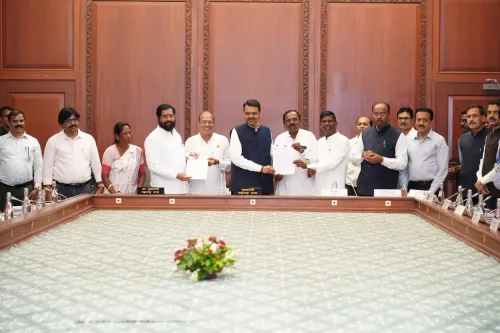
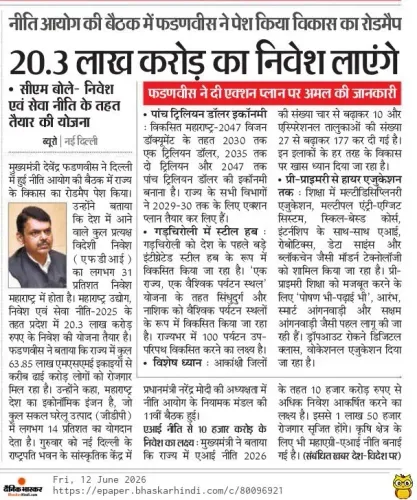
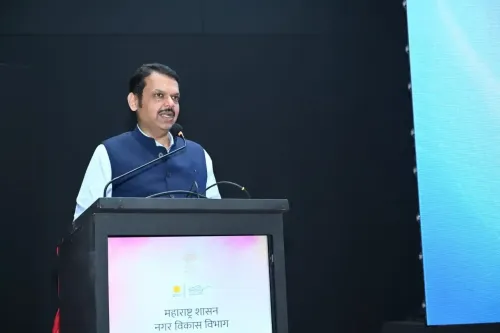
The Chief Minister's Office of Maharashtra posted on Saturday, 21 November 2026, quoting Fadnavis: 'जरूरतों के अनुसार हो भूमि अधिग्रहण' — 'land acquisition must happen according to need.' The remark was tagged to NITI Aayog, signalling the statement was made in a policy consultation context with the national think tank.
Why 'Need-Based' Is the Loaded Phrase Here
The phrase is deceptively simple, but it carries real weight in India's land policy history. The landmark Right to Fair Compensation and Transparency in Land Acquisition, Rehabilitation and Resettlement Act, 2013 replaced a colonial-era 1894 law precisely to address the problem of governments acquiring far more land than projects actually required — often at the expense of farming communities. The 2013 law introduced mandatory consent clauses and social impact assessments, but implementation has been uneven across states. Fadnavis's framing aligns with what NITI Aayog has advocated through its model land leasing and acquisition guidelines: that acquisition should be targeted, transparent, and tied to specific, demonstrated project needs — not forward-looking land banks built on speculation.Maharashtra's Balancing Act Between Industry and Agriculture
For Maharashtra, the tension is acute. The state sits at the intersection of major industrial corridor proposals, rapid urban expansion around Mumbai and Pune, and a large agrarian interior where any land notification triggers immediate political and community resistance. Maharashtra governments have historically tried to link acquisition to specific industrial and infrastructure priorities rather than issuing large blanket notifications — but enforcement of that principle has been contested on the ground. Farmers' groups and project developers have long occupied opposite ends of this debate: the former demanding stringent need-assessment before a single acre is notified, the latter arguing that rigid consent requirements add years to project timelines and deter investment.NITI Aayog's Role and What Comes Next
By invoking NITI Aayog in the same breath, Fadnavis is signalling that Maharashtra is engaging with the Centre's reform framework — not operating in isolation. NITI Aayog has shared model guidelines with states and is known to follow up with bilateral consultations. Any formal notification or circular from the Maharashtra government codifying 'need-based' criteria for upcoming projects — particularly those tied to industrial corridors or expressway expansions — will be the real test of whether this principle moves from statement to statute. One sentence from a Chief Minister. Decades of contested policy behind it. The farmers and developers watching from opposite banks will want to see the same thing: the fine print.Point of View
This framing is as much political risk management as it is governance. The real policy test will come when specific projects hit the notification stage and the 'need' calculus is put to public scrutiny. Watch for whether this produces a formal state-level order or remains a statement of principle.
NationPress
21 Nov 2026
Frequently Asked Questions
What did CM Devendra Fadnavis say about land acquisition in Maharashtra?
CM Devendra Fadnavis said land acquisition in Maharashtra should happen strictly according to need, calling for a targeted approach rather than broad or speculative land takeovers. The statement was made in connection with NITI Aayog.
What is the Land Acquisition Act 2013 and how does it apply to Maharashtra?
The Right to Fair Compensation and Transparency in Land Acquisition, Rehabilitation and Resettlement Act, 2013 replaced India's colonial-era 1894 law. It introduced mandatory consent from landowners and social impact assessments before acquisition, applying to all states including Maharashtra.
What is NITI Aayog's role in land acquisition policy?
NITI Aayog, India's national policy think tank established in 2015, has developed model land leasing and acquisition guidelines for states. It promotes need-based, transparent processes and engages states through consultations on land reform.
Why is land acquisition a sensitive issue in Maharashtra?
Maharashtra has significant industrial corridor and urban expansion projects that require land, while also having a large farming population. Land notifications have historically triggered protests, making the balance between development and farmer rights a persistent political challenge.
What should we watch for after Fadnavis's land acquisition statement?
The key follow-up will be whether the Maharashtra government issues a formal notification or circular setting out specific 'need-based' criteria for land acquisition, particularly for upcoming infrastructure and industrial projects tied to central schemes.