Uttarakhand CMO: Dairy centre launched in Pithoragarh's Gurna
Synopsis
The Uttarakhand CMO announced the launch of a Dairy Input-Output Centre in Gram Panchayat Gurna, Pithoragarh, under the Gramotthan Project with support from the Himalaya Cluster Level Federation, aiming to boost incomes for smallholder dairy farmers in a remote Himalayan border district.
Key Takeaways
A Dairy Input-Output Centre was inaugurated in Gram Panchayat Gurna , Vikas Khand Bin, Pithoragarh district on 21 November 2026 .
The centre was launched under the Gramotthan Project with the support of the Himalaya Cluster Level Federation .
Pithoragarh is a high-altitude border district bordering Nepal and China, where livestock farming is a primary income source.
The centre provides farmers with organised access to dairy inputs (feed, veterinary supplies) and a structured milk aggregation outlet.
Cluster-level federations are the key organisational mechanism linking self-help groups to market infrastructure in Uttarakhand's hill blocks.
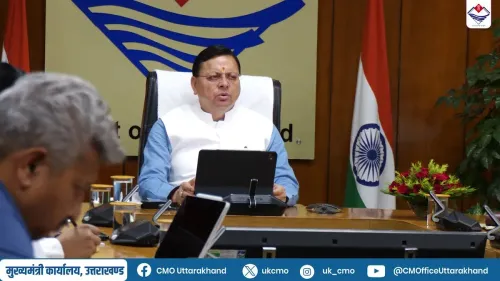
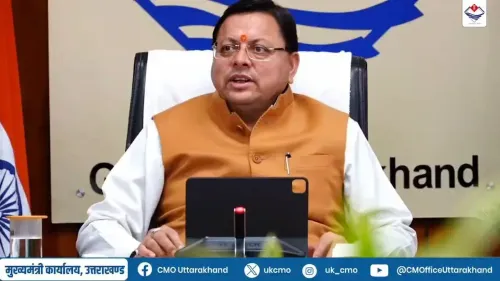
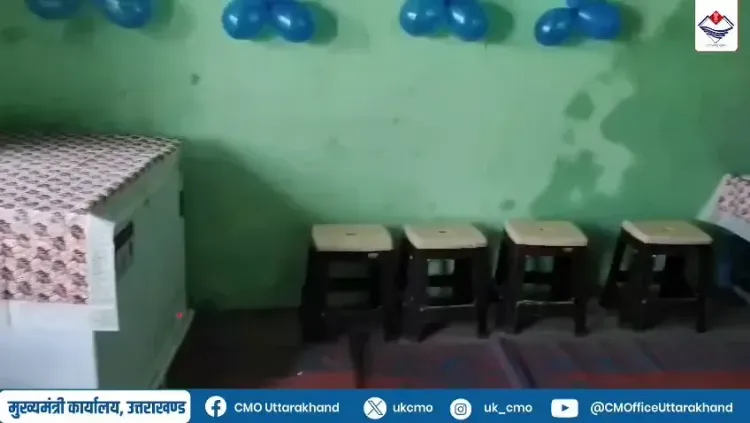
A remote Himalayan village in Pithoragarh district got a concrete economic push on Saturday, 21 November 2026, as a new Dairy Input-Output Centre opened its doors in Gram Panchayat Gurna of Vikas Khand Bin — giving livestock-dependent households a structured channel for milk collection and farm inputs. The Chief Minister's Office of Uttarakhand announced the launch, linking it to the Gramotthan Project and the Himalaya Cluster Level Federation.
A village on Uttarakhand's northern edge, now with a dairy hub
Pithoragarh sits at the trifold border of Uttarakhand, Nepal, and China — high altitude, thin connectivity, and an economy built around smallholder farming and livestock. For generations, village dairy farmers here have faced a familiar double squeeze: limited access to quality animal-feed inputs on one side, and no reliable market outlet for their milk on the other. The new centre directly targets that gap.
Cluster-level federations — networks of self-help groups organised at the block level — are the workhorse mechanism Uttarakhand's rural development programmes use to stitch individual households into a viable economic unit. The Himalaya Cluster Level Federation's involvement here means procurement, input supply, and milk aggregation can function at scale even in a terrain that defeats conventional market logistics.
Gramotthan Project's role in hill-district livelihoods
Uttarakhand governments have periodically invested in small-scale dairy infrastructure across hill districts, recognising that terrain constraints make traditional farming alone an insufficient income base. The Gramotthan Project sits within that longer arc — a rural uplift initiative channelling support through federated structures rather than individual handouts. Vikas Khand Bin in Pithoragarh is among the blocks where this model is now being tested on the ground.
The practical impact is tangible: farmers gain a single point for procuring feed supplements and veterinary inputs at organised rates, and a guaranteed aggregation point for their milk — removing the middleman friction that has historically eroded margins in these villages.
What this signals for Pithoragarh's broader block network
Gurna's dairy centre is a single data point, but the template it represents is replicable. If the federation model delivers measurable income gains, similar centres in other blocks of Pithoragarh — and potentially neighbouring border districts — are the logical next step. The government's public announcement via the official CMO account signals an intent to document and publicise these launches, which typically precedes a wider rollout.
For the households of Gram Panchayat Gurna, the proof will arrive in the milk cans — and the monthly income statements that follow.
Point of View
Making visible government presence in village economies a priority. If the Gramotthan model scales across Bin block and beyond, it could become a replicable template for other Himalayan states grappling with reverse migration and agrarian distress. The real test, however, is operational sustainability once project funding cycles close.
NationPress
21 Nov 2026
Frequently Asked Questions
What is the Dairy Input-Output Centre launched in Pithoragarh?
It is a facility in Gram Panchayat Gurna, Vikas Khand Bin, that gives dairy farmers a single point for procuring animal-feed and veterinary inputs and for aggregating their milk for sale, reducing dependence on middlemen.
What is the Gramotthan Project in Uttarakhand?
Gramotthan is a rural uplift project of the Uttarakhand government that supports livelihood infrastructure in hill districts, often channelling resources through cluster-level federations of self-help groups. Specific financial details are not publicly verified.
What is the Himalaya Cluster Level Federation?
It is a cluster-level federation — a network of self-help groups organised at the block level — that collaborates on input supply and milk collection for dairy farmers in Uttarakhand's Himalayan blocks.
Where is Vikas Khand Bin located?
Vikas Khand Bin is a development block within Pithoragarh district in the Kumaon division of Uttarakhand, close to the Nepal and China borders.
How does the dairy centre help farmers in remote Himalayan villages?
It addresses two chronic problems — lack of affordable inputs like feed supplements and no reliable milk market — by giving smallholder farmers organised access to both through the federation structure.