CM Fadnavis Launches MahDBT 2.0, Maha AI and Digital Governance Push
Synopsis
Chief Minister Devendra Fadnavis launched MahDBT 2.0, the Maha AI model, a Digital Life Certificate system, and a Seva Kendra standardisation drive at Vidhan Bhavan, Mumbai, marking Maharashtra's most ambitious push yet for AI-powered, transparent and citizen-centric governance.
Key Takeaways
MahDBT 2.0 consolidates all Direct Benefit Transfer schemes on a single portal, cutting application form fields from 138 to 66 through auto-population from government data pools.
The Maha AI model , co-developed with the National Informatics Centre , is described as a first-of-its-kind sovereign AI initiative in India, trained on state government data for administrative efficiency and cybersecurity.
The Digital Life Certificate System allows pensioners, senior citizens, and persons with disabilities to submit life certificates from home, eliminating repeated office visits.
Over 31,000 Aaple Sarkar Seva Kendras will be standardised with uniform branding and quality benchmarks, with more than 350 centres to be recognised annually under a new rating system.
CM Fadnavis directed all departments to migrate schemes to MahDBT 2.0 within a fixed deadline, citing reduced corruption and improved transparency in scholarship disbursements.
The Mahasarathi integrated data pool will support future scheme planning, targeted implementation, and elimination of duplicate beneficiaries.
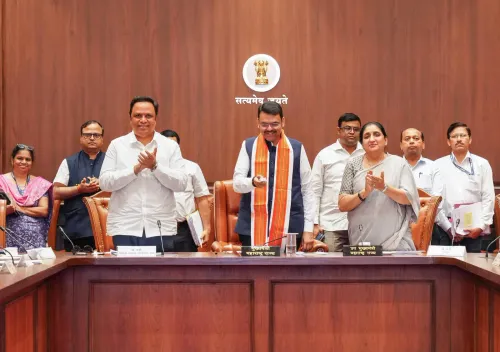
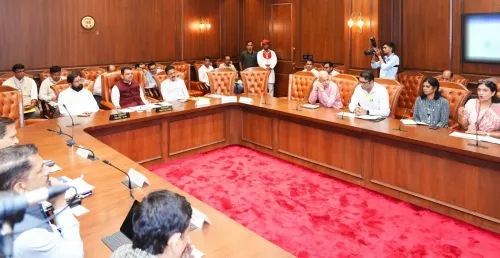
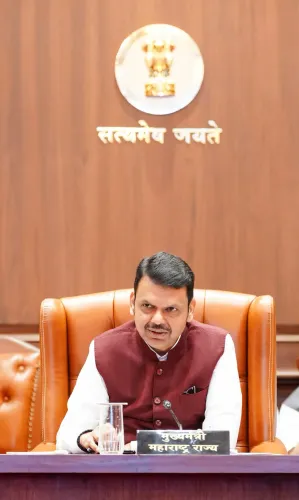
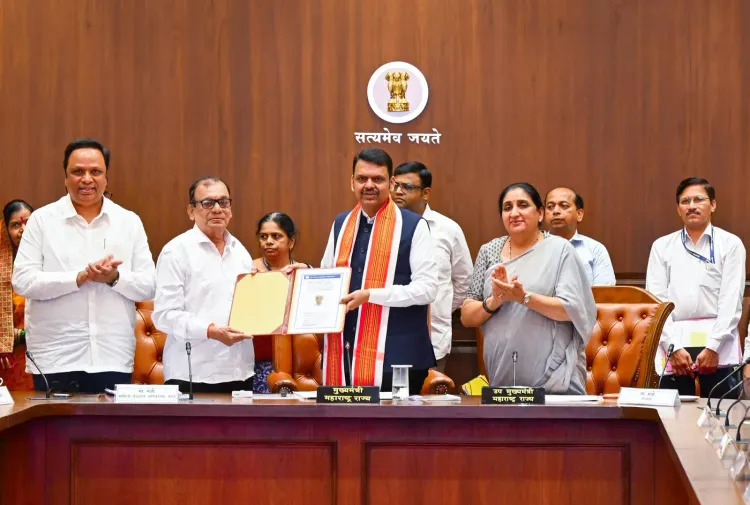
The Chief Minister's Office of Maharashtra announced on Wednesday, 25 June 2026, that Chief Minister Devendra Fadnavis chaired a high-level meeting at Vidhan Bhavan, Mumbai, where the state government launched multiple digital governance initiatives spanning artificial intelligence, direct benefit transfers, and citizen service infrastructure.
The official post stated: 'कृत्रिम बुद्धिमत्ता आणि डिजिटल नवोपक्रमांच्या माध्यमातून लोकाभिमुख, पारदर्शक आणि सक्षम प्रशासन' — 'People-centric, transparent and capable governance through artificial intelligence and digital innovations.' Four major projects were formally launched: MahDBT 2.0, Aaple Sarkar Seva Kendra Standardisation, the Digital Life Certificate System, and the Maha AI Project.
Context
The meeting brought together the state's electronics, information technology, and artificial intelligence departments alongside officials from the National Informatics Centre (NIC). Deputy Chief Minister Sunetra Ajit Pawar and Minister Ashish Shelar were present at the launch. CM Fadnavis described the initiatives as not merely technical upgrades but as 'effective tools to increase people-centricity, transparency, and accountability in governance.' The CM emphasised the integrated data pool built under Mahasarathi, saying it would help 'not only in delivering government schemes to citizens, but also in planning future schemes and implementing them in a targeted manner.' He added that the system would eliminate duplication of beneficiaries, detect misuse of schemes, and ensure eligible citizens receive benefits without obstacles.Policy Backdrop
India's national Direct Benefit Transfer (DBT) framework, launched in 2013, introduced Aadhaar-linked welfare delivery to reduce leakages. Maharashtra built on this with its earlier Aaple Sarkar portal, creating a single-window citizen service network. MahDBT 2.0, developed by the state's Electronics, IT and AI department, consolidates all DBT schemes onto a single portal with a single sign-on, dashboard, and data analytics. Crucially, application form fields have been reduced from 138 to 66, with government data pools auto-populating forms to save citizens time and effort. The CM directed all state departments to migrate their schemes to MahDBT 2.0 within a fixed deadline. He noted that the new DBT system had already improved transparency in scholarship schemes and prevented significant financial loss to the government. 'Once all schemes are on DBT, benefits will reach eligible citizens directly and corruption will be checked,' he said.Stakeholders and Impact
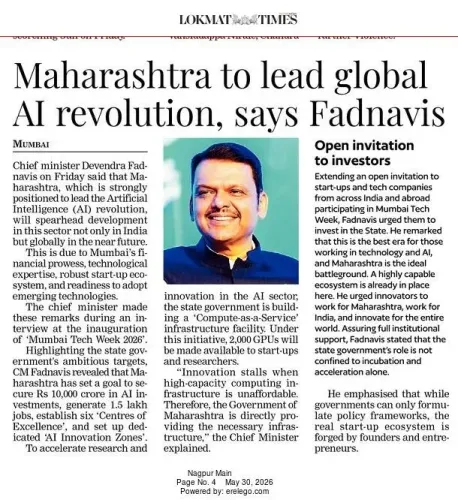
The Digital Life Certificate System, developed by NIC in collaboration with the Social Justice Department, directly benefits senior citizens, pensioners, and persons with disabilities. Beneficiaries will no longer need to visit government offices repeatedly to submit life certificates; the system enables paperless, real-time verification from home, reducing delays in scheme disbursements. The state's 31,000-plus Aaple Sarkar Seva Kendras will be standardised under a new quality framework with uniform branding and service benchmarks. A new 'Smart Aaple Seva Kendra' rating will be introduced, with awards at state, divisional, and district levels. More than 350 centres will be recognised annually to create a competitive environment for service quality improvement. The Maha AI model, co-developed by the state government and NIC, is described as a 'Maharashtra Hub for Advanced Artificial Intelligence' — a first-of-its-kind initiative in the country. CM Fadnavis called data 'the new gold and new oil,' arguing that government data must be processed through a sovereign AI model. He said an AI system trained on its own data would protect the state against future cyber and information security threats, while making administration more responsive and decision-making faster.What's Next
The CM expressed confidence that as agentic AI adoption grows, citizen-facing processes will become even faster and simpler. The immediate priority is ensuring all departments migrate to MahDBT 2.0 within mandated timelines and that officials and employees adopt these systems in their regular workflows. Maharashtra's push to build a sovereign AI model trained on state data signals a broader ambition: to anchor evidence-based policymaking and cybersecurity resilience in a single integrated digital architecture. If the rollout meets its targets, the state could set a replicable model for AI-driven governance across India.Point of View
A sovereign Maha AI model, the Digital Life Certificate system, and Seva Kendra standardisation represents one of the most comprehensive state-level digital governance overhauls in recent years. By reducing application fields from 138 to 66 and mandating department-wide DBT migration, the Fadnavis government is directly attacking the two classic failure points of welfare delivery: exclusion errors and leakages. The decision to build a state-owned AI model trained on government data — rather than relying on commercial platforms — reflects a growing awareness among Indian states about data sovereignty and cybersecurity risk. If implementation keeps pace with the ambition on display, Maharashtra's integrated data-plus-AI architecture could become a reference point for other states seeking to modernise governance without surrendering control of public data.
NationPress
25 Jun 2026
Frequently Asked Questions
What is MahDBT 2.0 and how is it different from the earlier portal?
MahDBT 2.0 is an upgraded single-window portal that consolidates all Direct Benefit Transfer schemes across Maharashtra's departments. It reduces the number of fields a citizen must fill from 138 to 66 by auto-populating information from the government's existing data pool, and adds a single sign-on, a unified dashboard, and Aadhaar-based verification.
What is the Maha AI model and who developed it?
The Maha AI model is an artificial intelligence system co-developed by the Maharashtra state government and the National Informatics Centre (NIC). It is designed to improve administrative efficiency, speed up decision-making, and protect government data from cyber threats by training exclusively on state government data.
How does the Digital Life Certificate system help senior citizens in Maharashtra?
The Digital Life Certificate system allows pensioners, senior citizens, and persons with disabilities to submit their life certificates from home without visiting a government office. The system is paperless, enables real-time verification, and reduces delays in benefit disbursements.
What is the Aaple Sarkar Seva Kendra standardisation plan?
The Maharashtra government will standardise its 31,000-plus Aaple Sarkar Seva Kendras with uniform branding, service quality benchmarks, and a new 'Smart Aaple Seva Kendra' rating. More than 350 centres will be recognised with awards at state, divisional, and district levels each year to encourage quality improvement.
What is Mahasarathi and what role does it play in Maharashtra's governance?
Mahasarathi is an integrated data pool built by the Maharashtra government that aggregates citizen and scheme data across departments. CM Fadnavis said it will help deliver existing schemes more efficiently, plan future schemes, target implementation, eliminate duplicate beneficiaries, and detect misuse of welfare programmes.