Rajasthan women workforce: Industry roundtable calls for collective action in Jaipur
Synopsis
Rajasthan's $350 billion economy ambition has a gender-gap problem. At a Jaipur roundtable on 25 June, officials and industry leaders warned that safety barriers, mobility constraints, and social norms are keeping women out of formal jobs — and that no development target can be met without fixing that first.
Key Takeaways
An Industry Roundtable on women's formal employment was held in Jaipur on 25 June , attended by government, industry, and workforce development representatives.
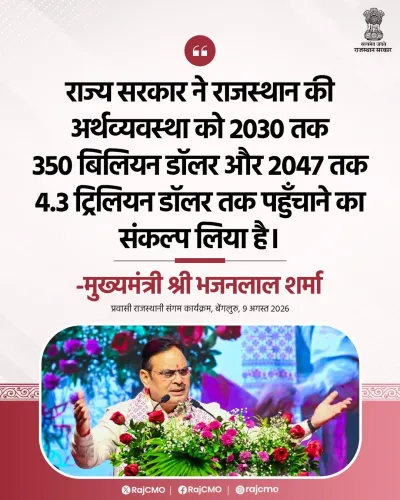
Officials linked Rajasthan's $350 billion economy by 2030 target directly to higher women's labour force participation.
Rajkumar Meena , Joint Director, Rajasthan Directorate of Employment, cited night-shift safety provisions under the labour code and job fairs as near-term enablers.
Rishav Mandal , MD of RSLDC , flagged social and cultural barriers as persistent constraints beyond skill and employment gaps.
The SheWorks initiative by IPE Global and RSLDC is working to link skilling outcomes to paid employment through stronger industry engagement.
Key focus areas include hiring, workplace inclusion, career progression, safety, and retention of women employees.
Industry leaders and government officials in Rajasthan on 25 June called for coordinated, multi-stakeholder action to raise women's participation in formal employment, warning that the state's target of becoming a $350 billion economy by 2030 cannot be achieved without substantially closing the gender gap in the labour market. The observations emerged at an Industry Roundtable on 'Advancing Women's Participation in Formal Employment' held in Jaipur.
Key Developments at the Roundtable
The consultation brought together representatives from industry, government, and workforce development organisations to examine barriers spanning safety, mobility, skilling, and workplace inclusion. Rajkumar Meena, Joint Director at the Rajasthan Directorate of Employment, noted that shifting social perceptions, combined with active policy intervention, were beginning to open new doors for women across sectors.
'Perceptions about women in the workforce are changing over time. The government has introduced several policy and legal measures that are helping increase women's participation across industries,' Meena said.
He specifically cited provisions for women's safety during night shifts under the labour code, as well as ongoing job fairs, as measures that would strengthen women's pathways into formal employment and economic empowerment.
Social and Cultural Barriers Remain a Core Challenge
Rishav Mandal, Managing Director of the Rajasthan Skill and Livelihood Development Corporation (RSLDC), acknowledged that entrenched social and cultural barriers continued to restrict employment choices for women in the state.
'As Rajasthan advances towards its development goals, increasing women's participation in formal employment will require us to address not only skill and employment gaps, but also the social and cultural barriers that often limit women's choices,' Mandal said.
This comes amid broader national data showing that India's female labour force participation rate, while gradually rising, remains among the lower tiers in comparable emerging economies — making state-level interventions like this roundtable particularly significant.
What the SheWorks Initiative Aims to Do
The roundtable also spotlighted the SheWorks initiative, implemented by IPE Global in partnership with RSLDC. The programme aims to strengthen pathways from skilling to paid employment through deeper industry engagement and improved labour market linkages, with a focus on hiring, workplace inclusion, career progression, and retention of women employees.
Rekha Menon, Women's Economic Liberty Lead at IPE Global, argued that women's formal employment was not a peripheral concern but central to the state's growth trajectory.
'Women's participation is central to the state's growth ambitions. Increasing women's participation in formal employment requires collective action to address barriers related to mobility, workplace safety and social norms, and create an enabling ecosystem where more women can access and thrive in quality jobs,' Menon said.
What Comes Next
The roundtable is expected to feed into broader policy discussions as Rajasthan works toward its 2030 economic targets. Officials indicated that job fairs and labour code provisions would be actively leveraged in the near term, while longer-term outcomes will depend on sustained industry commitment to inclusive hiring and retention practices. Whether the momentum from this consultation translates into measurable gains in women's formal employment will be a key indicator for the state's development agenda.
Point of View
And the gap between consultation and measurable outcome is where such initiatives typically stall. The $350 billion economy target gives this discussion a concrete anchor, but targets alone do not move female labour force participation numbers — implementation of night-shift safety norms, last-mile mobility solutions, and verifiable employer commitments do. The SheWorks model of linking skilling to actual job placement is the right structural approach; the question is whether it scales beyond pilot cohorts. Without a public dashboard tracking women's formal employment share in Rajasthan year-on-year, this roundtable risks becoming a well-intentioned event rather than a policy inflection point.
NationPress
23 Sept 2026
Frequently Asked Questions
What was the Jaipur Industry Roundtable on women's employment about?
The roundtable, held on 25 June in Jaipur, brought together government officials, industry representatives, and workforce development organisations to discuss barriers to women's participation in Rajasthan's formal workforce, including safety, mobility, skilling, and workplace inclusion. It was organised as part of efforts to align women's employment with the state's $350 billion economy target by 2030.
Why is women's workforce participation important for Rajasthan's 2030 economy target?
Officials at the roundtable stated that Rajasthan cannot achieve its ambition of becoming a $350 billion economy by 2030 without significantly increasing women's participation in formal employment. Women's economic inclusion was described as central — not peripheral — to the state's overall growth strategy.
What is the SheWorks initiative in Rajasthan?
SheWorks is a programme implemented by IPE Global in partnership with the Rajasthan Skill and Livelihood Development Corporation (RSLDC). It aims to create stronger pathways from skilling to paid employment by deepening industry engagement and improving labour market linkages for women.
What policy measures were cited to support women's formal employment in Rajasthan?
Rajkumar Meena of the Rajasthan Directorate of Employment cited provisions for women's safety during night shifts under the labour code and ongoing job fairs as key government measures aimed at expanding women's access to formal employment opportunities.
Who are the key organisations involved in advancing women's employment in Rajasthan?
The key organisations involved include the Rajasthan Directorate of Employment, the Rajasthan Skill and Livelihood Development Corporation (RSLDC), and IPE Global, which is implementing the SheWorks initiative in partnership with RSLDC to improve women's labour market outcomes in the state.