Mahua Moitra: Only Hindus and BJP voters count as Indians
Synopsis
TMC MP Mahua Moitra on 25 June 2026 posted that Indian citizenship today effectively requires being both Hindu and a BJP voter, sharpening opposition criticism of the CAA-NRC framework and its implications for religious minorities and political opponents across India.
Key Takeaways
TMC MP Mahua Moitra posted on 25 June 2026 that Indian citizenship appears to demand being both Hindu and a BJP voter.
The remark targets the Citizenship (Amendment) Act , passed in December 2019 and operationalised via rules notified in March 2024 .
The NRC update in Assam , published 31 August 2019 , excluded approximately 1.9 million people , fuelling documentation fears nationwide.
The TMC government in West Bengal has refused to implement any NRC exercise within the state.
Supreme Court hearings on the constitutional validity of the CAA rules remain a key watchpoint for the citizenship debate.
Opposition parties argue the CAA-NRC combination creates a de facto religious and political test for Indian citizenship.
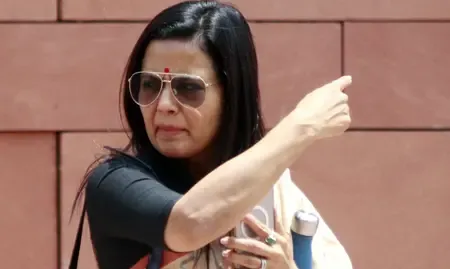
TMC MP Mahua Moitra on Thursday, 25 June 2026, sharply challenged the ruling establishment's approach to citizenship, asserting that the only proof of Indian citizenship today appears to be being both Hindu and a BJP voter. The Krishnanagar MP posted her remarks on X in what amounts to a pointed critique of the intersection of religious identity and political affiliation in citizenship discourse.
Context
Moitra's post states: 'It would seem that the only proof of Indian citizenship today is to be both Hindu and a BJP voter. Nothing else will do.' The remark distils a critique that opposition lawmakers have advanced with increasing frequency — that citizenship-related policy and verification exercises under the current central government apply standards that effectively privilege a specific religious and political identity over others.
The observation comes against the backdrop of an ongoing national debate over who qualifies as a legitimate Indian citizen, a debate that has sharpened since the passage of the Citizenship (Amendment) Act (CAA) in December 2019 and the notification of its rules in March 2024.
Policy Backdrop
The CAA amended the Citizenship Act of 1955 to create a fast-track naturalisation path for non-Muslim migrants from Pakistan, Bangladesh, and Afghanistan who entered India before 2014. Critics, including Moitra and other opposition leaders, have consistently argued that the law's exclusion of Muslims introduces a religious test into citizenship law.
Separately, the National Register of Citizens (NRC) update in Assam, published on 31 August 2019 after a Supreme Court-supervised process, excluded approximately 1.9 million people from the citizens' list. The exercise triggered widespread documentation disputes and intensified fears among minorities and marginalised communities about the prospect of a national NRC rollout.
Together, the CAA and NRC debates have produced what critics describe as a two-track citizenship system — one that appears more accommodating of Hindu migrants while placing heavier documentation burdens on Muslim residents. The Bharatiya Janata Party (BJP), in power nationally since 2014 under PM Narendra Modi, has defended both measures as humanitarian and security-driven rather than religiously motivated.
Stakeholders and Impact
The communities most directly affected by citizenship verification exercises include religious minorities — particularly Muslims — as well as long-settled communities in border states such as West Bengal, Assam, and Bihar, where documentation gaps are common among the rural poor regardless of religion. Opposition parties, civil society groups, and constitutional scholars have flagged that NRC-style processes risk rendering stateless those who cannot produce legacy documents.
For Moitra's own constituency of Krishnanagar in West Bengal, the citizenship question carries electoral as well as humanitarian weight. The state has been a flashpoint in the CAA debate, with the Trinamool Congress (TMC) government under Chief Minister Mamata Banerjee refusing to implement the NRC within the state's borders.
What's Next
Attention will now turn to any fresh state-level moves to prepare NRC-style citizens' lists and to upcoming Supreme Court hearings on the constitutional validity of the CAA rules. The court has admitted petitions challenging the law, and a ruling could reframe the entire citizenship debate. Moitra's intervention signals that opposition pressure on the government's citizenship agenda will continue to intensify, particularly as state elections approach in several politically sensitive regions.
Point of View
The two instruments conflate religious identity with civic belonging. By adding the qualifier 'BJP voter,' she extends the critique beyond religion into partisan territory, suggesting that political loyalty to the ruling party has become an informal prerequisite for uncontested citizenship. This framing is consistent with TMC's broader electoral strategy of positioning itself as the defender of minority and secular rights in West Bengal and nationally. The remark lands at a moment when the Supreme Court's pending review of CAA rules could either validate or fundamentally alter that political calculus.
NationPress
25 Jun 2026
Frequently Asked Questions
What did Mahua Moitra say about Indian citizenship?
Moitra posted on 25 June 2026 that the only proof of Indian citizenship today appears to be being both Hindu and a BJP voter, criticising what she sees as a religious and political test embedded in current citizenship policy.
What is the Citizenship Amendment Act and why is it controversial?
The CAA, passed in December 2019 and operationalised in March 2024, fast-tracks citizenship for non-Muslim migrants from Pakistan, Bangladesh and Afghanistan who arrived before 2014. Critics argue the exclusion of Muslims introduces a religious criterion into Indian citizenship law.
What is the NRC and how many people were excluded in Assam?
The National Register of Citizens is a database of verified Indian citizens. The 2019 Assam NRC update, supervised by the Supreme Court, excluded approximately 1.9 million people, triggering widespread documentation disputes.
What is TMC's position on the NRC?
The Trinamool Congress government in West Bengal, led by Chief Minister Mamata Banerjee, has refused to implement any NRC exercise within the state, arguing it would render millions stateless.
What happens next in the CAA legal challenge?
The Supreme Court has admitted petitions challenging the constitutional validity of the CAA rules. A ruling in those cases could significantly reshape the national citizenship debate and the political arguments both the BJP and opposition parties are making.