Mahua Moitra Calls Amit Shah 'Liar or Incompetent' Over Migrants
Synopsis
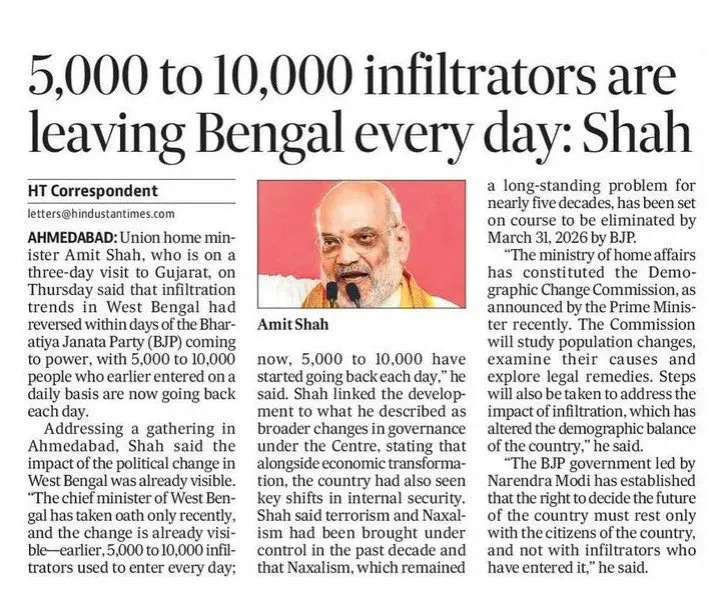
TMC MP Mahua Moitra on 30 May 2026 publicly accused Home Minister Amit Shah of being either dishonest or incompetent on illegal migration, arguing that migrants both entered and are leaving India on his watch — sharpening a long-running opposition challenge to the Home Ministry's border-security credentials.
Key Takeaways
Mahua Moitra , TMC Lok Sabha MP from Krishnanagar, West Bengal , posted a direct attack on Home Minister Amit Shah on 30 May 2026 .
She framed the Home Minister's position as a binary: either he is 'the biggest liar' or 'the most incompetent HM' on the question of migrant entry and exit.
Amit Shah has served as Union Home Minister since May 2019 , overseeing the NRC in Assam and the passage of the CAA , both central to the immigration debate.
Opposition parties, especially those from border states like West Bengal and Assam , have repeatedly challenged the Home Ministry's claims on infiltration control and deportation numbers.
The dispute is expected to resurface in the 2026-27 winter session of Parliament during debates on immigration or deportation legislation.
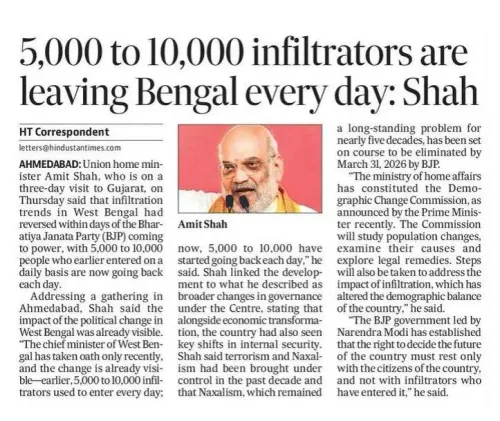
TMC MP Mahua Moitra launched a sharp attack on Union Home Minister Amit Shah on Saturday, 30 May 2026, accusing him of either dishonesty or administrative incompetence over the entry and exit of migrants during his tenure as Home Minister.
Context
Moitra's post was a direct rebuttal to a claim made by the Home Ministry or its supporters regarding migrants — a subject that has long been a flashpoint between the Bharatiya Janata Party (BJP)-led central government and opposition parties, particularly those from border states. Her pointed question — 'They came in on your watch and are leaving on your watch?' — frames the issue as one of executive accountability rather than policy design.
The remark targets Amit Shah, who has served as Union Home Minister since May 2019 and has made border security and immigration enforcement central to his political identity. Moitra's formulation offers a binary verdict: either the Home Minister's claims about migration are false, or his ministry has failed to prevent the very problem it claims to be solving.
Policy Backdrop
The immigration debate in India has been shaped by two landmark interventions under Shah's watch. The National Register of Citizens (NRC) exercise in Assam, completed in 2019, was designed to identify post-1971 illegal entrants, primarily from Bangladesh. In the same year, the Citizenship Amendment Act (CAA) was enacted, providing fast-track citizenship for non-Muslim migrants from Bangladesh, Pakistan, and Afghanistan.
Despite these high-profile legislative and administrative moves, opposition parties have consistently argued that the ground reality on border infiltration has not improved. West Bengal and Assam, both sharing borders with Bangladesh, remain at the centre of this debate, with successive election cycles amplifying charges and counter-charges on illegal migration numbers.
Stakeholders and Impact
The sharpest political stakes lie in West Bengal and Assam, where the identity of border communities and the composition of voter rolls have been contested for decades. Residents of these states, as well as documented and undocumented migrants themselves, are the most directly affected by any policy shift or enforcement failure.
For the BJP, immigration enforcement is a core governance credential — and any suggestion that infiltration continued or worsened under Shah's stewardship is a direct challenge to that narrative. For the TMC and other opposition parties, holding the Home Ministry accountable on this issue serves both a policy purpose and an electoral one, particularly ahead of state-level contests.
Moitra, representing Krishnanagar in West Bengal, has consistently used parliamentary and public platforms to press the Home Ministry on federal and immigration issues. Her post distils a well-worn opposition argument into its sharpest possible form: that the government cannot simultaneously claim credit for deportations and escape blame for arrivals.
What's Next
The exchange is likely to find an echo in the 2026-27 winter session of Parliament, where any proposed immigration or deportation legislation would provide a structured platform for this line of questioning. Opposition members from border states are expected to press the Home Ministry for district-level data on both entries and exits.
Whether the government responds with fresh enforcement figures or deflects the charge will shape the next phase of the immigration accountability debate — a debate that shows no sign of losing political heat ahead of upcoming state elections.
Point of View
Active on deportations — into a logical contradiction, she forces a choice between credibility and competence. The attack lands hardest because it does not dispute the government's data outright but instead uses the government's own framing against it. This pattern of opposition pressure on immigration metrics has intensified as West Bengal and Assam approach electoral cycles, making the Home Ministry's enforcement record a live political liability rather than a settled achievement. Whether Shah responds with granular data or absorbs the charge in silence will signal how confident the government is in its own numbers.
NationPress
14 Oct 2026
Frequently Asked Questions
Why did Mahua Moitra attack Amit Shah on migrants?
Mahua Moitra accused Amit Shah of being either dishonest or incompetent because she argued that migrants both entered and are leaving India during his tenure as Home Minister — undermining the government's claim of effective border control.
What is the NRC and how is it related to this controversy?
The National Register of Citizens (NRC) was completed in Assam in 2019 under the Home Ministry's direction to identify illegal entrants, primarily from Bangladesh. Opposition MPs like Moitra argue the exercise did not resolve the underlying infiltration problem.
How long has Amit Shah been Home Minister of India?
Amit Shah has served as Union Home Minister since May 2019, making him the minister in charge of border security, immigration enforcement, and internal security policy throughout the period in question.
What is Mahua Moitra's political background?
Mahua Moitra is a Lok Sabha MP from Krishnanagar, West Bengal, representing the All India Trinamool Congress (TMC). She is known for frequently challenging the BJP-led central government on immigration, federal, and governance issues.
Will this migrant debate come up in Parliament?
The immigration accountability debate is expected to resurface in the 2026-27 winter session of Parliament, where proposed immigration or deportation legislation could provide a platform for opposition MPs to press the Home Ministry for detailed enforcement data.