CM Fadnavis: Maharashtra Police Act to be Amended to Curb Dance Bar Misuse
Synopsis
Maharashtra CM Devendra Fadnavis declared at the Vidhan Sabha on 30 June 2026 that the Maharashtra Police Act will be amended to close the loophole allowing dance bars to misuse performance licences, signalling a fresh legislative push during the Monsoon Session 2026.
Key Takeaways
CM Devendra Fadnavis announced plans to amend the Maharashtra Police Act to curb misuse of performance licences by dance bars.
The announcement was made from the Vidhan Sabha, Mumbai , on 30 June 2026 during the Monsoon Session 2026 .
The amendment targets a legal loophole where performance licences are allegedly used to bypass restrictions on dance bar operations.
The move is expected to give Mumbai Police and district police clearer statutory authority to act against violating establishments.
The bill is likely to face scrutiny from civil society and potential legal challenges given the long history of dance bar litigation in Maharashtra.
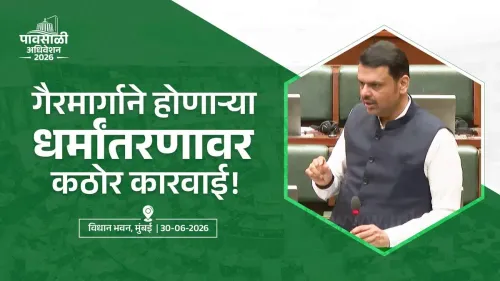
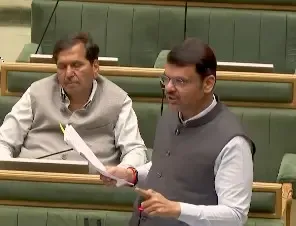
Maharashtra Chief Minister Devendra Fadnavis announced on 30 June 2026 that the Maharashtra Police Act will be amended to prevent dance bars from misusing performance licences. The announcement was made from the floor of the Vidhan Sabha, Mumbai, during the ongoing Monsoon Session 2026.
Context
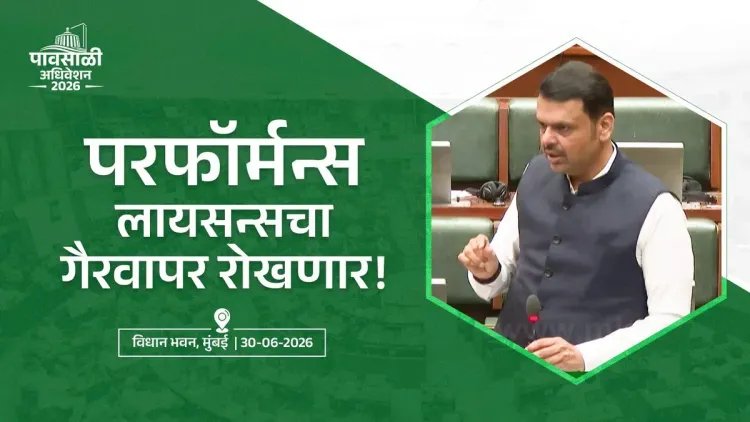
Addressing the state legislature, CM Fadnavis stated — in both English and Marathi — that the government had identified a pattern of performance licences being exploited by dance bar establishments beyond their permitted scope. His statement in Marathi, 'डान्स बारकडून परफॉर्मन्स लायसन्सचा गैरवापर होऊ नये, यासाठी महाराष्ट्र पोलीस अधिनियमात आवश्यक सुधारणा करण्यात येतील' [translated: 'Necessary amendments will be made to the Maharashtra Police Act to prevent dance bars from misusing performance licences'], signals a firm legislative intent. The announcement came during the Monsoon Session of the Maharashtra Vidhan Sabha, a key window for the state government to push legislative business.
Policy Backdrop
Dance bars in Maharashtra have been at the centre of regulatory and legal battles for over two decades. The state has previously enacted and amended legislation — including provisions under the Maharashtra Police Act — to regulate or ban dance performances in bars, with courts periodically intervening on grounds of livelihood rights and personal liberty. The recurring challenge for regulators has been the misuse of broadly worded performance licences to circumvent restrictions that apply specifically to dance bar operations. The proposed amendment targets this legal grey area directly, seeking to tighten the definition and conditions attached to performance licences so they cannot be used as a backdoor by establishments otherwise barred from hosting dance performances.
Stakeholders and Impact
The amendment, once tabled and passed, would directly affect bar and restaurant licence holders in Mumbai and across Maharashtra who currently operate under performance licences. Law enforcement agencies, particularly the Mumbai Police and district police units, would gain clearer statutory authority to act against violators without protracted legal ambiguity. Civil society groups and legal advocates who have historically argued for the rights of bar dancers are likely to scrutinise the amendment's language closely to ensure it does not disproportionately affect legitimate performers or livelihood rights protected under constitutional provisions.
What's Next
The government is expected to introduce the amendment bill in the ongoing Monsoon Session 2026, though a specific tabling date has not been announced. The bill will need to pass both Houses of the Maharashtra Legislature before receiving the Governor's assent. Legal challenges before the Bombay High Court or the Supreme Court of India remain a possibility given the history of litigation around dance bar regulation in the state. If enacted, the amendment would mark the latest chapter in Maharashtra's long effort to bring regulatory clarity to an area that has repeatedly tested the boundary between law enforcement, licensing policy, and fundamental rights.
Point of View
Reflecting the state's ongoing struggle to enforce dance bar restrictions despite repeated court interventions. By framing the reform around licence misuse rather than an outright ban, the government appears to be threading a needle — tightening enforcement while pre-empting the constitutional challenges that have historically unravelled broader prohibitions. The announcement on the Vidhan Sabha floor during the Monsoon Session signals urgency and political will, but the real test will be in the amendment's precise language. If the bill passes, it could set a precedent for how Maharashtra — and potentially other states — use licensing law as a more durable regulatory tool in place of blunt prohibitions.
NationPress
30 Jun 2026
Frequently Asked Questions
Why is Maharashtra amending the Police Act for dance bars?
The Maharashtra government is amending the Maharashtra Police Act to close a loophole where dance bars misuse performance licences to operate in ways that are otherwise restricted by law. CM Devendra Fadnavis made this announcement at the Vidhan Sabha on 30 June 2026.
What is a performance licence in the context of dance bars in Maharashtra?
A performance licence in Maharashtra permits establishments to host live performances. Dance bars have allegedly been using these broadly worded licences to circumvent specific restrictions on dance bar operations, which the proposed amendment aims to prevent.
When will the Maharashtra Police Act amendment be introduced?
The amendment is expected to be introduced during the ongoing Monsoon Session 2026 of the Maharashtra Legislature, though a specific date for tabling the bill has not been announced.
How does this affect dance bars in Mumbai?
If passed, the amendment would restrict how dance bars in Mumbai and across Maharashtra can use performance licences, giving police clearer legal authority to act against establishments that exploit the current regulatory ambiguity.
Has Maharashtra tried to regulate dance bars before?
Yes, Maharashtra has a long history of attempting to regulate or ban dance bars through legislation and executive action, with courts — including the Bombay High Court and the Supreme Court — periodically intervening on grounds of livelihood and fundamental rights.