CM Fadnavis marks 12 years of Make in India
Synopsis
Maharashtra Chief Minister Devendra Fadnavis marked the 12th anniversary of Make in India on 25 September 2026, praising PM Modi's initiative for positioning India as a global manufacturing hub and linking it to the Atmanirbhar Bharat self-reliance drive.
Key Takeaways
Make in India was launched by PM Narendra Modi on 25 September 2014 and marks its 12th anniversary in 2026.
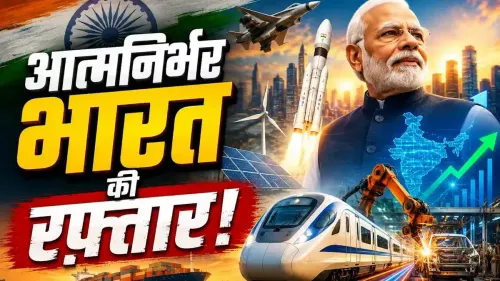
CM Devendra Fadnavis hailed the programme as having transformed India into 'a global manufacturing powerhouse.' The post linked Make in India to Atmanirbhar Bharat , the self-reliance campaign announced in May 2020 .
Maharashtra is among India's leading states for industrial investment, giving Fadnavis's tribute added political and economic weight.
The anniversary comes as India actively courts global manufacturers diversifying supply chains across sectors including electronics and green energy.
Twelve years after Prime Minister Narendra Modi unveiled the lion logo on a September evening in 2014, Maharashtra Chief Minister Devendra Fadnavis marked the anniversary of Make in India on Friday, 25 September 2026, calling the programme a transformation of India into 'a global manufacturing powerhouse.'
From a 2014 launch to a 12-year milestone
Make in India was launched by PM Modi on 25 September 2014 with the explicit goal of raising manufacturing's share of India's GDP, attracting foreign direct investment, and generating large-scale employment. The programme adopted a roaring lion — assembled from India's national emblem — as its instantly recognisable symbol, and targeted 25 key sectors ranging from defence and aerospace to textiles and automobiles.
Fadnavis, posting on X with the hashtag #12YearsOfMakeInIndia, invoked both the initiative's original ambition and the Atmanirbhar Bharat campaign — announced by Modi in May 2020 — which deepened the push for domestic production and reduced import dependence. 'The lion continues to roar louder,' he wrote, blending the programme's mascot with a wider assertion of industrial momentum.
Maharashtra's stake in the manufacturing story
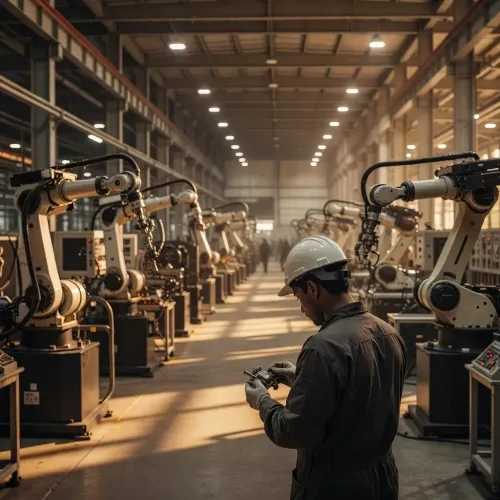
Maharashtra has consistently ranked among India's top destinations for industrial investment, making Fadnavis's voice on this anniversary particularly weighted. The state hosts major manufacturing clusters in Pune, Nashik, and Aurangabad, and has been an active participant in sector-specific incentive schemes that dovetail with the Make in India framework.
The Chief Minister's post arrives as the central government continues to court global electronics, semiconductor, and green-energy manufacturers — sectors where India is positioning itself to absorb supply chains diversifying away from other Asian hubs. For Maharashtra, that pipeline represents both jobs and revenue.
Atmanirbhar Bharat: the self-reliance layer
The pairing of Make in India with Atmanirbhar Bharat in Fadnavis's tribute reflects how official messaging has evolved over the decade. Where Make in India was primarily outward-facing — a pitch to global investors — Atmanirbhar Bharat added an inward dimension: building domestic capacity so that critical industries are less exposed to global supply shocks. Together, the two programmes have framed India's industrial policy narrative since 2020.
Twelve years in, the anniversary is as much a political stocktaking as an economic one — a moment for the ruling party to claim credit for a direction of travel, even as the debate over precise manufacturing-sector outcomes continues.
For a programme whose lion was meant to signal strength from the start, the question now is whether the roar translates into the kind of GDP-share numbers that would make the anniversary truly definitive.
Point of View
Continuous industrial-policy arc rather than two distinct initiatives. As India pitches itself as an alternative manufacturing hub to global investors, such coordinated messaging from state-level leaders reinforces the centre's foreign-investment narrative. The real test, however, remains whether manufacturing's share of GDP has moved meaningfully in twelve years — a number the BJP will need to own as the anniversary invites independent scrutiny.
NationPress
25 Sept 2026
Frequently Asked Questions
When was Make in India launched?
Make in India was launched by Prime Minister Narendra Modi on 25 September 2014 , making 2026 its 12th anniversary.
What is the goal of Make in India?
The programme aims to position India as a global manufacturing destination by attracting foreign investment, raising manufacturing's share of GDP, and generating large-scale employment across 25 key sectors .
What is Atmanirbhar Bharat and how is it related to Make in India?
Atmanirbhar Bharat ('Self-reliant India') was announced by PM Modi in May 2020 to promote domestic production and reduce import dependence. It builds on Make in India by adding an inward-facing self-reliance dimension to the original outward-facing investment pitch.
Why did Devendra Fadnavis post about Make in India?
CM Devendra Fadnavis posted on 25 September 2026 to mark the 12th anniversary of the initiative, praising PM Modi's leadership and calling India a 'global manufacturing powerhouse.'
What is Maharashtra's role in Make in India?
Maharashtra is one of India's top industrial investment destinations, home to major manufacturing clusters in Pune , Nashik , and Aurangabad , making it a key state in the Make in India story.