CM Fadnavis Marks Emergency 1975 as India's Dark Democratic Day

Synopsis
Maharashtra Chief Minister Devendra Fadnavis marked the 51st anniversary of the 1975 Emergency on 25 June 2026, calling it a dark day when India's constitutional freedoms were suspended. His post, in English and Marathi, aligned with the BJP's annual Samvidhan Hatya Diwas observance, keeping the Emergency's political memory in active public discourse.
Key Takeaways
Devendra Fadnavis , Chief Minister of Maharashtra, posted on 25 June 2026 marking the 51st anniversary of the 1975 Emergency.
He described the Emergency as 'a dark day' when 'constitutional freedoms were suspended and democratic rights were suppressed.' The post was bilingual — English and Marathi — and carried hashtags #SamvidhanHatyaDiwas and #DarkDaysOfEmergency .
The national Emergency was proclaimed by Indira Gandhi on 25 June 1975 and lasted 21 months , until 21 March 1977 .
The BJP has formally designated 25 June as Samvidhan Hatya Diwas , making annual commemorations a structured part of the party's political calendar.
Statements from other national parties and possible parliamentary references to Emergency-era amendments are expected around the anniversary.
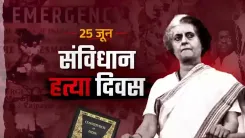
Maharashtra Chief Minister Devendra Fadnavis on Thursday, 25 June 2026, marked the 51st anniversary of the 1975 Emergency by calling it a dark chapter in independent India's history when constitutional freedoms were suspended and democratic rights were suppressed. The post, shared on X in both English and Marathi, carried hashtags including #SamvidhanHatyaDiwas (Samvidhan Hatya Diwas — Constitution Murder Day) and #DarkDaysOfEmergency.
Context
Fadnavis wrote: 'Emergency 1975, a dark day in independent India's history, when constitutional freedoms were suspended, and democratic rights were suppressed.' In Marathi, he described it as 'लोकशाहीचे घटनात्मक अधिकार गोठवून, भारतीयांची गळचेपी करणारा काळा दिवस' — 'a black day that froze the constitutional rights of democracy and throttled Indians.' The dual-language post underscores the anniversary's resonance across Maharashtra's political and civic landscape.
The national Emergency was proclaimed by then Prime Minister Indira Gandhi on 25 June 1975, citing internal disturbance, and remained in force until 21 March 1977 — a period of 21 months during which civil liberties were curtailed, the press was censored, and thousands of political opponents were detained without trial. Fundamental rights guaranteed under the Constitution of India were effectively suspended for the duration.
Policy Backdrop
The BJP has formally designated 25 June as Samvidhan Hatya Diwas — Constitution Murder Day — making annual commemorations a structured part of the party's political calendar. The framing positions the 1975–1977 Emergency as a definitive instance of Congress-led authoritarianism and contrasts it with the party's stated commitment to constitutional democracy.
Fadnavis's post carries the hashtag #संविधान_हत्या_दिवस, aligning squarely with this national BJP observance. As Chief Minister of Maharashtra — India's most populous and economically significant state — his voice amplifies the commemoration well beyond party circles, lending it the weight of a sitting head of government.
Stakeholders and Impact
The anniversary resonates with opposition leaders, journalists, and civil liberties activists who mark it as a reminder of the fragility of democratic institutions. Press freedom organisations have historically used the date to highlight the dangers of executive overreach, given that the Emergency period saw sweeping pre-censorship of Indian newspapers.
For the Congress party, the date is politically sensitive — the Emergency remains one of the most contested episodes in its legacy. Annual BJP commemorations, particularly from prominent state leaders like Fadnavis, keep the episode in active public discourse ahead of electoral cycles and parliamentary sessions.
What's Next
Statements from other national and regional parties are expected through the day as the 25 June anniversary draws its customary round of political commentary. Parliament, when in session around this date, has periodically seen references to Emergency-era constitutional amendments, and legislators across party lines may invoke the occasion in floor speeches or social media outreach.
The sustained institutionalisation of Samvidhan Hatya Diwas by the BJP signals that the Emergency's political memory will continue to be actively contested — making each anniversary a marker not just of history, but of the living fault lines between India's two largest national parties.
Point of View
He signals that this is not merely a national party message but one calibrated for Maharashtra's electorate. The institutionalisation of Samvidhan Hatya Diwas transforms what was once a reactive critique into a proactive annual ritual, giving the BJP a recurring opportunity to frame constitutional guardianship as its own identity. As long as the Emergency remains a live political fault line, such commemorations will function as much as forward-looking electoral messaging as they do historical remembrance.
NationPress
25 Jun 2026
Frequently Asked Questions
What was the 1975 Emergency in India?
The 1975 Emergency was a 21-month period from 25 June 1975 to 21 March 1977 when Prime Minister Indira Gandhi suspended civil liberties and constitutional provisions, citing internal disturbance. Fundamental rights were curtailed, the press was censored, and thousands of political opponents were detained.
What is Samvidhan Hatya Diwas?
Samvidhan Hatya Diwas, meaning 'Constitution Murder Day,' is the name the BJP has given to 25 June to mark the anniversary of the 1975 Emergency proclamation. It is observed annually as a reminder of what the party describes as Congress-led authoritarianism.
Why did Devendra Fadnavis post about the 1975 Emergency?
Fadnavis posted on 25 June 2026 — the 51st anniversary of the Emergency proclamation — as part of the BJP's annual Samvidhan Hatya Diwas observance, calling the period a dark day when constitutional freedoms and democratic rights were suppressed.
Who proclaimed the 1975 Emergency in India?
Prime Minister Indira Gandhi proclaimed the national Emergency on 25 June 1975, citing internal disturbance. It remained in force for 21 months until 21 March 1977.
What does the hashtag SamvidhanHatyaDiwas mean?
SamvidhanHatyaDiwas translates from Hindi/Marathi as 'Constitution Murder Day.' It is used by the BJP and its leaders to mark 25 June as the day the 1975 Emergency suspended the constitutional rights of Indian citizens.