CM Fadnavis Marks Organ Donation Day, Urges Maharashtra to Pledge
Synopsis
On International Organ Donation Day, 13 August 2026, Maharashtra Chief Minister Devendra Fadnavis urged citizens to pledge their organs, calling donation the supreme gift of life. India faces a persistent gap between organ demand and supply, making awareness drives a critical public-health lever.
Key Takeaways
International Organ Donation Day is observed annually on 13 August to promote voluntary organ donation worldwide.
CM Devendra Fadnavis posted a bilingual appeal in English and Marathi, calling organ donation 'the supreme gift of life.' India's Transplantation of Human Organs Act (1994, amended 2011) provides the legal framework for voluntary organ donation and transplantation.
Maharashtra has run periodic public awareness drives aligned with the National Organ and Tissue Transplant Organisation (NOTTO) framework.
India's organ demand significantly outpaces supply, making political and community-level awareness campaigns a key tool for closing the gap.
Every year, hundreds of thousands of Indians wait for an organ that may never come. On International Organ Donation Day, 13 August 2026, Maharashtra Chief Minister Devendra Fadnavis used the occasion to call on citizens to embrace what he described as the highest form of giving — the gift of life itself.
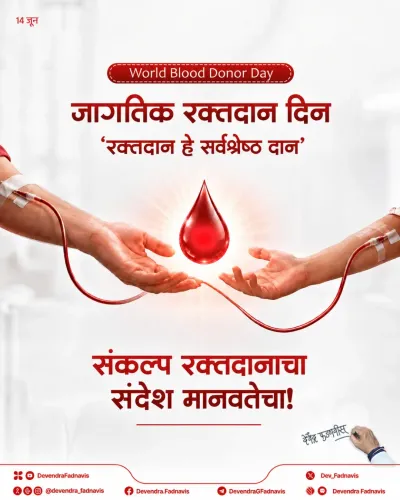
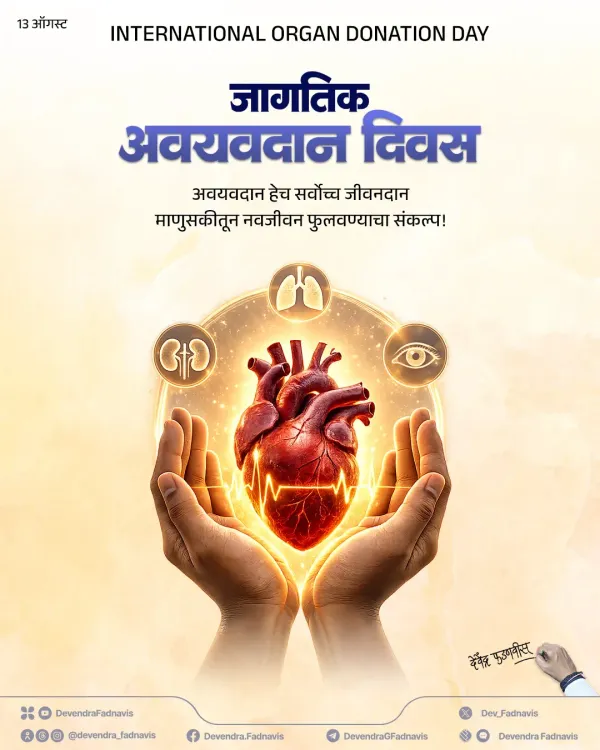
Posting in both English and Marathi, Fadnavis wrote: 'अवयवदान हेच सर्वोच्च जीवनदान; माणुसकीतून नवजीवन फुलवण्याचा संकल्प!' — 'Organ donation is the supreme gift of life; a resolve to nurture new life through humanity.' The message, framed around hope and a second chance, landed on a day the world sets aside to spotlight a quiet, persistent crisis.
A Gap That Costs Lives Every Day
India's demand for transplantable organs far outpaces supply — a structural imbalance that has persisted for decades despite legislative and administrative action. The Transplantation of Human Organs Act, 1994, amended in 2011, created a legal framework for voluntary donation and organ retrieval, and established the National Organ and Tissue Transplant Organisation (NOTTO) as the coordinating body. Yet awareness and registration rates remain low relative to the scale of need.
Maharashtra has periodically run public drives and registration campaigns aligned with the NOTTO framework. International Organ Donation Day, observed every 13 August, serves as a focal point for these efforts — a moment when state and national voices amplify the ask that doctors and patient families make year-round.
Why a Chief Minister's Voice Matters Here
Organ donation decisions are deeply personal, often made by grieving families in the hardest hours. Public figures who speak plainly and repeatedly about donation normalise the conversation — research in public health consistently links political and community leadership to higher registration intent. A Chief Minister addressing his state on this day is not ceremony for its own sake. It is a nudge at scale, reaching millions who may never have considered pledging their organs.
The gap between those who need organs and those who donate remains one of India's most solvable public-health challenges — solvable not through new technology, but through awareness, trust, and a shift in social norms. Fadnavis's message, however brief, is a small push in that direction.
Point of View
High-visibility form of public communication. The organ donation gap in India is fundamentally a trust and awareness problem, which makes political messaging genuinely useful, not merely symbolic. For Maharashtra, a state with urban hospital infrastructure capable of supporting transplant programmes, sustained leadership attention could translate into measurable registration gains. The real test will be whether this day's appeal is followed by concrete state-level action — registration drives, hospital protocol upgrades, or family counselling initiatives.
NationPress
13 Aug 2026
Frequently Asked Questions
When is International Organ Donation Day?
International Organ Donation Day is observed every year on 13 August to raise global awareness about the importance of voluntary organ donation.
What did CM Devendra Fadnavis say on Organ Donation Day 2026?
Maharashtra Chief Minister Devendra Fadnavis posted a bilingual message calling organ donation 'the supreme gift of life' and urged citizens to resolve to give new life through humanity, using the occasion of International Organ Donation Day on 13 August 2026 .
What is India's law on organ donation?
India's organ donation and transplantation is governed by the Transplantation of Human Organs Act, 1994 , which was amended in 2011 to strengthen voluntary donation norms and establish the National Organ and Tissue Transplant Organisation (NOTTO) as the national coordinating body.
How can I register as an organ donor in Maharashtra?
Citizens can register as organ donors through the NOTTO (National Organ and Tissue Transplant Organisation) portal or through state health department registration drives. Maharashtra periodically runs public campaigns aligned with NOTTO to encourage sign-ups.
Why is organ donation awareness important in India?
India faces a significant gap between the number of patients waiting for organ transplants and the number of available donors. Awareness campaigns and political leadership are considered key tools for increasing voluntary donation rates and saving lives.