CM Fadnavis meets Amit Shah, seeks NDRF aid for drought-hit Maharashtra
Synopsis
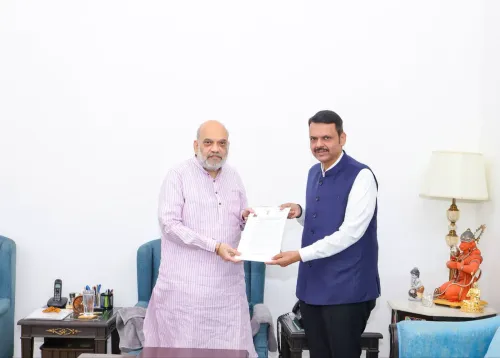
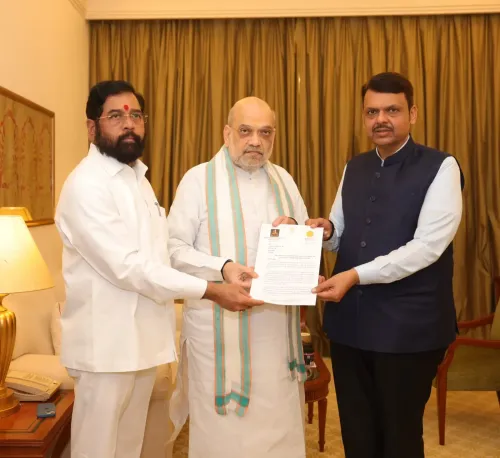
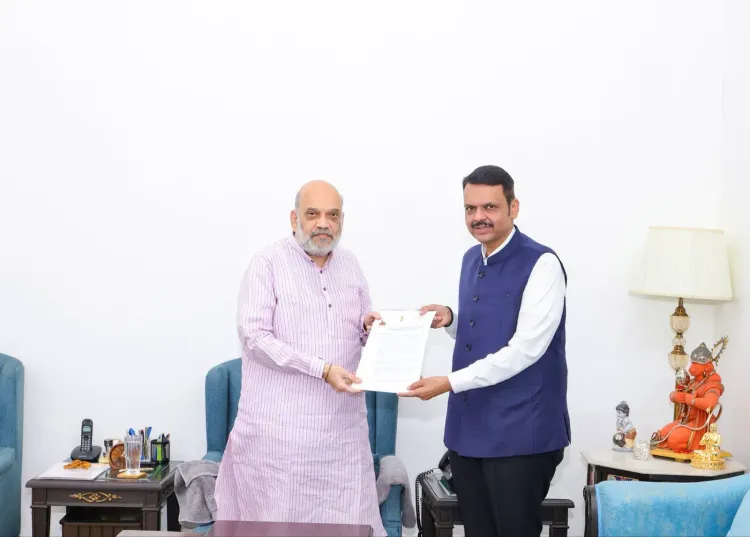
Maharashtra CM Devendra Fadnavis met Union Home Minister Amit Shah in New Delhi on October 7, 2026, presenting a state memorandum on drought conditions across 265 tehsils and requesting maximum NDRF assistance. Shah assured full Central support and confirmed a government survey team will assess conditions from October 8 to 11.
Key Takeaways
265 tehsils in Maharashtra have been officially declared drought-affected.
CM Devendra Fadnavis met Union Home Minister Amit Shah in New Delhi on October 7, 2026 .
Maharashtra submitted a formal memorandum requesting maximum financial aid through the NDRF (National Disaster Response Fund) .
Amit Shah assured maximum possible assistance from the Central government to Maharashtra.
A Central government team will visit Maharashtra from October 8 to 11 to conduct an on-ground drought assessment.
The state government has already activated multiple drought-relief schemes while awaiting Central funds.
New Delhi, October 7, 2026 — With 265 tehsils across Maharashtra officially under drought declaration and relief machinery already stretched, Maharashtra Chief Minister Devendra Fadnavis flew to the capital today to knock on the highest door available — Union Home Minister Amit Shah.
Fadnavis met Shah in New Delhi on Wednesday, October 7, presenting a formal memorandum from the state government and walking the minister through the scale of the crisis — which tehsils are worst hit, what relief measures are already running on the ground, and exactly how much more the state needs from the Centre.
265 tehsils dry, state government already in relief mode
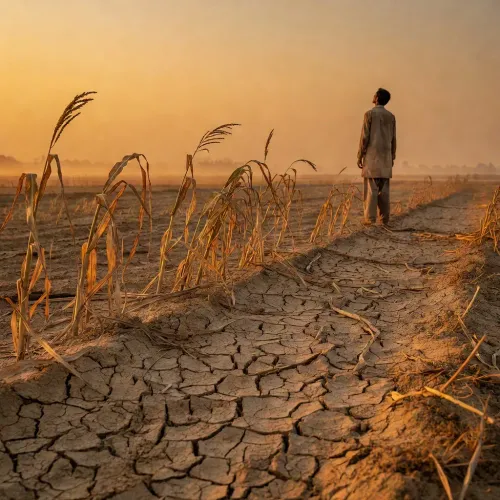
The number tells its own story: 265 tehsils — a substantial swath of Maharashtra — have been formally declared drought-affected. The state government has activated multiple drought-relief schemes, but a crisis of this breadth demands federal resources that state coffers alone cannot cover. That is the arithmetic Fadnavis carried into Shah's office.
The CM's core ask was targeted and specific: maximum financial assistance channelled through the National Disaster Response Fund (NDRF). The NDRF is the primary central mechanism for compensating states facing natural calamities, and tapping it is both a fiscal lifeline and a formal recognition that a disaster has crossed the threshold requiring national-level intervention.
Shah's assurance and a Central team en route to Maharashtra
The meeting, by Fadnavis's own account, yielded two concrete outcomes. First, Shah assured the Chief Minister that the Centre would provide 'adhiktam sahayata' — maximum possible assistance — to Maharashtra. Second, and more immediately actionable, Shah confirmed that a Central government assessment team will visit Maharashtra between October 8 and 11 to conduct an on-ground survey of drought conditions.
That four-day field inspection is the procedural step that typically precedes a formal NDRF release. Central teams visit, verify, and submit reports that form the basis for fund allocation. The clock, in other words, has started.
Fadnavis expressed gratitude for the assurance, posting on X (formerly Twitter): 'Kendra sarkar mazbutine Maharashtrachya sobat rahil' — the Centre will stand firmly with Maharashtra.
Why timing matters for farmers and administrators
Drought declarations and NDRF disbursements are time-sensitive in ways that go beyond politics. Kharif harvest assessments, cattle-camp setups, water-tanker deployments, and job-guarantee scheme activations all require confirmed funding lines. Districts waiting on Central funds cannot commit to full-scale relief operations on expectation alone. The Central team's October 8–11 visit, followed by its report, will determine how quickly money moves and how many of those operations get the green light.
For the 265 tehsils under drought, those days matter enormously.
Point of View
Which also has electoral optics in a BJP-ruled state where farmer welfare is a persistent flashpoint. How quickly the NDRF disbursement follows the October 8–11 assessment will be the real test of whether the assurances translate into timely relief.
NationPress
7 Oct 2026
Frequently Asked Questions
How many tehsils in Maharashtra have been declared drought-affected in 2026?
265 tehsils across Maharashtra have been officially declared drought-affected, according to CM Devendra Fadnavis's statement after his meeting with Union Home Minister Amit Shah on October 7, 2026.
What is NDRF and why is Maharashtra seeking funds from it?
The National Disaster Response Fund (NDRF) is the Central government's primary mechanism for providing financial assistance to states hit by natural calamities. Maharashtra is seeking NDRF funds because the drought spanning 265 tehsils exceeds what state resources alone can address.
When will the Central government team visit Maharashtra to assess the drought?
A Central government survey team is scheduled to visit Maharashtra between October 8 and 11, 2026 to conduct an on-ground assessment of drought conditions, as confirmed by Union Home Minister Amit Shah.
What did Amit Shah promise Maharashtra regarding drought relief?
Union Home Minister Amit Shah assured Maharashtra CM Devendra Fadnavis that the Centre would provide maximum possible assistance through the NDRF and that the Central government would stand firmly with Maharashtra.
What relief measures has Maharashtra already taken for the drought?
The Maharashtra state government has activated multiple drought-relief schemes across the affected tehsils. CM Fadnavis briefed Amit Shah on these ongoing measures during their meeting in New Delhi on October 7, 2026 .