CM Fadnavis: MRDP Milestone for Kolhapur-Sangli Floods
Synopsis
Maharashtra CM Devendra Fadnavis announced on 27 July 2026 that the state and the World Bank have completed preparatory processes for the ₹3,200 crore Maharashtra Resilience Development Program, aimed at permanently addressing flooding in Kolhapur, Sangli, and Ichalkaranji through river capacity upgrades and improved drainage.
Key Takeaways
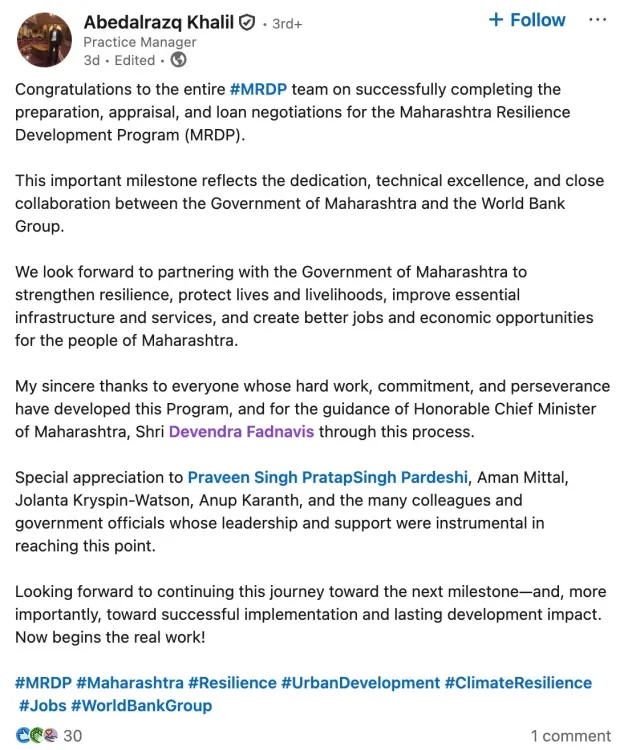
Maharashtra CM Devendra Fadnavis announced on 27 July 2026 that preparatory processes for the MRDP have been successfully completed jointly with the World Bank .
The Maharashtra Resilience Development Program (MRDP) carries a budget of ₹3,200 crore and targets long-term flood control in Kolhapur , Sangli , and Ichalkaranji .
The project will increase water storage capacity and enhance the carrying capacity of the Krishna and Panchganga rivers, alongside strengthening stormwater drainage systems.
The initiative was facilitated through the Department of Economic Affairs , with support from PM Narendra Modi and Finance Minister Nirmala Sitharaman .
Western Maharashtra has faced repeated severe flooding, most notably in 2019 , driving demand for a permanent engineering-based solution in the region.
Next steps include tendering, land acquisition, and construction phases subject to periodic World Bank disbursement and progress reviews.
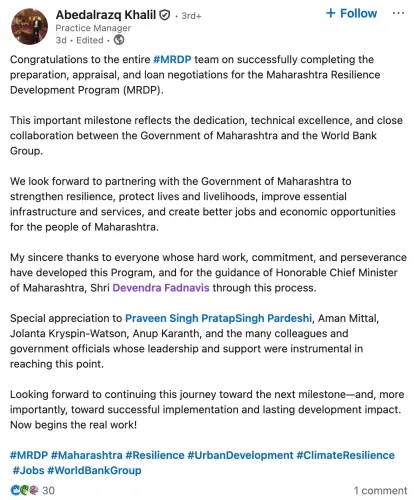
Maharashtra Chief Minister Devendra Fadnavis announced on Monday, 27 July 2026 that the state government and the World Bank have successfully completed the preparatory processes under the Maharashtra Resilience Development Program (MRDP), marking a significant step toward a permanent solution to chronic flooding in Kolhapur, Sangli, and Ichalkaranji.
Context
Posting in Marathi on X, Chief Minister Fadnavis said he was 'pleased to share' that the Maharashtra government and the World Bank have jointly completed the necessary preparations and procedures under the MRDP. The ₹3,200 crore project, he stated, 'will be a major step toward building a long-term flood control system' for the three cities. He thanked Prime Minister Narendra Modi, Union Finance Minister Nirmala Sitharaman, the Department of Economic Affairs of the Government of India, and the World Bank for their cooperation in realising this 'transformative initiative.'
Western Maharashtra's Krishna and Panchganga river basins have been battered by severe monsoon flooding repeatedly over the past decade. The 2019 floods in particular caused widespread devastation across Kolhapur and Sangli districts, displacing hundreds of thousands of residents and destroying standing crops, prompting sustained demands from the state for a durable, engineered solution.
Policy Backdrop
The MRDP is a state-World Bank partnership designed to address flood vulnerability through a combination of increased water storage capacity, enhanced carrying capacity of the Krishna and Panchganga rivers, and stronger stormwater drainage infrastructure. The project aligns with the World Bank's broader portfolio of urban resilience and disaster management financing in India, which spans multiple states and has been active since the early 2000s.
Such multilateral infrastructure projects in India are routed through the Department of Economic Affairs under the Union Finance Ministry, which negotiates and administers World Bank loan agreements on behalf of state governments. Chief Minister Fadnavis's acknowledgement of Finance Minister Nirmala Sitharaman and the DEA reflects this standard institutional pathway. Maharashtra has increasingly pursued such partnerships to address climate-linked flood risks that state budgets alone cannot absorb.
Stakeholders and Impact
The primary beneficiaries of the MRDP are the flood-affected residents of Kolhapur, Sangli, and Ichalkaranji — densely populated urban and peri-urban areas where annual inundation disrupts livelihoods, damages property, and strains public health infrastructure. Western Maharashtra farmers, whose agricultural land along the river floodplains is routinely submerged during heavy monsoon spells, also stand to benefit from improved river carrying capacity and drainage systems.
The ₹3,200 crore outlay represents one of the larger multilateral-funded resilience investments in the state in recent years. Improved stormwater drainage and river management infrastructure could reduce the frequency and severity of flood events that have historically required large-scale state relief operations and central disaster relief fund disbursements.
What's Next
With preparatory and procedural milestones now reported as complete, the focus shifts to the tendering, land acquisition, and construction phases of the MRDP. The World Bank typically structures such financing with periodic disbursement tranches tied to verified progress benchmarks, meaning the state government will be subject to ongoing implementation reviews. The credibility of the programme will ultimately be tested by the pace and quality of on-ground execution before the next monsoon cycle places the Krishna-Panchganga basin under pressure again.
Point of View
Who has long faced pressure from western Maharashtra constituencies over the state's failure to deliver a durable flood solution after the catastrophic 2019 inundations. By securing World Bank financing and completing procedural groundwork, the BJP-led government can credibly claim forward movement on an issue that cuts across party lines in Kolhapur and Sangli — both historically competitive districts. The explicit acknowledgement of PM Modi and Finance Minister Sitharaman signals a deliberate effort to share credit with the Centre, reinforcing the coalition narrative of cooperative federalism. The harder test, however, will be execution speed: multilateral-funded infrastructure projects in India have a mixed record on timelines, and flood-affected communities will measure success by outcomes on the ground, not preparatory milestones.
NationPress
27 Jul 2026
Frequently Asked Questions
What is the Maharashtra Resilience Development Program (MRDP)?
The Maharashtra Resilience Development Program (MRDP) is a ₹3,200 crore state-World Bank initiative aimed at building long-term flood control infrastructure in Kolhapur, Sangli, and Ichalkaranji by increasing river carrying capacity, water storage, and stormwater drainage systems.
Why do Kolhapur and Sangli face recurring floods?
Kolhapur and Sangli lie along the Krishna and Panchganga rivers in western Maharashtra, which overflow during heavy monsoon rainfall. River siltation, inadequate drainage, and climate variability have worsened flooding over the years, with the 2019 floods being particularly severe.
What is the role of the World Bank in the MRDP?
The World Bank is a co-partner in the MRDP, providing multilateral financing for the project. Such loans are administered through India's Department of Economic Affairs and come with periodic disbursement tied to verified implementation progress.
What did CM Devendra Fadnavis announce about the MRDP on 27 July 2026?
CM Fadnavis announced that the Maharashtra government and the World Bank have successfully completed the necessary preparatory processes and procedures for the MRDP, marking a key milestone toward launching the ₹3,200 crore flood mitigation project.
Who approved the MRDP and what is the next step?
The MRDP was facilitated with support from PM Narendra Modi, Finance Minister Nirmala Sitharaman, and the Department of Economic Affairs. The next steps involve tendering, land acquisition, and the construction phase of the project.