CM Fadnavis pays tribute at Hutatma Smarak on Martyrs' Day
Synopsis
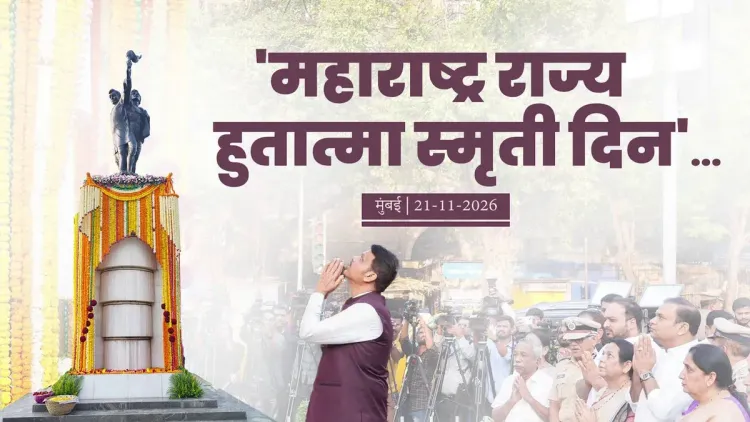
Maharashtra Chief Minister Devendra Fadnavis paid his respects at the Hutatma Smarak in Mumbai on Hutatma Smruti Din, honouring the martyrs of the Samyukta Maharashtra movement whose sacrifices led to the state's formation on 1 May 1960.
Key Takeaways
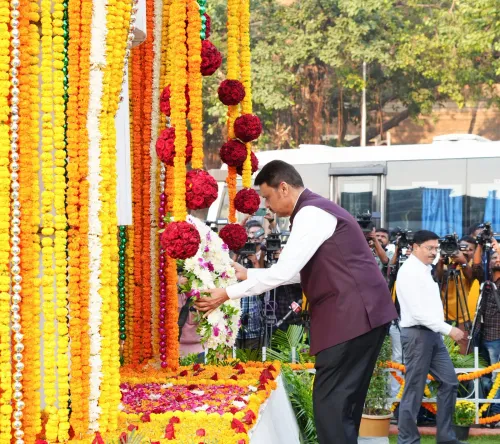
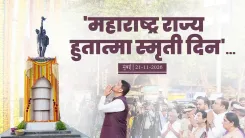
CM Devendra Fadnavis offered floral tributes at Hutatma Smarak , Mumbai, on Hutatma Smruti Din .
The memorial honours martyrs of the Samyukta Maharashtra movement , a 1950s agitation for a Marathi-speaking state.
Maharashtra was formally established on 1 May 1960 following the movement's success.
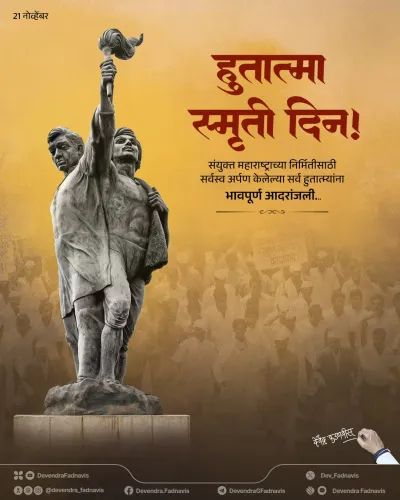
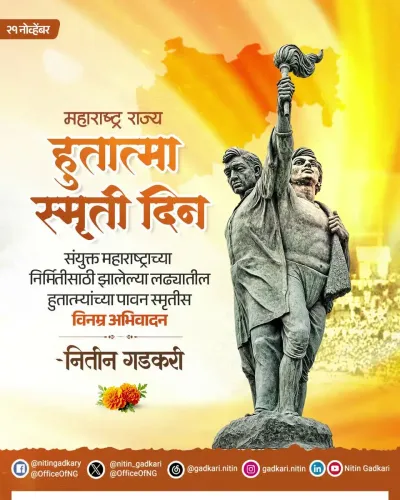
Hutatma Smarak is located at Flora Fountain in South Mumbai and is the symbolic heart of the state's founding memory.
Leaders across political parties observe Hutatma Smruti Din annually, reflecting the movement's enduring role in Maharashtra's identity.
On Hutatma Smruti Din, the day Maharashtra pauses to remember those who gave their lives so the state could exist, Maharashtra Chief Minister Devendra Fadnavis offered floral tributes at the Hutatma Smarak in Mumbai — a solemn act of remembrance at the city's most iconic martyrs' memorial.
Posting in both English and Marathi, Fadnavis wrote: 'हुतात्मा स्मृतिदिनानिमित्त मुंबई येथील हुतात्मा स्मारक येथे संयुक्त महाराष्ट्राच्या आंदोलनात प्राणार्पण केलेल्या सर्व हुतात्म्यांना पुष्पचक्र अर्पण करून विनम्र अभिवादन केले.' — 'Humbly offered floral tributes to all the martyrs who sacrificed their lives for the formation of a united Maharashtra at Hutatma Smarak in Mumbai on Hutatma Smruti Din.'
The sacrifice behind Maharashtra's birth
The Hutatma Smarak — 'Hutatma' meaning martyr in Marathi — stands at Flora Fountain in South Mumbai, erected in memory of those killed during the Samyukta Maharashtra movement of the 1950s. The agitation was a fierce, sustained push by Marathi-speaking people to carve a linguistically unified state out of the then Bombay State. It was a movement that cost lives.
The struggle culminated on 1 May 1960, when Maharashtra was formally established as a separate state — a date now celebrated as Maharashtra Day. The martyrs honoured on Hutatma Smruti Din are the men and women whose deaths in police firing and protests made that founding possible. The memorial at Flora Fountain remains the emotional and political heart of that memory.
A ritual of remembrance across party lines
Political leaders across Maharashtra's fractured party landscape converge on this observance each year — a rare moment of cross-party consensus rooted in the state's founding identity. For the sitting Chief Minister, the act of laying a wreath at Hutatma Smarak is both a constitutional duty and a statement of continuity: that the state's government honours the sacrifices that made it necessary.
The Samyukta Maharashtra movement also sits at the intersection of linguistic nationalism and India's broader post-independence state reorganisation — a reminder that the map of modern India was redrawn not just by Parliament, but by people willing to die for their language and homeland.
Point of View
And a sitting Chief Minister's presence at the Hutatma Smarak is as much a statement of state legitimacy as it is personal reverence. For the BJP, which governs a state whose very existence was won through a movement led by non-BJP forces, participating in this observance is a deliberate act of inclusive statecraft. The annual ritual also signals that regional linguistic identity — far from fading — remains a live political currency in Maharashtra, one no ruling party can afford to ignore.
NationPress
21 Nov 2026
Frequently Asked Questions
What is Hutatma Smruti Din?
Hutatma Smruti Din is a day of remembrance in Maharashtra dedicated to the martyrs who sacrificed their lives during the Samyukta Maharashtra movement, which fought for the creation of a unified Marathi-speaking state.
What is Hutatma Smarak in Mumbai?
Hutatma Smarak is a memorial located at Flora Fountain in South Mumbai, erected in honour of those killed during the Samyukta Maharashtra movement of the 1950s. 'Hutatma' means martyr in Marathi.
What was the Samyukta Maharashtra movement?
The Samyukta Maharashtra movement was a 1950s agitation demanding the formation of a separate, linguistically unified Marathi-speaking state. It led to the establishment of Maharashtra on 1 May 1960.
Why did Devendra Fadnavis visit Hutatma Smarak?
As Maharashtra Chief Minister, Devendra Fadnavis paid floral tributes at Hutatma Smarak on Hutatma Smruti Din to honour the martyrs of the Samyukta Maharashtra movement, observing an annual state tradition of remembrance.
When was Maharashtra state formed?
Maharashtra was formally established as a separate state on 1 May 1960, following the successful Samyukta Maharashtra movement that sought a distinct state for Marathi-speaking people.