CM Fadnavis Salutes Indian Army on Surgical Strike Day
Synopsis
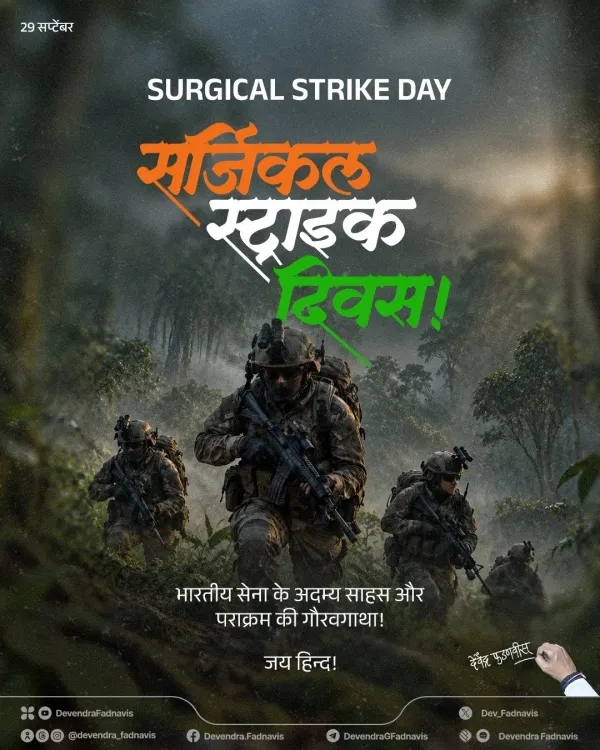
Maharashtra Chief Minister Devendra Fadnavis marked Surgical Strike Day on 29 September by honouring the Indian Army's 2016 cross-LoC operation, calling it a proud chapter in India's security history and saluting soldiers' bravery in a bilingual tribute.
Key Takeaways
Surgical Strike Day falls on 29 September each year, commemorating the 2016 Indian Army operation across the Line of Control.
The 2016 strikes were launched in response to the Uri terrorist attack , which killed 18 Indian soldiers .
Maharashtra CM Devendra Fadnavis issued a bilingual tribute in English and Hindi, saluting the Army's bravery.
The post is part of a broader pattern of state-level BJP leaders publicly marking the anniversary to reinforce national security narratives.
Surgical Strike Day has become an annual fixture in India's public discourse on counter-terrorism and armed-forces morale since 2016.
Ten years after a night operation rewrote India's counter-terrorism doctrine, Maharashtra Chief Minister Devendra Fadnavis marked Surgical Strike Day on 29 September by honouring the Indian Army's courage and resolve — calling the strikes 'a proud chapter in India's security history.'
The Strike That Set a Precedent
In the early hours of 29 September 2016, Indian Army Special Forces crossed the Line of Control and destroyed terrorist launchpads in Pakistani-administered territory — a direct response to the Uri terrorist attack that had killed 18 Indian soldiers days earlier. The operation marked a decisive shift: India signalled it would act pre-emptively rather than absorb cross-border terror strikes in silence.
The government subsequently designated 29 September as Surgical Strike Day, institutionalising the anniversary as an annual moment of national reflection on defence preparedness and the Army's operational capability.
Fadnavis's Tribute and What It Signals
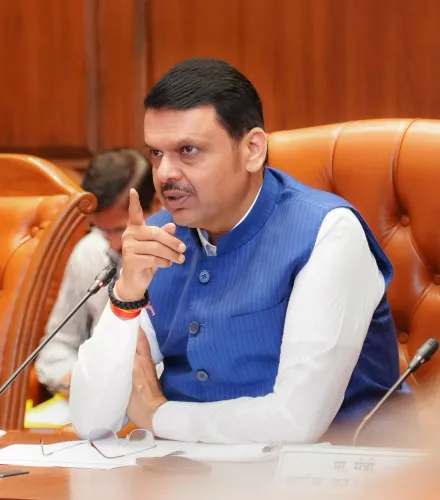
Posting in both English and Hindi, Fadnavis wrote, 'सर्जिकल स्ट्राइक दिवस पर देश की रक्षा में समर्पित भारतीय सेना की वीरता को नमन!' — 'On Surgical Strike Day, I salute the bravery of the Indian Army dedicated to defending the nation!' The bilingual tribute, tagged with #SurgicalStrikeDay and #Maharashtra, reflects how state-level BJP leadership has woven national security commemoration into its annual political calendar.
As a senior BJP leader, Fadnavis has consistently amplified defence narratives from Mumbai, connecting Maharashtra's political identity to the broader story of India's assertive security posture. The pattern is deliberate — regional voices reinforcing a national message on a day that carries both military and symbolic weight.
A Day That Now Anchors India's Security Discourse
Since 2016, Surgical Strike Day has evolved from a military anniversary into a recurring fixture in India's public conversation about cross-border terrorism and armed-forces morale. Defence establishments, state governments, and civil society organisations mark it with tributes, parades, and policy statements. The day also invites scrutiny of counter-terrorism readiness and the ongoing security situation along the Line of Control.
For the Indian Army — a force of over 1.2 million active personnel — the annual commemoration is as much about institutional pride as it is about strategic messaging to adversaries.
A decade on, the surgical strikes remain the clearest modern benchmark for what India is willing to do when provoked — and every September 29, the country is reminded of exactly that.
Point of View
Reinforcing the party's 'strong on defence' brand at every level of government. What is worth watching is whether such observances eventually translate into concrete state-level policy actions — defence corridor investments, veteran welfare schemes, or civil-military interface programmes — that give the tribute institutional weight beyond the symbolic. For now, the day functions primarily as a reaffirmation of national identity, one that resonates deeply with the armed-forces community and the broader electorate that valorises military assertiveness.
NationPress
29 Sept 2026
Frequently Asked Questions
What is Surgical Strike Day and why is it celebrated on 29 September?
Surgical Strike Day is observed on 29 September to mark the Indian Army's 2016 cross-Line of Control operation that destroyed terrorist launchpads in Pakistani-administered territory, conducted in retaliation for the Uri terrorist attack. The government designated this date as an annual commemoration of the operation.
What were the 2016 surgical strikes?
In September 2016, following the Uri terrorist attack that killed 18 Indian soldiers, Indian Army Special Forces conducted cross-LoC strikes targeting terrorist infrastructure. The operation was a significant shift in India's counter-terrorism posture, signalling willingness to act pre-emptively.
Why did CM Devendra Fadnavis post about Surgical Strike Day?
Devendra Fadnavis , as Maharashtra Chief Minister and senior BJP leader, issued the tribute as part of the party's established practice of marking Surgical Strike Day publicly to honour the armed forces and highlight national security achievements.
What did Devendra Fadnavis say on Surgical Strike Day?
Fadnavis called the surgical strikes 'a proud chapter in India's security history' and, in Hindi, saluted the bravery of the Indian Army dedicated to defending the nation — 'देश की रक्षा में समर्पित भारतीय सेना की वीरता को नमन!'
How is Surgical Strike Day marked across India?
Since 2016, Surgical Strike Day is marked by tributes from political leaders, defence establishments, and civil society. State governments, the central defence ministry, and the armed forces use the occasion to honour soldiers and reiterate India's counter-terrorism resolve.