CM Fadnavis: SC Sub-Classification Call After SC Guidance, Legislature Talks
Synopsis
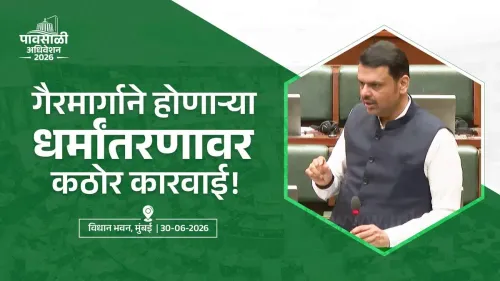
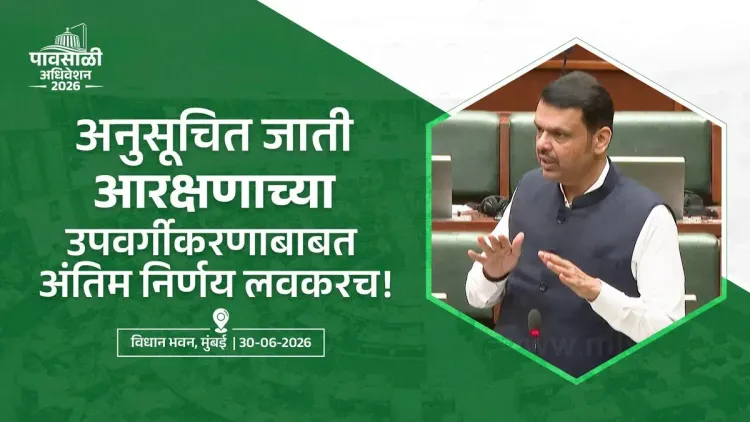
Maharashtra CM Devendra Fadnavis declared on 30 June 2026 at the Vidhan Sabha that any final decision on sub-classifying Scheduled Caste reservations will strictly follow Supreme Court directions and involve consultation with members of the Maharashtra Legislature.
Key Takeaways
CM Devendra Fadnavis made the announcement from the Vidhan Sabha, Mumbai on 30 June 2026 during the Monsoon Session.
The Maharashtra government will follow Supreme Court directions before finalising any SC reservation sub-classification policy.
Fadnavis committed to consulting members of the Maharashtra Legislature before a final decision is taken.
The statement covers sub-classification of reservation specifically for Scheduled Castes , not OBCs or other categories.
The move signals a cautious, court-anchored and consensus-driven approach by the state government on a politically sensitive issue.
The decision will affect millions of SC community members across Maharashtra and could set a precedent for other states.
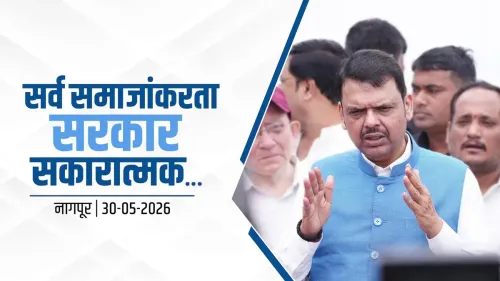
Maharashtra Chief Minister Devendra Fadnavis announced on Tuesday, 30 June 2026, that the state government will take a final decision on sub-classification of reservation for Scheduled Castes only after following the Supreme Court's directions and holding consultations with members of the Maharashtra Legislature. The announcement was made from the floor of the Vidhan Sabha, Mumbai, during the ongoing Monsoon Session 2026.
Context
Fadnavis stated in both English and Marathi: 'अनुसूचित जातींच्या आरक्षणाच्या उपवर्गीकरणाबाबत सर्वोच्च न्यायालयाच्या निर्देशांनुसार तसेच विधिमंडळातील सदस्यांशी चर्चा करून अंतिम निर्णय घेण्यात येईल.' (Translation: 'A final decision on the sub-classification of reservation for Scheduled Castes will be taken in accordance with the directions of the Supreme Court and after due consultation with the members of the Legislature.')
The statement signals that the Maharashtra government is not moving unilaterally on this sensitive issue, choosing instead to anchor its policy response within the constitutional framework set by the apex court and through democratic deliberation inside the legislature.
Policy Backdrop
The question of sub-classifying Scheduled Caste (SC) reservations has been a long-contested legal and political issue in India. In a landmark ruling, a seven-judge Constitution Bench of the Supreme Court of India held that states have the power to create sub-categories within the SC list to ensure that the most backward among the Scheduled Castes receive a more equitable share of reservation benefits.
The court, however, also laid down that any such sub-classification must be based on empirical data and adequate justification — not political convenience. States across India, including Punjab and others, have been working to frame sub-classification policies in line with this ruling, making the Supreme Court's directions the central reference point for any state action.
Maharashtra, with one of the largest SC populations in the country, has been under pressure from multiple SC sub-communities — particularly the Mahar community and others — who hold differing views on how reservation benefits should be distributed within the broader SC category.
Stakeholders and Impact
The statement directly affects millions of SC community members across Maharashtra who stand to benefit from — or potentially be affected by — any sub-classification of reservation. Smaller SC sub-groups have historically argued that dominant communities within the SC list corner a disproportionate share of government jobs and educational seats.
By committing to legislative consultation, Fadnavis is also signalling to opposition parties and SC community leaders that the Mahayuti government intends to build political consensus before acting. This approach could reduce the risk of legal challenges to any future state notification on sub-classification.
The Monsoon Session 2026 of the Maharashtra Legislature, which provided the platform for this announcement, is a key window for lawmakers from all parties to formally register their community's position on the matter.
What's Next
The Maharashtra government is expected to study the Supreme Court's detailed directions and possibly constitute a committee or commission to gather empirical data on the socio-economic conditions of SC sub-groups — a requirement the apex court has emphasised. Legislative discussions during and after the Monsoon Session will shape the contours of the eventual policy.
The final decision, when it comes, will set a precedent for how one of India's most populous and economically significant states implements the Supreme Court's sub-classification framework, potentially influencing policy trajectories in other states as well.
Point of View
He insulates the government from accusations of either rushing or stonewalling on sub-classification. The dual anchoring to judicial direction and legislative process makes it difficult for opposition parties to attack the position without appearing to challenge the apex court's authority. This approach fits a broader pattern among ruling coalitions in large states: defer to constitutional processes on reservation issues to avoid fracturing coalition vote banks while the legal framework matures. The real test will come when empirical data is collected and sub-groups begin lobbying for specific percentage allocations.
NationPress
30 Jun 2026
Frequently Asked Questions
What is SC reservation sub-classification in Maharashtra?
SC reservation sub-classification refers to dividing the existing Scheduled Caste reservation quota into sub-categories so that more backward sub-groups within the SC list receive a fairer share of government jobs and educational seats. Maharashtra CM Fadnavis has said the state will decide on this only after following Supreme Court directions.
What did the Supreme Court say about SC sub-classification?
A seven-judge Constitution Bench of the Supreme Court ruled that states have the power to create sub-categories within the SC reservation list, provided the sub-classification is backed by empirical data and sound justification. This ruling is the legal basis for states like Maharashtra to consider sub-classification policies.
When will Maharashtra take a final decision on SC sub-classification?
CM Devendra Fadnavis stated on 30 June 2026 that the final decision will be taken after studying the Supreme Court's directions and after consultations with members of the Maharashtra Legislature. No specific deadline has been announced.
Why is SC sub-classification a sensitive issue in Maharashtra?
Maharashtra has a large and diverse Scheduled Caste population, with different sub-communities holding competing claims over reservation benefits. Sub-classification could redistribute quotas among these groups, making it politically and socially sensitive for any government to act without broad consensus.
What is the Maharashtra Monsoon Session 2026?
The Monsoon Session 2026 is the mid-year sitting of the Maharashtra Legislature held in Mumbai, during which CM Fadnavis made this announcement about SC reservation sub-classification on 30 June 2026.