CM Fadnavis chairs SDG review meet, targets top national rank

Synopsis
Chief Minister Devendra Fadnavis on 23 July 2026 chaired a Social Sector War Room review in Mumbai, directing all Maharashtra departments to adopt outcome-based planning aligned with NITI Aayog's SDG India Index and target the country's top rank by 2030, with quarterly reviews and mandatory SDG KPIs in officer appraisals.
Key Takeaways
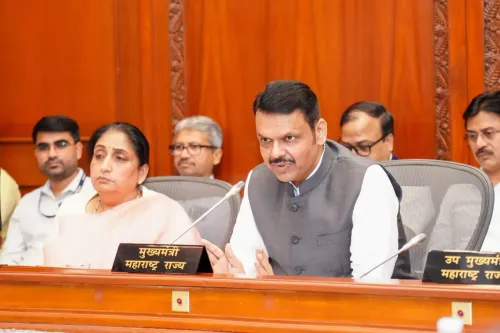
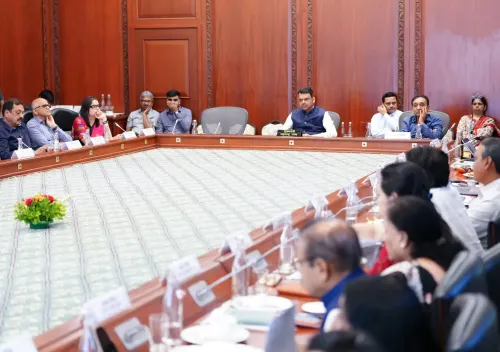
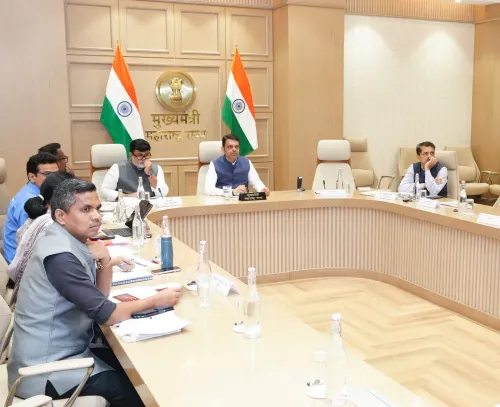
CM Devendra Fadnavis chaired an SDG India Index review at Sahyadri Guest House, Mumbai on 23 July 2026 under the Social Sector War Room.
Maharashtra aims to rank first nationally across all NITI Aayog SDG indicators within the next four years .
10 aspirational districts and 177 aspirational talukas are to receive intensified, index-guided development investment.
SDG performance will be a mandatory KPI in officers' Annual Performance Appraisal Reports (APAR) .
SDG progress reviews are mandated every three months , with parallel monitoring at the Chief Secretary level.
Upcoming budget planning must be aligned to accelerate SDG index targets, and departments must strengthen real-time data collection and close data gaps.
The Chief Minister's Office of Maharashtra announced on Thursday, 23 July 2026 that Chief Minister Devendra Fadnavis chaired a high-level review meeting at Sahyadri Guest House, Mumbai, under the Social Sector War Room, to assess Maharashtra's performance on NITI Aayog's Sustainable Development Goals (SDG) India Index. The meeting directed all state departments to pursue outcome-based, department-wise planning for the next four years with the explicit aim of making Maharashtra the top-ranked state across all SDG indicators nationally.
Context
The post, in Marathi, announced: 'शाश्वत विकास उद्दिष्टांच्या पूर्ततेसाठी परिणामाधारित नियोजन!' ('Outcome-based planning for the fulfilment of Sustainable Development Goals!'). The review covered Maharashtra's current standing in NITI Aayog's SDG India Index, which ranks states and union territories across 17 sustainable development goals spanning health, education, clean energy, infrastructure, and social equity. Senior state officials were present at the meeting.
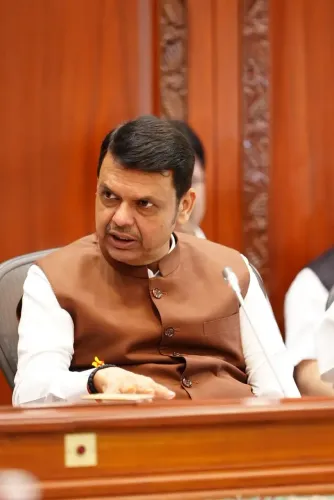
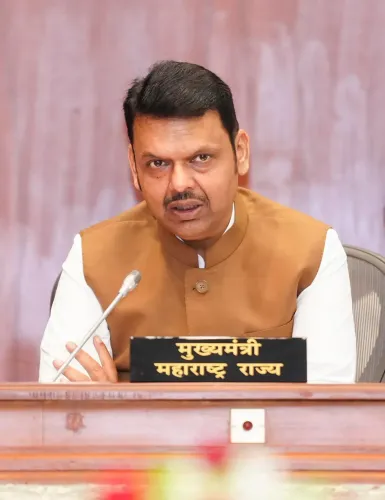
CM Fadnavis was quoted as saying that Maharashtra has made significant progress toward SDG targets in recent years, but given the state's capacity, there is a need to work more effectively across NITI Aayog's various indices to accelerate the pace toward 2030. He described the next four years as 'decisive' for the state's development.
Policy Backdrop
NITI Aayog released its first SDG India Index in 2018, establishing a competitive ranking framework that has since pushed states to align departmental planning with measurable social-sector outcomes. The index fosters what policymakers call 'competitive federalism', where states benchmark against each other on indicators directly affecting citizens' lives. Maharashtra's engagement with this framework reflects a wider national administrative shift toward evidence-based governance.
The meeting also focused on Maharashtra's 10 aspirational districts and 177 aspirational talukas — designated by the state government as lagging regions requiring concentrated development effort. NITI Aayog's Aspirational Districts Programme, launched in 2018, pioneered the model of real-time monitoring and targeted resource deployment in backward regions, a template now extended to talukas across several states.
Key Directives from the Meeting
CM Fadnavis issued several specific administrative directions. Departments were instructed to study the best practices of top-ranked states and adapt their policies accordingly. He emphasised the need to strengthen real-time data collection, conduct comparative analysis with other states' indices, and identify 'data gaps' where available statistics do not reflect ground realities. Continuous evaluation of scheme implementation with immediate corrective action was also mandated.
In a significant accountability measure, Fadnavis directed that SDG performance be made a mandatory Key Performance Indicator (KPI) in the Annual Performance Appraisal Report (APAR) of all officers. Progress on NITI Aayog indices is to be reviewed every three months, with regular monitoring also at the Chief Secretary level. Upcoming budget planning must be aligned to accelerate fulfilment of SDG index targets, the CM stated.
The CM noted that Maharashtra already performs well in areas such as energy and sustainable cities, and instructed departments to maintain that consistency while focusing corrective attention on sectors where the state lags. He called for an outcome-based work culture across the administration, measuring real changes in health, education, infrastructure, and social development.
Stakeholders and Impact
The directives directly affect all state government departments, district administrations, and the 177 aspirational talukas where intensified development work is now expected under NITI Aayog's index framework. Citizens in these regions — among Maharashtra's most underserved — stand to benefit most from the outcome-focused push. The mandatory KPI linkage to officer APARs introduces a direct accountability mechanism that could reshape how mid- and senior-level bureaucrats prioritise SDG-aligned schemes.
The health sector received specific attention: Fadnavis directed that patient outcomes be tracked on an outcome basis — comparing patient numbers and benefits before and after interventions — rather than measuring only the availability of treatment infrastructure.
What's Next
The first quarterly SDG progress review under this new framework is expected within three months, with Chief Secretary-level monitoring running in parallel. State budget allocations for 2027-28 will be a key signal of how firmly SDG-linked targets are embedded in fiscal planning. The performance of Maharashtra's 10 aspirational districts and 177 talukas under intensified NITI Aayog-index-guided investment will be closely watched as the state pursues a top national ranking before 2030.
Point of View
Index-driven accountability architecture — a notable shift in Maharashtra's governance culture. Tying SDG performance to officer APARs is a high-stakes bureaucratic incentive that, if enforced, could meaningfully alter how departments prioritise resource deployment in the state's lagging talukas. The emphasis on real-time data and quarterly Chief Secretary reviews reflects the broader competitive-federalism logic NITI Aayog has cultivated since 2018, where national rankings function as political capital. With the 2030 SDG deadline approaching and Maharashtra's budget cycle imminent, the next fiscal year's allocations will be the real test of whether these directives translate into structural change or remain aspirational.
NationPress
22 Oct 2026
Frequently Asked Questions
What is the NITI Aayog SDG India Index and how does it rank Maharashtra?
The NITI Aayog SDG India Index, first released in 2018, ranks all Indian states and union territories on their progress across 17 Sustainable Development Goals covering health, education, clean energy, infrastructure and social equity. Maharashtra participates in this ranking and the state government has now set a target of achieving the top national rank across all indicators by 2030.
What did CM Devendra Fadnavis direct at the SDG review meeting on 23 July 2026?
CM Fadnavis directed all departments to adopt outcome-based, department-wise planning for the next four years, strengthen real-time data collection, benchmark against top-ranked states, and ensure SDG performance becomes a mandatory KPI in every officer's Annual Performance Appraisal Report. He also mandated quarterly SDG progress reviews at the Chief Secretary level.
Which are Maharashtra's aspirational districts and talukas mentioned in the meeting?
The state government has designated 10 aspirational districts and 177 aspirational talukas as lagging regions requiring concentrated development. CM Fadnavis directed that large-scale development work be carried out in these areas in line with NITI Aayog's index indicators to push Maharashtra to the top of national rankings.
What is the Social Sector War Room in Maharashtra?
The Social Sector War Room is a Maharashtra government mechanism for monitoring and reviewing social-sector scheme performance. The 23 July 2026 meeting on SDG India Index performance was held under this framework, chaired by CM Devendra Fadnavis at Sahyadri Guest House in Mumbai.
How will Maharashtra link SDG goals to its budget planning?
CM Fadnavis stated that upcoming budget planning must be used to accelerate fulfilment of SDG index targets. This means the state's annual budget allocations — particularly for the 2027-28 cycle — are expected to incorporate SDG-linked targets, with departments restructuring and strengthening schemes accordingly.