CM Fadnavis Thanks Modi, Sitharaman for Pre-Diwali Tax Devolution

Synopsis
Maharashtra CM Devendra Fadnavis thanked PM Modi and FM Sitharaman on 1 November 2026 after the Centre released an advance instalment of tax devolution to states ahead of Diwali, calling it a timely boost for development works across Maharashtra.
Key Takeaways
The Central Government released an advance instalment of tax devolution to states ahead of Diwali 2026 .
Maharashtra CM Devendra Fadnavis publicly thanked PM Narendra Modi and FM Nirmala Sitharaman for the early transfer.
The 15th Finance Commission fixed states' share of the divisible tax pool at 41 per cent for 2021–26.
Advance devolution releases improve state liquidity and enable faster capital expenditure on infrastructure and welfare.
Maharashtra , as India's most industrialised state, is a major recipient of central tax transfers.
How the state deploys the funds will be tracked through utilisation reports on ongoing development projects.
An early festival gift from New Delhi landed in Maharashtra's fiscal calendar on Sunday, 1 November 2026: the Central Government released an advance instalment of tax devolution to states ahead of Diwali, and Maharashtra Chief Minister Devendra Fadnavis moved quickly to acknowledge it.
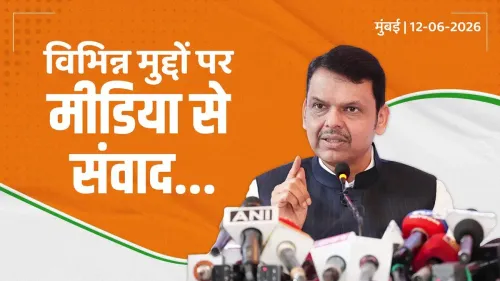
Posting on X, Fadnavis expressed 'heartfelt gratitude' to Prime Minister Narendra Modi and Union Finance Minister Nirmala Sitharaman, calling the early transfer a 'festive boost' that would 'give a major impetus to development works and benefit the people of Maharashtra.'
What tax devolution is — and why timing matters
Tax devolution is not a grant or a favour. It is a constitutional obligation. Under Articles 270 and 280 of the Constitution, the Centre is required to share a portion of its tax collections with states. The 15th Finance Commission fixed that share at 41 per cent of the divisible pool for the period 2021–26, covering income tax, GST compensation cess, and other levies. States receive this in monthly instalments across the financial year. Advancing those instalments — releasing them early, before the calendar due date — is a fiscal tool successive central governments have used to shore up state liquidity at moments of high expenditure demand. Festivals matter here: state governments face elevated spending on welfare schemes, infrastructure payments, and local procurement precisely around Diwali.Maharashtra's place in the devolution picture
Maharashtra is India's most industrialised state and one of the largest contributors to the central tax pool it draws from. An advance release improves the state's near-term cash position, giving its treasury the flexibility to accelerate pending capital expenditure — roads, housing, irrigation, urban infrastructure — without waiting for the next scheduled transfer. Fadnavis has been vocal on centre-state fiscal matters since taking charge, and the public acknowledgement serves a dual purpose: it flags that the funds have arrived, and it positions the Maharashtra government as a proactive receiver ready to deploy them.What to watch as the money moves
The announcement raises a natural follow-up question: where does the advance go first? The state's utilisation reports on ongoing infrastructure and development projects will be the clearest signal of whether the liquidity injection translates into on-ground acceleration — or merely smooths over existing payment backlogs. With the 16th Finance Commission's recommendations for the post-2026 period due to take shape, how states like Maharashtra deploy advance tranches will also feed into the broader argument about devolution adequacy. The Centre has set the festive tone. Maharashtra now carries the responsibility of converting an early transfer into visible development momentum.Point of View
The public acknowledgement reinforces Maharashtra's image as a development-oriented state ready to absorb and deploy central funds. The broader arc here is the transition to the 16th Finance Commission cycle: states that demonstrably utilise advance tranches efficiently will carry stronger arguments for a higher devolution share post-2026. The real test, as always, is whether accelerated receipts produce accelerated outcomes on the ground.
NationPress
1 Nov 2026
Frequently Asked Questions
What is tax devolution and how does it work in India?
Tax devolution is the constitutionally mandated transfer of a share of central tax revenues to states. Under Articles 270 and 280, the Finance Commission determines the formula; the 15th Finance Commission set the states' share at 41 per cent of the divisible pool for 2021–26, released in monthly instalments.
Why did the Centre release an advance instalment of tax devolution before Diwali 2026?
The Centre periodically advances scheduled devolution instalments ahead of major festivals to improve state liquidity, enabling state governments to accelerate welfare and infrastructure spending at a time of elevated demand.
How much tax devolution does Maharashtra receive from the Centre?
The exact quantum of Maharashtra's share is determined by the Finance Commission formula and varies by year. The exact amount of the advance instalment released ahead of Diwali 2026 has not been officially specified in publicly available data at the time of this report.
What is the 15th Finance Commission and when does it end?
The 15th Finance Commission, constituted in 2020, covers the period 2021–26 and recommended that states collectively receive 41 per cent of the Union's divisible tax pool. Its recommendations expire in 2026, after which the 16th Finance Commission's terms will govern devolution.
How will Maharashtra use the advance tax devolution funds?
CM Fadnavis indicated the funds will be directed toward development works benefiting the people of Maharashtra. Specific deployment will be reflected in the state government's utilisation reports on infrastructure, housing, irrigation, and other capital projects.