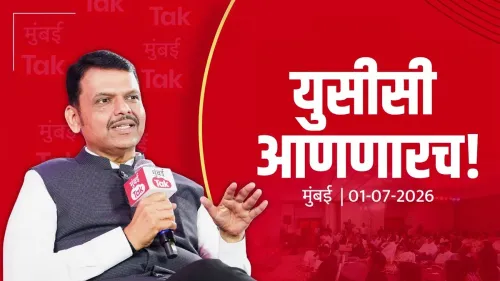
CM Fadnavis to Table UCC Bill in Maharashtra Winter Session
Synopsis
The Chief Minister's Office of Maharashtra announced on 10 July 2026 that CM Devendra Fadnavis will table the Uniform Civil Code Bill during the state assembly's winter session, placing Maharashtra among BJP-governed states advancing UCC legislation after Uttarakhand's landmark enactment.
Key Takeaways
The Chief Minister's Office of Maharashtra announced on 10 July 2026 that the Uniform Civil Code Bill will be introduced in the winter session of the Maharashtra Legislative Assembly.
Chief Minister Devendra Fadnavis of the BJP is the named proponent of the legislation.
The Uniform Civil Code seeks a single legal framework for marriage, divorce, inheritance, and adoption across all religious communities.
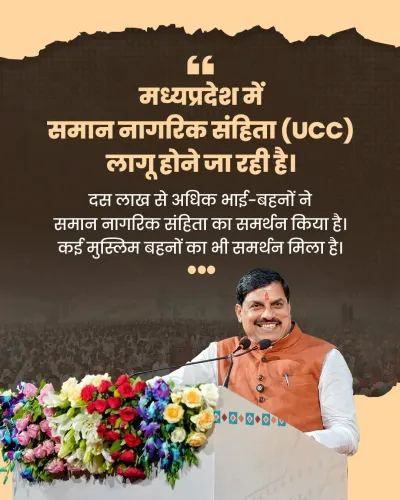
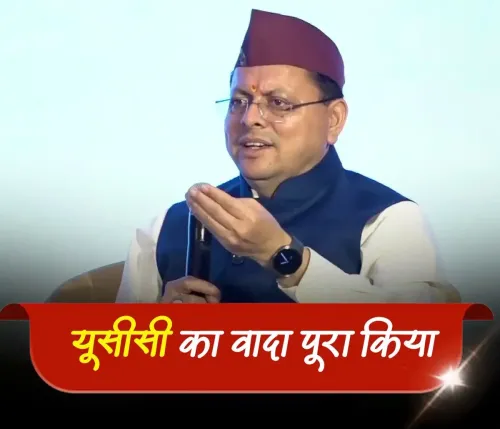
Uttarakhand was the first Indian state to enact a UCC, and Maharashtra's move follows a broader BJP-led state-level push on the issue.
The bill, if introduced, will face legislative debate and could be subject to judicial review given constitutional questions around religious freedoms.
Key stakeholders include religious communities, women's organisations, and civil society groups across Maharashtra.
The Chief Minister's Office of Maharashtra announced on Friday, 10 July 2026, that Chief Minister Devendra Fadnavis intends to introduce the Uniform Civil Code (UCC) Bill during the upcoming winter session of the Maharashtra Legislative Assembly.
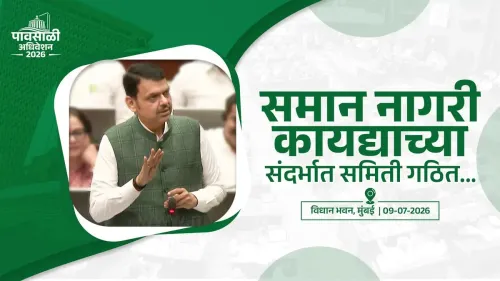
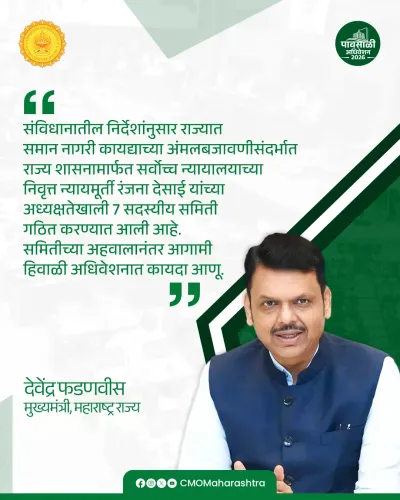
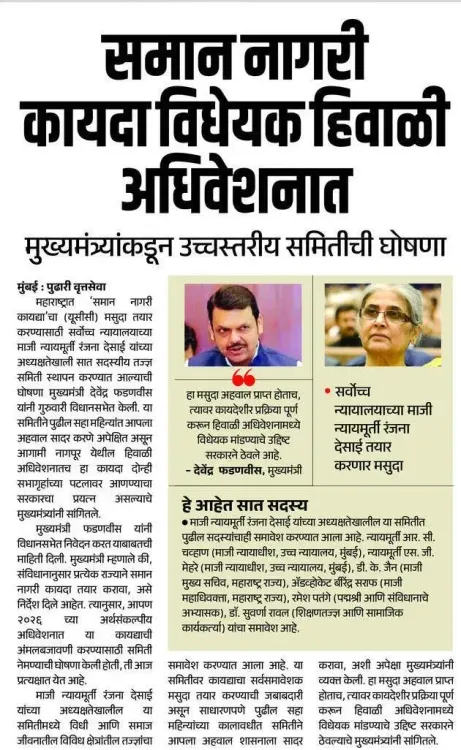
The CMO's post, directed at Chief Minister Fadnavis, stated in Marathi: 'समान नागरी कायदा विधेयक हिवाळी अधिवेशनात' — ('Uniform Civil Code Bill in the winter session') — signalling the government's intent to table the legislation before the house in the coming months.
Context
The Uniform Civil Code proposes a single set of civil laws governing marriage, divorce, inheritance, and adoption for all citizens regardless of religion. It finds mention as a Directive Principle of State Policy under Article 44 of the Indian Constitution, which directs the state to endeavour to secure a uniform civil code for citizens across the country. The debate around the UCC has a long legislative and judicial history in India. As far back as 1985, the Supreme Court of India, in the landmark Shah Bano case, called for enactment of a Uniform Civil Code to promote national integration and gender equality in personal law matters.Policy Backdrop
The Bharatiya Janata Party (BJP) has consistently included the UCC in its electoral commitments, reiterating the promise in its 2019 national election manifesto. Devendra Fadnavis, a senior BJP leader who has served multiple terms as Chief Minister of Maharashtra, has aligned the state government's legislative agenda with the party's broader national priorities. Uttarakhand became the first Indian state to enact a Uniform Civil Code, setting a legislative precedent that has intensified discussions in other BJP-governed states. Maharashtra's announcement places it among the states actively examining such reform, reflecting a wider pattern of state-level action on an issue that remains the subject of national debate.Stakeholders and Impact
The proposed legislation, if tabled and passed, would affect religious communities, women's organisations, and civil society groups across Maharashtra, one of India's most populous and economically significant states. Supporters argue the code would advance gender equality by replacing religion-specific personal laws — which critics say discriminate against women in matters of divorce and inheritance — with a uniform framework. Opponents, including sections of minority religious communities and some legal scholars, contend that a uniform code could infringe upon constitutionally protected religious freedoms and cultural practices. Any bill introduced in the assembly would be subject to legislative debate, potential amendments, and, if enacted, possible judicial review.What's Next
All eyes will now be on the proceedings of the Maharashtra Legislative Assembly's winter session, where the formal introduction of the bill — or any pre-legislative consultation process — will be closely watched by legal experts, community organisations, and political observers. Should the bill be introduced, it would trigger public consultations and committee scrutiny before any vote. Legal challenges before the judiciary remain a possibility if the legislation clears the assembly, given the constitutional sensitivities involved in reforming personal law across religious communities.Point of View
Maharashtra — with its large, religiously diverse population and economic weight — represents a far more consequential and politically complex test case for the UCC. The move is likely to sharpen political polarisation ahead of future electoral cycles, with minority community groups and opposition parties expected to mount both legislative and legal resistance. Whether the bill advances smoothly or stalls will serve as a barometer for the UCC's viability as a nationwide reform.
NationPress
10 Jul 2026
Frequently Asked Questions
What is the Uniform Civil Code Bill in Maharashtra?
The Uniform Civil Code Bill in Maharashtra proposes a single set of civil laws — covering marriage, divorce, inheritance, and adoption — applicable to all citizens of the state regardless of their religion, replacing existing religion-specific personal laws.
When will the UCC Bill be introduced in the Maharashtra assembly?
According to the Chief Minister's Office of Maharashtra, the bill is planned for introduction during the winter session of the Maharashtra Legislative Assembly, as announced on 10 July 2026 .
Which state was first to enact the Uniform Civil Code in India?
Uttarakhand was the first Indian state to enact a Uniform Civil Code, setting a legislative precedent that has encouraged other BJP-governed states, including Maharashtra, to consider similar legislation.
What does Article 44 of the Indian Constitution say about the Uniform Civil Code?
Article 44 of the Indian Constitution, listed under the Directive Principles of State Policy, directs the state to endeavour to secure a Uniform Civil Code for all citizens throughout the territory of India.
Who are the main stakeholders affected by the Maharashtra UCC Bill?
The primary stakeholders include religious communities whose personal laws would be replaced, women's organisations that have long advocated for equal rights in marriage and inheritance, and civil society and legal groups who may challenge or support the legislation.