CM Fadnavis waives Rs 54 lakh Nazarana tax for 12,000 Kolhapur families
Synopsis
Maharashtra CM Devendra Fadnavis announced a waiver of Rs 54 lakh in Nazarana tax on 1 July 2026, enabling conversion of Saranjam lands in 55 Chandgad taluka villages from Class-2 to Class-1 ownership, benefiting around 12,000 families in Kolhapur district.
Key Takeaways
55 villages in Chandgad taluka, Kolhapur district will have Saranjam lands converted from Class-2 to Class-1 ownership status.
A Nazarana tax of approximately Rs 54 lakh has been waived as a special case to remove the primary financial barrier to conversion.
Around 12,000 families in the region will gain full, unrestricted land ownership rights.
MLA Shivaji Patil was credited by CM Fadnavis for persistently pursuing the resolution of this issue.
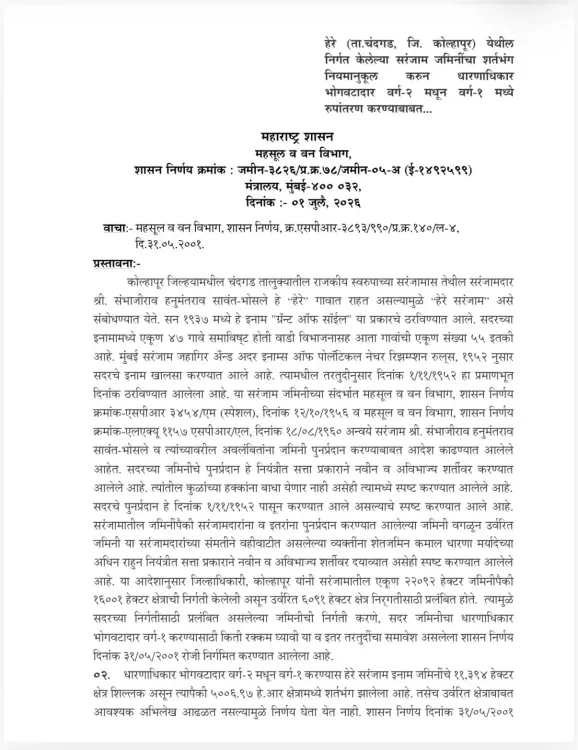
The formal government order was issued on 1 July 2026 by Revenue Minister Chandrashekhar Bawankule's department.
Updating of 7/12 land record extracts across all 55 villages is the critical next administrative step.
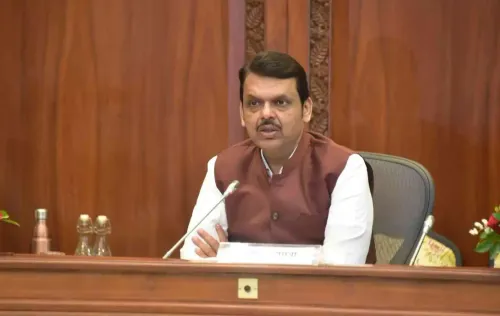
Maharashtra Chief Minister Devendra Fadnavis on Wednesday, 1 July 2026, announced that the state government has waived a Nazarana (tribute) tax of approximately Rs 54 lakh to facilitate the conversion of Saranjam lands in 55 villages of Chandgad taluka, Kolhapur district, from restricted Class-2 to full ownership Class-1 status — a move set to benefit around 12,000 families.
Context
Posting in Marathi on X, CM Fadnavis stated: 'कोल्हापूर जिल्ह्यातील चंदगड तालुक्यातील हेरे येथील 55 गावांचा सरंजाम जमिनींचा प्रश्न होता' ('There was a pending issue of Saranjam lands in 55 villages in the Here area of Chandgad taluka, Kolhapur district'). He noted that the government had earlier given its word to convert these lands from Class-2 to Class-1, and that the primary hurdle — a Nazarana tax of roughly Rs 54 lakh — has now been waived as a special case. A formal government order was issued on 1 July 2026 through the Revenue Department.
MLA Shivaji Patil had consistently followed up on this issue, and CM Fadnavis specifically credited his persistent advocacy for bringing the matter to resolution. The Chief Minister expressed that he was 'extremely happy' to announce the order.
Policy Backdrop
Saranjam lands are pre-independence tenure grants historically awarded to loyal chieftains and intermediaries. Under the Maharashtra Land Revenue Code, 1966, such lands were classified as Class-2, which imposes restrictions on transfer and full ownership rights. Converting them to Class-1 grants holders clear, unrestricted title — a process that has been pursued incrementally by successive state governments to reduce litigation and modernise land records.
The Nazarana, a procedural charge levied during such conversions, has often acted as a financial barrier for small and marginal farmers. The current BJP-led Maharashtra government has periodically waived such charges for clustered village groups to accelerate the process, particularly in regions where colonial-era tenure arrangements left land ownership legally ambiguous.
Stakeholders and Impact
The beneficiaries are approximately 12,000 rural families in the 55 villages of Chandgad taluka, a predominantly agrarian belt in Kolhapur district in western Maharashtra. For these households, Class-1 status means they can legally sell, mortgage, or transfer their agricultural land without prior government permission — a significant economic enabler.
Revenue Minister Chandrashekhar Bawankule's department issued the government order, making the waiver official. The resolution of this long-pending matter also carries political weight for MLA Shivaji Patil, whose constituency includes the affected villages, ahead of future electoral cycles.
What's Next
The immediate follow-up will be the updating of land records — specifically 7/12 extracts (the official land ownership documents in Maharashtra) — for all 55 villages to reflect the new Class-1 status. Any delays in this administrative step could slow the practical benefit reaching families on the ground.
Observers will also watch whether the state government issues similar conversion orders for other talukas across Maharashtra where Saranjam and Inam land tenure issues remain unresolved, using the Chandgad precedent as a template for expedited waiver-based resolution.
Point of View
CM Fadnavis ties a bureaucratic resolution to a visible political narrative of promise-keeping. The move fits a broader pattern of incremental Saranjam and Inam land conversions that successive Maharashtra governments have used to consolidate rural support without large fiscal outlay. The real test will be how swiftly the 7/12 extracts are updated — administrative lag between a government order and on-ground record change is where such announcements have historically stalled.
NationPress
1 Jul 2026
Frequently Asked Questions
What are Saranjam lands and why do they need conversion in Maharashtra?
Saranjam lands are pre-independence grants given to chieftains and intermediaries that were classified as Class-2 under the Maharashtra Land Revenue Code, 1966. Class-2 status restricts the owner's right to sell or transfer land without government permission. Converting them to Class-1 grants full, unrestricted ownership rights to the holders.
What is the Nazarana tax that was waived for Chandgad farmers?
Nazarana is a procedural tribute or charge levied by the government during the conversion of land from Class-2 to Class-1 status. In the case of 55 villages in Chandgad taluka, this charge amounted to approximately Rs 54 lakh, which the Maharashtra government has now waived as a special case.
How many families will benefit from the Kolhapur Saranjam land conversion order?
Approximately 12,000 families across 55 villages in Chandgad taluka, Kolhapur district, will benefit from the conversion of their Saranjam lands to Class-1 ownership status following the government order issued on 1 July 2026.
Who issued the government order for the Chandgad land conversion?
The government order was issued by the Revenue Department under Maharashtra Revenue Minister Chandrashekhar Bawankule on 1 July 2026, as announced by Chief Minister Devendra Fadnavis.
What is the role of MLA Shivaji Patil in the Chandgad Saranjam land issue?
MLA Shivaji Patil, whose constituency includes the affected villages in Chandgad taluka, consistently followed up with the state government to resolve the pending Saranjam land conversion issue. CM Fadnavis publicly credited his persistent advocacy as a key factor in bringing the matter to resolution.