CM Sai's Office Spotlights Jashpur Tea as Tourism Hub
Synopsis
The Chief Minister's Office of Chhattisgarh spotlighted Jashpur's tea plantations on 1 July 2026 as dual hubs of rural employment and agri-tourism. The district's 'Herbal Black Tea Orthodox' variety is being positioned as a premium product opening new market avenues for tribal women growers.
Key Takeaways
The Chief Minister's Office of Chhattisgarh on 1 July 2026 promoted Jashpur tea plantations as centres of both employment and tourism.
Jashpur district in northern Chhattisgarh has cultivated tea on non-traditional lands since the mid-2000s with Tea Board of India support.
A locally produced 'Herbal Black Tea Orthodox' variety is being positioned as a premium product with new market potential.
Tribal women and small growers are the primary stakeholders, with women's self-help groups integrated into the production chain.
The initiative aligns with Chief Minister Vishnu Deo Sai's stated priorities of agriculture diversification and tribal-area employment since taking office in December 2023 .
Future steps include potential tea tourism infrastructure, branding filings, and export or e-commerce linkages for Jashpur tea.
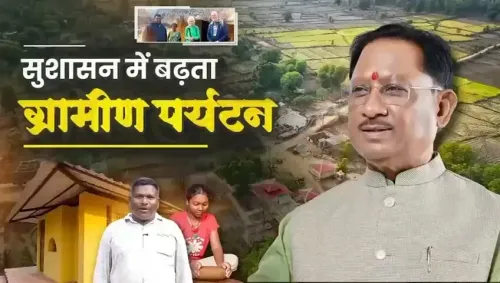
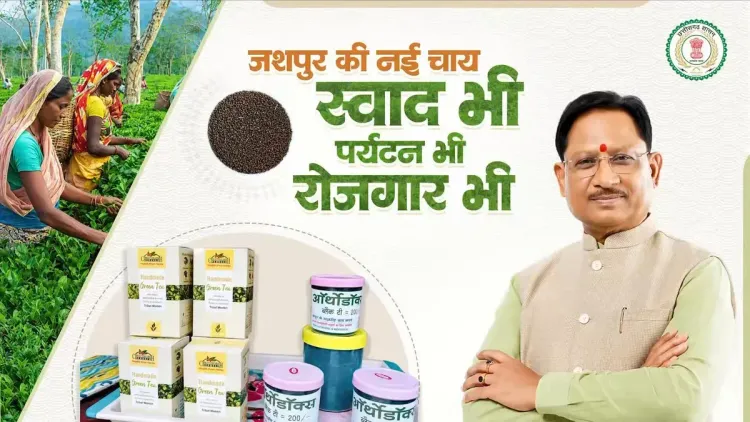
The Chief Minister's Office of Chhattisgarh on Wednesday, 1 July 2026 highlighted how tea plantations in Jashpur district have evolved into dual engines of rural employment and agri-tourism, with a locally produced 'Herbal Black Tea Orthodox' variety emerging as a premium brand with new market potential.
The post, shared under the handle of Chief Minister Vishnu Deo Sai's office, carried the message: 'Jashpur ki chai, sabke man ko bhae' ('Jashpur's tea, loved by all'), underscoring the state government's push to brand the district's tea as both a lifestyle product and a livelihood anchor for tribal communities.
Context
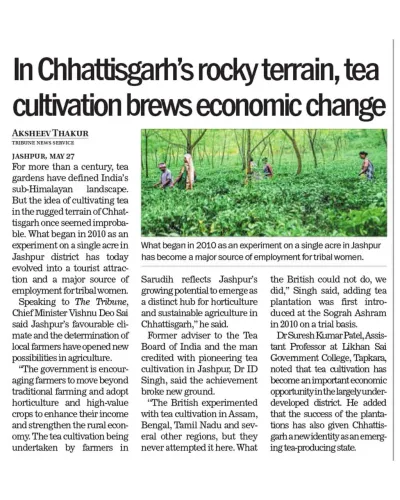
Jashpur, a hilly district in northern Chhattisgarh with a predominantly tribal population, has been cultivating tea on non-traditional lands since the mid-2000s. The initiative was part of a broader effort by the state government, backed by the Tea Board of India, to introduce plantation crops in Jashpur and neighbouring Surguja districts as an alternative livelihood for tribal households. Over two decades, what began as cultivation trials has matured into established tea estates that now attract visitors alongside generating farm-level income.
Policy Backdrop
The promotion of tea in Chhattisgarh fits a wider pattern seen across central and eastern India, where state governments have encouraged tea, coffee, and medicinal crops in hill and forest districts since the early 2000s to diversify tribal incomes and curb distress migration. The Jashpur programme has specifically linked production with women's self-help groups, making women's empowerment a stated pillar of the effort. The development of 'Herbal Black Tea Orthodox' — a value-added, slow-processed variety known for nuanced flavour — signals an intent to move up the supply chain beyond commodity leaf and compete in premium domestic and potentially export markets.
Stakeholders and Impact
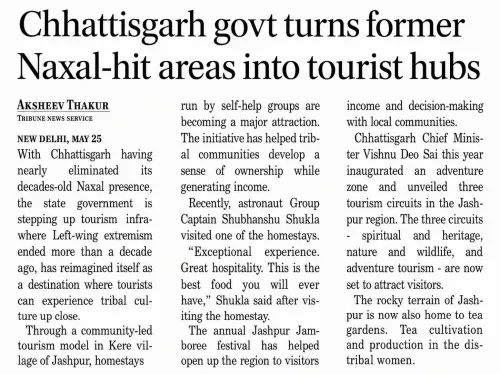
The primary beneficiaries are tribal women and small tea growers in Jashpur who participate in cultivation, processing, and now tourism-linked activities at the plantations. By positioning the tea estates as tourist destinations, the state government aims to create secondary income streams — guided tours, tea-tasting experiences, and local hospitality — that supplement farm earnings. The Chief Minister Vishnu Deo Sai administration, in office since December 2023, has placed agriculture diversification and tribal-area employment among its stated priorities, and the Jashpur tea narrative aligns directly with that agenda.
What's Next
Observers will watch for formal announcements on tea tourism infrastructure investment, geographical indication or branding filings for Jashpur Herbal Black Tea Orthodox, and any memoranda of understanding with the Tea Board of India or private processors to scale distribution. A credible export linkage or a listing on e-commerce platforms would mark the next material step in converting the government's promotional messaging into measurable market outcomes for growers.
Point of View
The state is attempting to claim credit for long-gestating institutional work while signalling fresh ambition. The 'Herbal Black Tea Orthodox' branding, if backed by concrete certification and distribution deals, could genuinely differentiate Jashpur in a crowded market. The real test will be whether the tourism and export momentum translates into verifiable income gains for the tribal women at the base of the supply chain.
NationPress
1 Jul 2026
Frequently Asked Questions
What is Jashpur Herbal Black Tea Orthodox?
Jashpur Herbal Black Tea Orthodox is a value-added, slow-processed tea variety grown in Jashpur district of Chhattisgarh, promoted for its distinct flavour and quality. It is cultivated with involvement of tribal women's self-help groups and is being positioned as a premium product for domestic and potentially export markets.
When did tea cultivation start in Jashpur Chhattisgarh?
Systematic tea cultivation in Jashpur and neighbouring Surguja districts began around 2004 with support from the Tea Board of India , making Chhattisgarh one of the non-traditional tea-growing states in central India.
How are Jashpur tea plantations connected to women's empowerment?
The Jashpur tea programme has integrated women's self-help groups into cultivation and processing, making tribal women primary stakeholders in the supply chain. This model of linking agricultural production with women's collectives is a recurring feature of livelihood schemes in tribal districts across central India.
Is Jashpur tea a tourist destination?
Yes, according to the Chief Minister's Office of Chhattisgarh , Jashpur tea plantations have emerged as agri-tourism destinations alongside their role as employment generators. Visitors can experience the tea estate environment, though formal tourism infrastructure details are yet to be publicly announced.
Who is Vishnu Deo Sai and what is his role in Chhattisgarh's tea push?
Vishnu Deo Sai is the Chief Minister of Chhattisgarh since December 2023 , representing the BJP. His administration has prioritised agriculture diversification and tribal-area employment, and the promotion of Jashpur tea aligns with those stated policy goals.