CM Rekha Gupta fires back at Rahul Gandhi over APEC claim
Synopsis
Delhi Chief Minister Rekha Gupta slammed Congress leader Rahul Gandhi on November 20, 2026, over claims India was excluded from APEC — pointing out that India has never held membership in the Asia-Pacific forum founded in 1989 under Rajiv Gandhi's premiership.
Key Takeaways
Delhi CM Rekha Gupta posted a pointed rebuttal on November 20, 2026 targeting Rahul Gandhi over an APEC claim.
APEC was founded in 1989 — during the tenure of Prime Minister Rajiv Gandhi — and India was not among its member economies then or since.
The forum has 21 member economies , all oriented around the Pacific Rim; India's non-membership predates every government since 1989.
Gupta framed the episode as a 'fact-check failure' by Gandhi, contrasting it with PM Modi's record of expanded multilateral engagement.
The exchange reflects a broader BJP social-media strategy of using historical baselines to counter opposition foreign-policy critiques.
A sharp political volley landed on Friday, November 20, 2026, when Delhi Chief Minister Rekha Gupta turned a foreign-policy jab from the opposition into a pointed fact-check, calling out what she described as a 'jhooth ki dukaan' — a shop of lies — over claims that India was not invited to APEC.
The claim that set off the rebuttal
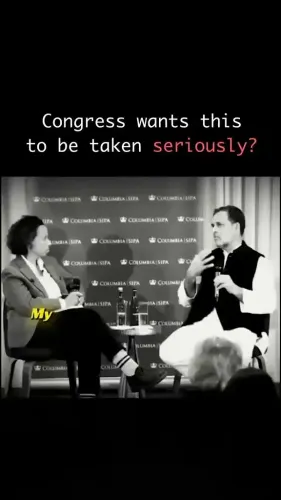
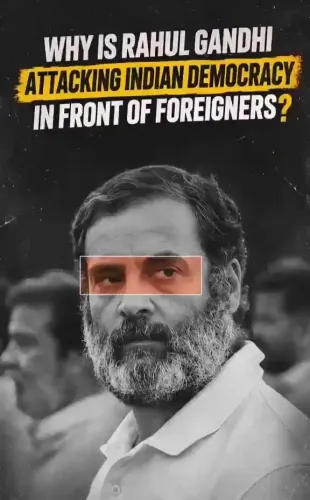
Congress leader Rahul Gandhi had apparently suggested that India's absence from an APEC summit represented a diplomatic failure under the current government. CM Gupta went after the premise directly: India has never been a member of APEC, and was never excluded from it under Prime Minister Narendra Modi. The research block flags the exact wording and timing of Gandhi's original statement as unverified, but Gupta's rebuttal frames it as a clear misreading of geopolitical history.
Her punchline carried deliberate historical weight: 'APEC was formed in 1989, when your father was PM.' The Asia-Pacific Economic Cooperation forum was indeed established in 1989 — during the premiership of Rajiv Gandhi — with 21 founding and subsequent member economies, none of which included India. That membership map has not changed in the decades since.
APEC at a glance — and why India was never at the table
APEC, founded in 1989, is a regional economic forum built around the Asia-Pacific rim — economies bordering the Pacific Ocean on both its Asian and American sides. India, geographically an Indian Ocean nation, has historically sat outside that membership architecture. Its absence from an APEC summit is therefore a matter of geography and founding charter, not a diplomatic snub to be laid at any prime minister's door.
This distinction matters. Framing non-membership as a failure of foreign policy requires the audience not to know the forum exists, what it does, or who belongs to it. Gupta's post bets — correctly, by the historical record — that the facts do the rebutting for her.
BJP's social-media playbook on foreign policy critiques
The exchange fits a well-worn pattern. BJP leaders have increasingly used rapid-response social-media posts to counter opposition foreign-policy narratives by citing historical baselines — a tactic that shifts the burden of proof onto the critic. The contrast being drawn here is explicit: PM Modi expanding India's multilateral footprint versus an opposition leader, in Gupta's framing, 'hunting for a chair at a table India never joined.'
Whether or not India should seek APEC membership is a legitimate policy debate. What is not in debate is the basic fact of its current non-membership — a fact that predates every government since 1989.
When a political attack rests on a premise that history disproves, the fact-check doesn't need spin — it needs only to be read aloud.
Point of View
Then use it to invert the original attack. By tracing APEC's founding to Rajiv Gandhi's own premiership, she neutralises the 'Modi failure' framing before it can settle. The broader arc is significant — as India's global ambitions grow, so does the political stakes attached to every multilateral forum India does or does not attend, making fact-accuracy in foreign-policy messaging increasingly consequential for all parties.
NationPress
20 Nov 2026
Frequently Asked Questions
Is India a member of APEC?
No. India has never been a member of APEC. The Asia-Pacific Economic Cooperation forum was founded in 1989 with economies bordering the Pacific Ocean; India has not been part of its membership since the forum's inception.
When was APEC founded and who was India's PM then?
APEC was founded in 1989. At that time, Rajiv Gandhi was serving as Prime Minister of India. India was not invited to join the forum at its founding and has not become a member in the decades since.
What did Rekha Gupta say about Rahul Gandhi and APEC?
Delhi CM Rekha Gupta posted on November 20, 2026, calling out what she described as Rahul Gandhi spreading false claims about India being excluded from APEC. She pointed out that India has never been an APEC member and called the episode a 'fact-check failure' by Gandhi.
How many members does APEC have?
APEC has 21 member economies. These are primarily nations with coastlines on the Pacific Ocean, spanning Asia, Oceania, and the Americas. India, as an Indian Ocean nation, is not among them.
Why is India not in APEC?
India's non-membership in APEC is rooted in the forum's founding design as a Pacific Rim grouping. India's geographic orientation toward the Indian Ocean, rather than the Pacific, has historically placed it outside APEC's membership architecture since the forum was established in 1989.