CM Rekha Gupta salutes press on National Press Day
Synopsis
Delhi Chief Minister Rekha Gupta marked National Press Day on 16 November by congratulating journalists across India, applauding the industry's shift from print to digital and calling a truth-committed press a key partner in the Viksit Bharat mission.
Key Takeaways
National Press Day falls on 16 November every year, marking the founding of the Press Council of India in 1966 .
Delhi CM Rekha Gupta extended greetings to all journalists and media professionals across the country.
She highlighted Indian journalism's evolution from print to digital and from ground reporting to new technologies.
The message framed a press dedicated to truth, sensitivity and public interest as a partner in the Viksit Bharat — developed India by 2047 — vision.
Annual National Press Day messages from political leaders have consistently acknowledged the media's contribution to public information and national development.
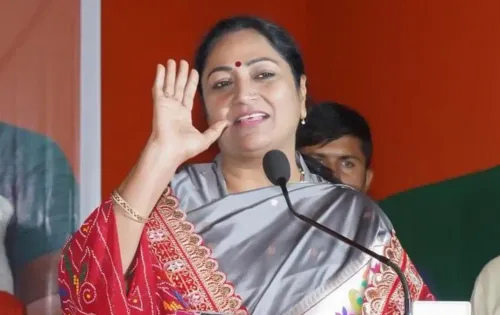
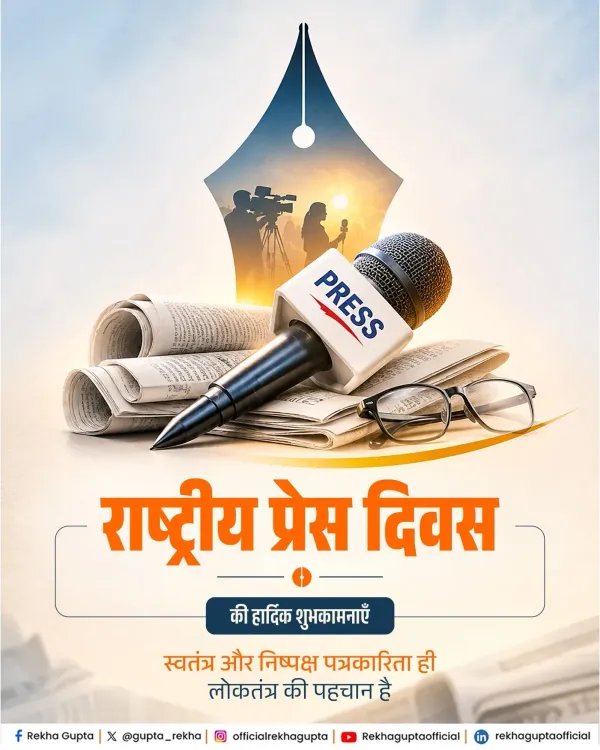
On National Press Day, 16 November, Delhi Chief Minister Rekha Gupta extended warm wishes to every journalist and media professional across the country, framing India's press not merely as an observer of national progress but as an active partner in it.
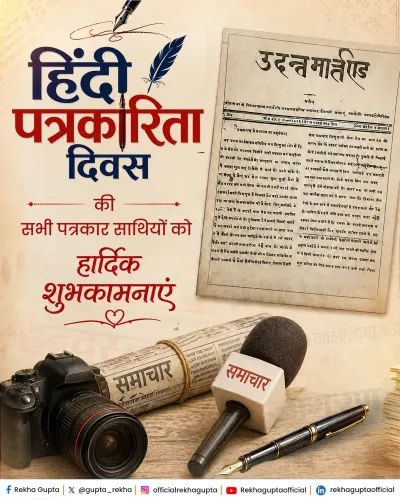
Posting in Hindi, CM Gupta wrote: 'राष्ट्रीय प्रेस दिवस पर देश के सभी पत्रकारों एवं मीडियाकर्मियों को हार्दिक बधाई एवं शुभकामनाएं' — 'Heartfelt congratulations and best wishes to all journalists and media workers of the country on National Press Day.' She noted that Indian journalism is 'establishing new dimensions with changing times,' spanning print to digital and ground reporting to new technologies.
Why November 16 carries weight for India's press
National Press Day marks the anniversary of the Press Council of India's establishment on 16 November 1966, under the Press Council Act. The Council was created as an autonomous quasi-judicial body to preserve press freedom while maintaining journalistic standards — a dual mandate that remains as contested and vital today as it was six decades ago.
The day has been observed every year since, with political leaders and civil society using it to reflect on the state of the Indian media. This year is no different — but the context is sharper. The industry's tectonic shift from broadsheet to smartphone screen, from scheduled bulletins to always-on social feeds, has fundamentally redrawn what journalism looks like in India.
Print to digital: the arc CM Gupta named
CM Gupta's message directly acknowledged that journey, crediting journalists for channelling public voice — 'जन-जन की आवाज को नई शक्ति दे रहे हैं' ('giving new strength to the voice of every citizen') — through talent, hard work and commitment. She also tied journalism's mission to the Viksit Bharat vision, the government's framework for a developed India by 2047, describing a press dedicated to 'truth, sensitivity and public interest' as an important partner in that journey.
The reference to Viksit Bharat is a recurring thread in official messaging this year, threading together institutions — educational, judicial, media — as stakeholders in the country's centenary development goal. For journalists on the ground navigating shrinking newsroom budgets, evolving digital-revenue models, and an accelerating misinformation landscape, the acknowledgement carries both symbolic warmth and an implicit expectation.
India's journalism sector has undergone one of the fastest digital transitions of any large democracy. Mobile-first news consumption now dominates, regional-language digital platforms have exploded, and AI-assisted reporting tools are entering even mid-sized newsrooms. The journalists being saluted today are navigating all of it simultaneously.
Point of View
But its explicit invocation of Viksit Bharat signals an effort to embed media institutions within the ruling party's development narrative. Framing journalists as partners in a 2047 national goal is a soft-power move — it honours the profession while implicitly aligning its mission with government priorities. The reference to digital transformation is timely: India's media landscape is mid-transition, and official recognition of that shift can influence policy conversations around the Press Council's evolving mandate. Whether warm rhetoric translates into structural support for newsrooms — funding, legal protections, digital-infrastructure access — remains the sharper question.
NationPress
16 Nov 2026
Frequently Asked Questions
When is National Press Day celebrated in India?
National Press Day is observed every year on 16 November , marking the founding of the Press Council of India on that date in 1966 under the Press Council Act.
What is the Press Council of India?
The Press Council of India is an autonomous quasi-judicial body established in 1966 to safeguard press freedom and uphold journalistic standards. It hears complaints against and by the press.
What did Delhi CM Rekha Gupta say on National Press Day 2026?
Delhi CM Rekha Gupta greeted all journalists and media professionals, praised Indian journalism's shift from print to digital, and called a truth-committed press an important partner in the Viksit Bharat mission.
What is Viksit Bharat?
Viksit Bharat is the Indian government's vision for a fully developed India by 2047 , the country's centenary of independence, referenced across policy and institutional communications as an overarching national goal.
Why do political leaders issue statements on National Press Day?
National Press Day is an annual occasion where political leaders acknowledge the role of a free press in democracy. Statements typically cover press freedom, journalistic evolution, and the media's contribution to public information.