CM Rekha Gupta Distributes Rainwater Harvesting Kits in Delhi
Synopsis
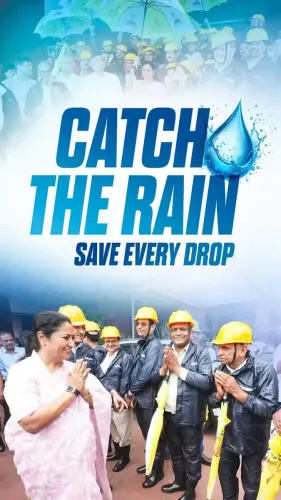
Delhi CM Rekha Gupta distributed Rainwater Harvesting Kits to Rohtas Nagar constituency volunteers at the Delhi Secretariat on 31 July 2026, invoking PM Modi's 'Catch the Rain' campaign to push water conservation as a community-led mass movement in the capital.
Key Takeaways
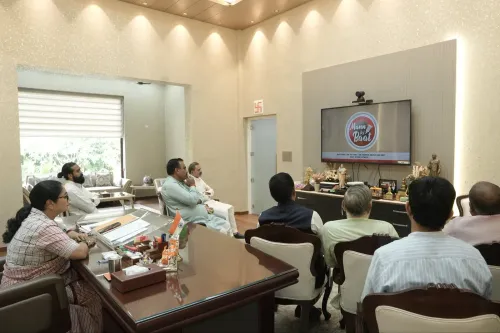
Delhi CM Rekha Gupta distributed Rainwater Harvesting Kits to volunteers from Rohtas Nagar assembly constituency at the Delhi Secretariat on 31 July 2026 .
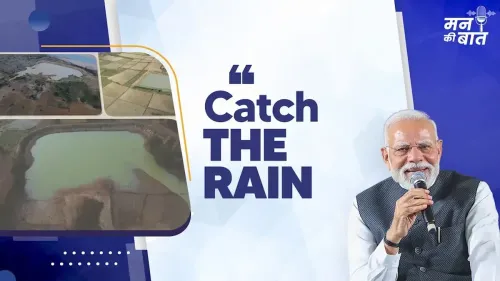
The drive is inspired by PM Narendra Modi's 'Catch the Rain' campaign, launched in 2021 under the Jal Shakti Abhiyan .
Cabinet minister Pravesh Sahib Singh and MLA Jitendra Mahajan attended the distribution event.
The initiative aims to turn rainwater harvesting into a jan-andolan (people's movement) through grassroots community participation.
The approach reflects a broader national trend of decentralised, community-led water conservation to counter urban groundwater depletion.
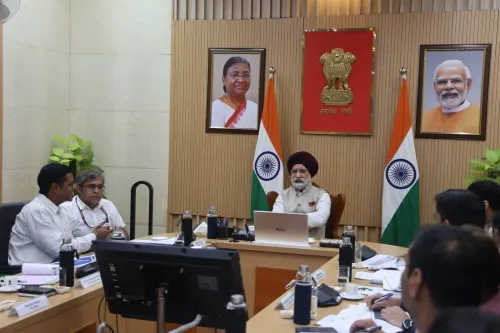
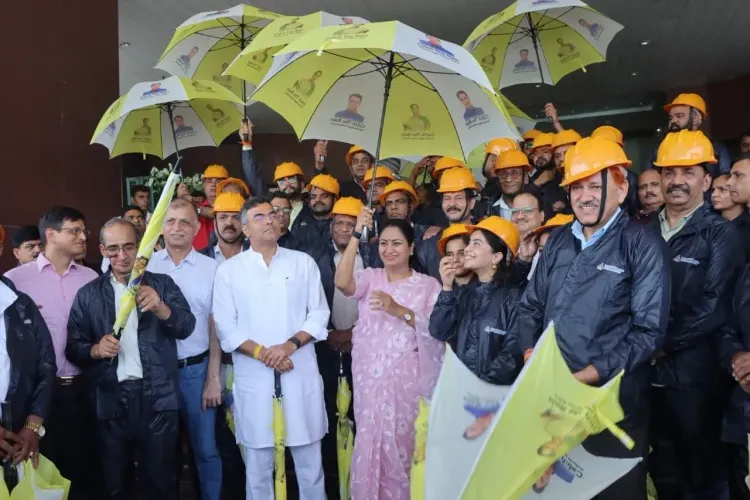
Every monsoon drop that falls on Delhi's rooftops and roads is either a resource or a missed opportunity — and Delhi Chief Minister Rekha Gupta is betting on community hands to tip that balance. On Friday, 31 July 2026, the CM presided over a distribution of Rainwater Harvesting Kits to volunteers from the Rohtas Nagar assembly constituency at the Delhi Secretariat, framing the drive as a step toward making water conservation a genuine mass movement in the capital.
Sharing the event on X, CM Gupta wrote: 'बारिश की हर बूंद अगर सहेज ली जाए, तो वही बूंद कल दिल्ली के जल-सुरक्षित भविष्य की सबसे बड़ी ताकत बन सकती है' — 'If every drop of rain is conserved, that very drop can become the greatest force behind Delhi's water-secure future.' She cited Prime Minister Narendra Modi's 'Catch the Rain' campaign as the inspiration driving the Delhi government's push for jan-bhagidari (community participation) in rainwater harvesting.
Rohtas Nagar Volunteers at the Centre of the Drive
The kit distribution targeted grassroots volunteers from Rohtas Nagar, a west Delhi assembly segment, positioning local residents as the first line of a decentralised conservation effort rather than relying solely on government infrastructure. Cabinet colleague Pravesh Sahib Singh and Rohtas Nagar MLA Jitendra Mahajan were present at the event alongside other dignitaries.
'Catch the Rain' — From a National Campaign to Delhi's Streets
The 'Catch the Rain' campaign was launched in 2021 by the Ministry of Jal Shakti under the broader Jal Shakti Abhiyan, with the explicit goal of making rainwater harvesting a nationwide habit before and during the monsoon season. Delhi's kit drive is a local operationalisation of that national push — translating a central government slogan into physical tools placed in community hands.
The approach fits a wider pattern across Indian cities: as groundwater tables fall and urban water stress deepens, state governments have turned to decentralised harvesting drives backed by public awareness campaigns. Delhi governments have periodically run similar initiatives, but the emphasis on jan-andolan — a people's movement — signals an attempt to sustain momentum beyond a single distribution event.
Whether the kits translate into functioning harvesting structures, and whether Rohtas Nagar becomes a replicable model for other Delhi constituencies, will be the real measure of the drive's impact when the monsoon tallies are drawn.
Point of View
The Delhi BJP government is threading local governance action into a central party narrative — a deliberate alignment that doubles as political messaging ahead of future electoral cycles. The choice of Rohtas Nagar as the launch constituency suggests a ward-level rollout strategy rather than a city-wide simultaneous push, which could allow the administration to showcase measurable outcomes in a defined geography. If kit utilisation data is tracked and published, this could evolve into a credible model; if not, it risks becoming another ceremonial distribution drive in a city that has seen several. The broader test is whether Delhi's building regulations and municipal systems are updated to make rainwater harvesting structurally mandatory — community kits alone cannot fix a systemic water deficit.
NationPress
14 Sept 2026
Frequently Asked Questions
What are the Rainwater Harvesting Kits distributed by Delhi CM Rekha Gupta?
These are physical kits given to community volunteers to help collect and store rainwater at the local level, part of Delhi government's push to make water conservation a grassroots habit aligned with PM Modi's 'Catch the Rain' campaign.
What is the 'Catch the Rain' campaign?
'Catch the Rain' is a national campaign launched in 2021 by the Ministry of Jal Shakti under the Jal Shakti Abhiyan, encouraging states and cities to harvest rainwater before and during the monsoon to replenish groundwater and reduce urban water stress.
Where were the rainwater harvesting kits distributed in Delhi?
The kits were distributed at the Delhi Secretariat to volunteers from the Rohtas Nagar assembly constituency on 31 July 2026 .
Who attended the rainwater harvesting kit distribution event with CM Rekha Gupta?
Cabinet minister Pravesh Sahib Singh and Rohtas Nagar MLA Jitendra Mahajan were among the dignitaries present at the event.
Why is Delhi promoting rainwater harvesting?
Delhi faces serious urban water stress and declining groundwater levels. Decentralised rainwater harvesting through community participation is seen as a scalable way to augment water supply during and after the monsoon season.