CM Rekha Gupta Activates Delhi Heatwave Action Plan 2026
Synopsis
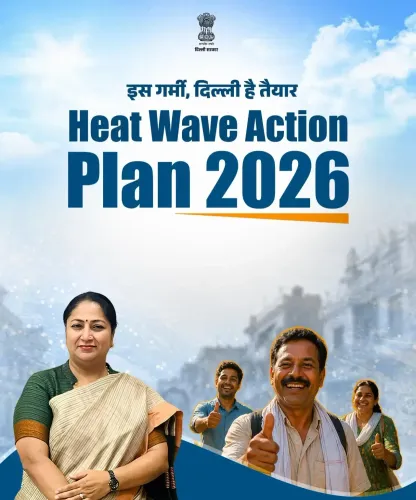
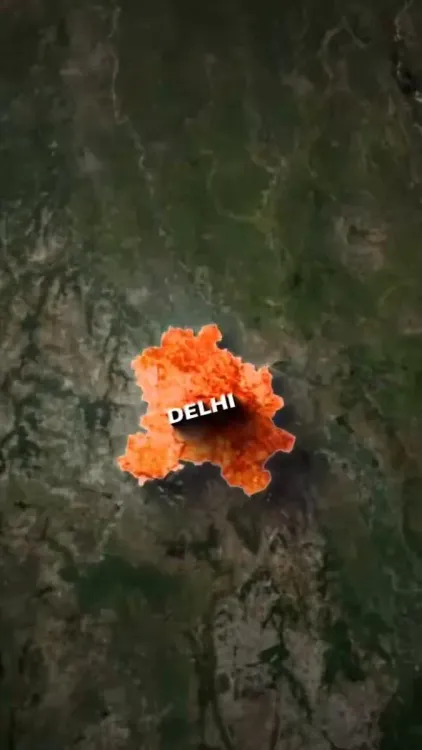
Delhi Chief Minister Rekha Gupta has announced the Heatwave Action Plan 2026 is running at mission mode, with over 10 lakh ORS packets distributed, Mobile Heat Relief Vans deployed, a Water Bell System activated in schools, and cooling points set up for animals and birds across the capital.
Key Takeaways
Over 10 lakh ORS packets have been distributed across Delhi under the Heatwave Action Plan 2026.
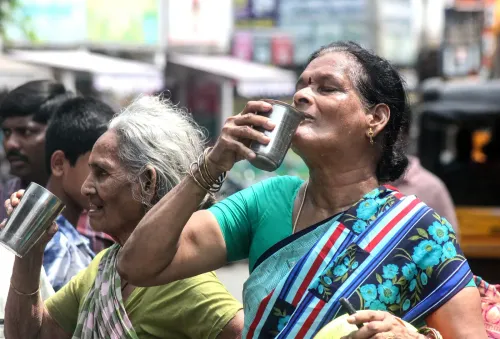
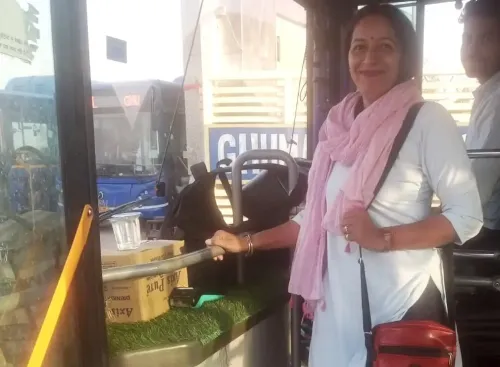
Mobile Heat Relief Vans have been deployed at multiple points across the city to provide on-the-spot relief to residents.
A Water Bell System has been activated in Delhi schools to ensure children drink water at regular intervals during the school day.
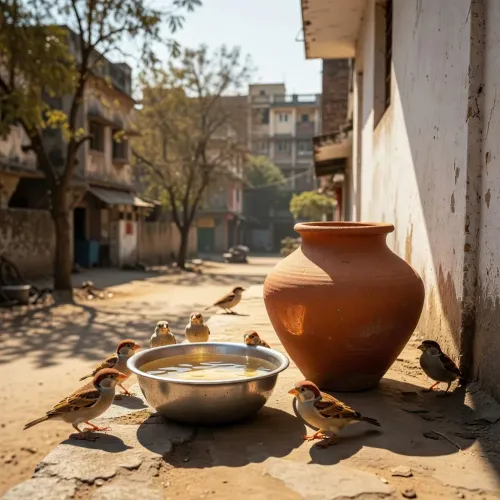
Water and cooling points have been arranged for animals and birds , extending the plan's scope beyond human welfare.
CM Rekha Gupta has framed the initiative under the leadership of PM Narendra Modi and a people-centric governance vision.
India's city-level heatwave preparedness framework dates to the 2010 Ahmedabad heatwave and was formalised by NDMA national guidelines in 2016 .
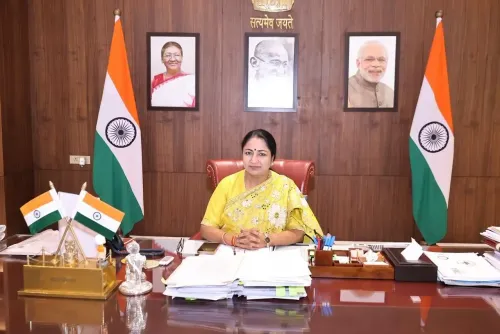
Delhi Chief Minister Rekha Gupta announced on Wednesday, 27 May 2026 that the city's Heatwave Action Plan 2026 is being implemented at 'mission mode', crediting the initiative to the leadership of Prime Minister Narendra Modi and a vision of 'compassionate, prepared and people-centric governance'.
Context
In a post on X, CM Gupta listed four active interventions: distribution of over 10 lakh ORS packets, deployment of Mobile Heat Relief Vans across the capital, activation of a Water Bell System in schools, and the arrangement of water and cooling points for animals and birds. The announcement comes as Delhi experiences peak summer conditions, with urban heat stress posing acute risks to residents in densely populated areas.
ORS — oral rehydration salts — are a frontline public-health tool for preventing dehydration caused by heat exposure. The scale of distribution, exceeding 10 lakh packets, signals a broad outreach targeting not only hospitals and clinics but also street-level access points across the city.
Policy Backdrop
India's systematic approach to heatwave preparedness traces back to the 2010 Ahmedabad heatwave, which prompted the country's first city-level heat action plan. The National Disaster Management Authority (NDMA) subsequently issued national guidelines in 2016, encouraging states to build coordinated early-warning and response frameworks.
Since the mid-2010s, state-level plans have expanded to include mobile hydration facilities, school-based interventions, and targeted outreach to the urban poor — elements all present in Delhi's 2026 plan. Rising heatwave frequency and intensity, linked to climate trends and rapid urbanisation, have made such plans increasingly critical for Indian cities.
The inclusion of water and cooling points for animals and birds marks a notable extension of the plan's scope beyond human welfare, reflecting growing awareness of ecosystem-wide heat stress in urban environments.
Stakeholders and Impact
Delhi's residents — particularly daily-wage workers, street vendors, and the urban poor who lack access to air-conditioned spaces — stand to benefit most directly from the Mobile Heat Relief Vans and ORS distribution drives. These groups face disproportionate heat-related health risks during summer months.
School children are a second key cohort addressed by the plan. The Water Bell System, which prompts students to drink water at regular intervals during the school day, targets heat-induced dehydration among a population that may not self-regulate fluid intake adequately. The measure also signals to parents and educators that institutional preparedness is in place.
Animal welfare organisations and civic bodies responsible for stray animals and urban wildlife are implicated by the cooling-point provisions, broadening the plan's stakeholder base beyond typical public-health frameworks.
What's Next
The effectiveness of Delhi's Heatwave Action Plan 2026 will be measured against heat-related illness and mortality data as the summer progresses. Health authorities and disaster management officials will be expected to report on the reach and utilisation of relief infrastructure deployed under the plan.
If the interventions demonstrably reduce heat casualties, Delhi's model — combining mass ORS distribution, mobile relief, school hydration protocols, and animal welfare provisions — could serve as a template for replication in other high-density Indian cities facing similar climate pressures. PM Modi's framing as the plan's guiding vision also suggests potential for the approach to be scaled through central government channels into a broader national urban heat resilience programme.
Point of View
A domain where the party has historically faced scrutiny over urban infrastructure gaps. By invoking PM Modi's leadership, the messaging ties a state-level operational rollout to the national political brand — a pattern consistent with BJP's top-down attribution strategy ahead of civic visibility cycles. The breadth of the plan, spanning human hydration, school safety, and animal welfare, reflects an effort to project comprehensive governance rather than a narrow emergency response. If heat-health outcomes improve measurably, Delhi's 2026 framework could become a replicable model that reinforces the Centre's disaster preparedness narrative across other BJP-governed states.
NationPress
22 Oct 2026
Frequently Asked Questions
What is Delhi's Heatwave Action Plan 2026?
Delhi's Heatwave Action Plan 2026 is a government programme to mitigate heat-related health risks across the capital, involving ORS packet distribution, Mobile Heat Relief Vans, a Water Bell System in schools, and water and cooling points for animals and birds.
How many ORS packets has Delhi distributed under the heatwave plan?
Delhi has distributed over 10 lakh ORS packets under the Heatwave Action Plan 2026, as announced by Chief Minister Rekha Gupta on 27 May 2026.
What is the Water Bell System in Delhi schools?
The Water Bell System is a school-based intervention activated under Delhi's Heatwave Action Plan 2026 that prompts students to drink water at regular intervals during the school day to prevent heat-induced dehydration.
Who is overseeing Delhi's heatwave response in 2026?
Delhi Chief Minister Rekha Gupta is overseeing the Heatwave Action Plan 2026, which she has attributed to the broader leadership and vision of Prime Minister Narendra Modi .
When did India start city-level heatwave action plans?
India's city-level heatwave preparedness began after the 2010 Ahmedabad heatwave , with the National Disaster Management Authority issuing national guidelines in 2016 to encourage coordinated state and city responses.