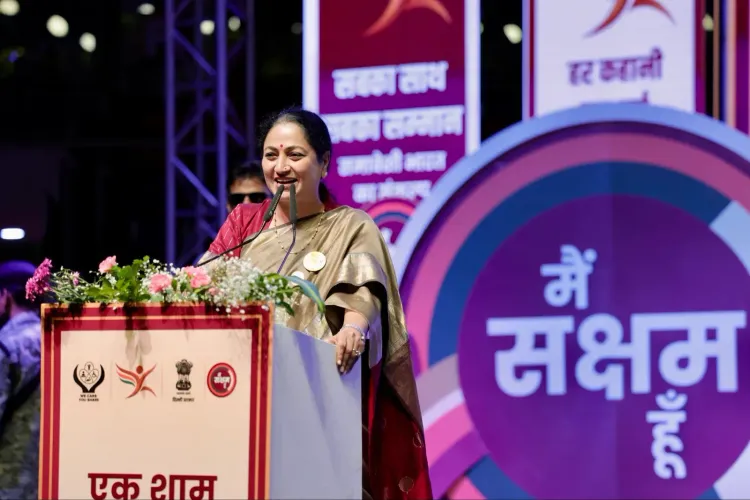
CM Rekha Gupta Honours Delhi's Divyangjan at Talkatora Stadium
Synopsis
Delhi Chief Minister Rekha Gupta and Union Minister Dr. Virendra Kumar honoured disability achievers at Talkatora Stadium on 25 September 2026 under the Seva Sankalp Abhiyan, pledging education, skills, employment and accessibility for Delhi's divyangjan community.
Key Takeaways
Delhi CM Rekha Gupta attended the 'Ek Shaam Divyangjan Ke Naam' event at Talkatora Stadium on 25 September 2026 .
The event was organised under the Seva Sankalp Abhiyan , a BJP-linked public-service outreach campaign.
Virendra Kumar , MP Bansuri Swaraj , and legislators Ravindra Indraj and Anil Goyal were present.
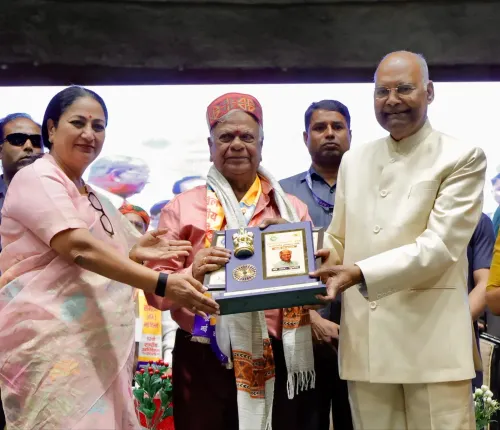
Divyangjan achievers in sports, education and skill were formally recognised and honoured.
Gupta pledged four pillars for Delhi's disabled citizens: dignity, education and skills, employment, and universal accessibility .
The event aligns with the Rights of Persons with Disabilities Act 2016 and the Sugamya Bharat Abhiyan launched in 2015.
Achievement, not adversity, defined the evening at Talkatora Stadium on 25 September 2026, as Delhi Chief Minister Rekha Gupta joined hands with the Centre to celebrate persons with disabilities who have excelled in sports, education and skill — and to renew a promise that the capital's every corner will be accessible to them.
'Ek Shaam Divyangjan Ke Naam' — What the Evening Meant
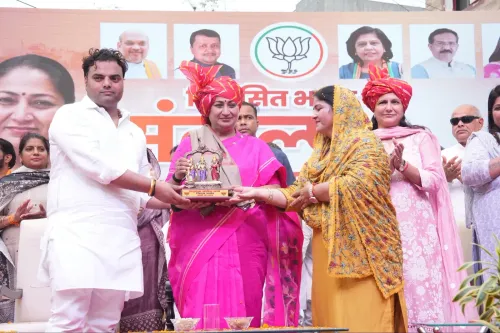
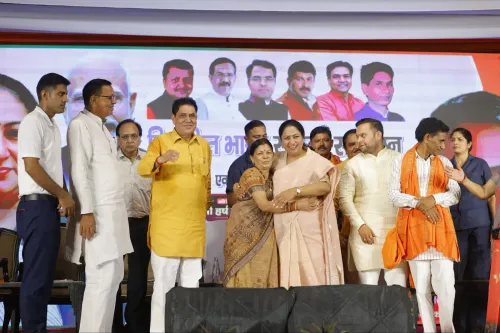
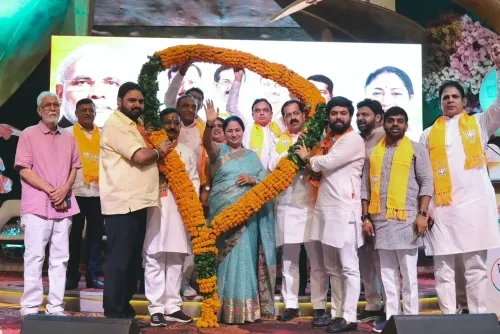
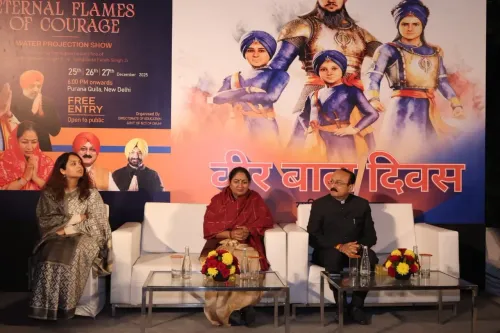
The event, titled 'Ek Shaam Divyangjan Ke Naam' (An Evening in Honour of Persons with Disabilities), was held under the Seva Sankalp Abhiyan — a BJP-linked public-service outreach campaign that stages targeted welfare events for marginalised communities across states. CM Gupta was joined on stage by Union Minister of Social Justice and Empowerment Dr. Virendra Kumar, MP Bansuri Swaraj, Cabinet colleague Ravindra Indraj, and legislator Anil Goyal.
Divyangjan achievers from multiple fields — sport, academia, vocational skill — were formally honoured. Gupta framed their success in terms that stretched beyond personal glory: 'Your achievements are not just individual success — they raise the confidence of the entire society,' she said, drawing applause from the gathering.
The Policy Spine Behind the Celebration
The event sits within a well-established Central policy architecture. The Rights of Persons with Disabilities Act, 2016 expanded legally recognised disability categories from 7 to 21 and strengthened reservations and protections. The Sugamya Bharat Abhiyan (Accessible India Campaign), launched in 2015, has been pushing accessibility of public buildings, transport infrastructure and digital systems ever since.
Dr. Virendra Kumar, as the minister responsible for central disability-welfare schemes, has been the operational face of these drives. His presence alongside a state chief minister underscored the Centre-state convergence that Seva Sankalp Abhiyan is designed to project.
Delhi's Own Pledge: Education, Skills, Employment, Access
Gupta laid out four pillars she described as Delhi's 'Seva Sankalp' for its disabled citizens: dignity and opportunity, education and skill-building, employment and self-reliance, and universal accessibility of city facilities. The framing mirrors Prime Minister Narendra Modi's long-running emphasis on atmanirbharta (self-reliance) as the ultimate goal of welfare — a philosophy Gupta credited directly to Modi's leadership in her remarks.
What the evening did not produce — at least publicly — were specific scheme announcements or timelines for accessibility audits of Delhi's public infrastructure. The next test of the pledge will be whether it translates into concrete state-level policy action: new skill programmes, employment drives, or a fresh audit of the capital's public spaces for compliance with accessibility norms.
An evening of applause is only as durable as the follow-through — and Delhi's divyangjan community will be watching.
Point of View
Reinforcing BJP's messaging in a state it recently controls. The presence of both a Union minister and a chief minister amplifies the Centre-state synergy optic, which is particularly useful when projecting inclusive governance credentials. However, the absence of concrete new policy announcements means the event's lasting impact depends on administrative follow-through — accessibility audits, skill enrolment numbers, and employment data will ultimately define whether the pledge holds. Politically, it positions Gupta as a proactive CM who bridges Delhi's ground-level welfare needs with Central government resources.
NationPress
26 Sept 2026
Frequently Asked Questions
What is the 'Ek Shaam Divyangjan Ke Naam' event?
'Ek Shaam Divyangjan Ke Naam' (An Evening in Honour of Persons with Disabilities) is a recognition event held under the Seva Sankalp Abhiyan, where persons with disabilities who have excelled in sports, education or skill are formally honoured by government officials.
What is the Seva Sankalp Abhiyan?
Seva Sankalp Abhiyan is a BJP-linked public-service outreach campaign that organises welfare and recognition events for marginalised groups, including persons with disabilities, across states.
What did Delhi CM Rekha Gupta pledge for divyangjan at the event?
CM Rekha Gupta pledged four pillars for Delhi's disabled citizens: dignity and opportunity, education and skill development, employment and self-reliance, and universal accessibility of city infrastructure and facilities.
What is the Rights of Persons with Disabilities Act 2016?
The Rights of Persons with Disabilities Act 2016 expanded legally recognised disability categories in India from 7 to 21 and strengthened legal protections, reservations and entitlements for persons with disabilities.
What is the Sugamya Bharat Abhiyan?
Sugamya Bharat Abhiyan, or the Accessible India Campaign, was launched in 2015 to improve accessibility of public buildings, transport and information technology systems for persons with disabilities across India.