CM Rekha Gupta Marks Modi's 25 Years in Public Service
Synopsis
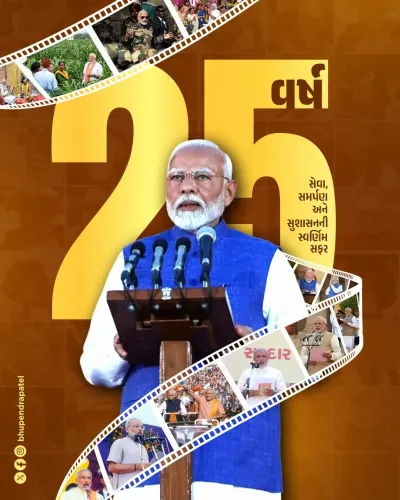
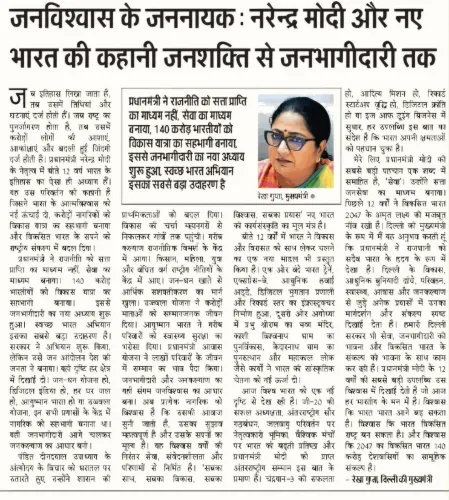
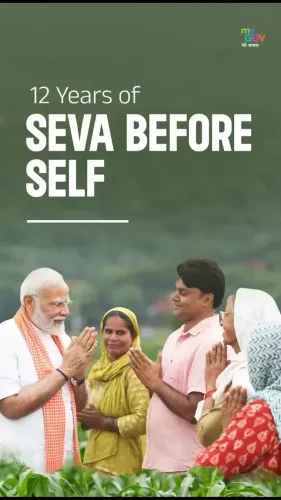
Delhi Chief Minister Rekha Gupta on October 7, 2026 saluted PM Narendra Modi's 25-year journey in public life under #25YearsOfSeva, calling it an unbroken resolve of national service from Gujarat's grassroots to governing all of India.
Key Takeaways
Delhi CM Rekha Gupta posted a tribute on October 7, 2026 marking PM Modi's 25 years in public service under #25YearsOfSeva .
The post traces Modi's journey from Chief Minister of Gujarat (from October 2001 ) through his tenure as Prime Minister from May 2014 .
Gupta described the 25-year arc as 'rashtra-sadhana' — national devotion — encompassing service to villages, farmers, youth, and women.
Her tribute directly invokes the 'Viksit Bharat' vision, reinforcing the BJP's development narrative ahead of future political cycles.
The tribute uses key BJP ideological phrases: 'seva ko sanskar' (service as a value) and 'kartavya ko sadhana' (duty as devotion).
Twenty-five years of unbroken public life — and Delhi Chief Minister Rekha Gupta wants every Indian to pause and mark the milestone. On Wednesday, October 7, 2026, the BJP leader took to X to salute Prime Minister Narendra Modi's quarter-century journey from Gujarat's grassroots to the heights of national governance, calling it an 'aakhand sankalp' — an unbroken resolve — dedicated entirely to the nation's rise.
In her post under the hashtag #25YearsOfSeva, Gupta wrote that Modi's journey is 'a practice of public service, an act of national devotion, and an unbroken resolve dedicated to India's ascent.' She described the transformation visible in the lives of villages, the poor, farmers, youth, and women as 'a beautiful saga of the nation's renaissance.'
From Gujarat to Governing India: The arc CM Gupta traces
Gupta's tribute begins at Gujarat — the 'sacred land' from which, she says, a stream of public service first flowed — before sweeping across the country. The framing is deliberate: Modi was Chief Minister of Gujarat for roughly thirteen years before becoming Prime Minister in May 2014, making October 2026 roughly the 25th year since he first assumed elected executive office in October 2001. Gupta's post places that entire arc — state leadership and national leadership combined — under a single banner of 'rashtra-sadhana', or national devotion.
She credits Modi with awakening India's self-confidence, giving fresh energy to the country's cultural consciousness, and 'strengthening in every Indian's heart the resolve for a developed and prosperous India' — a direct echo of the ruling party's flagship 'Viksit Bharat' vision framework targeting a developed India by 2047.
Why Delhi's CM is amplifying a national milestone
Gupta, who leads a BJP government in the national capital, has been among the more vocal state-level voices reinforcing the party's central messaging in 2026. Saluting a senior leader's public anniversary is standard political practice within the BJP's organisational culture — but the language here goes beyond ritual. Phrases like 'seva ko sanskar' (making service a value) and 'kartavya ko sadhana' (making duty a devotion) are drawn from the ideological vocabulary the party consistently uses to frame Modi's governance story ahead of major political cycles.
Her closing wish — that 'his resolve for India's supreme prosperity continues steadily toward fulfilment' — anchors the tribute firmly to the future, projecting continuity rather than retrospection alone.
Twenty-five years in. The milestone is now on the record. What gets built in the years ahead will determine whether the saga Gupta describes finds its final chapter — or is only at its midpoint.
Point of View
A high-profile, nationally resonant post deepens her visibility within the party hierarchy. The framing of 25 years as a seamless continuum — Gujarat to New Delhi, state to nation — also serves to pre-empt any 'what has been achieved' accountability framing by opponents.
NationPress
7 Oct 2026
Frequently Asked Questions
What is the #25YearsOfSeva milestone for PM Modi?
#25YearsOfSeva marks roughly 25 years since PM Narendra Modi began elected executive public service, counting from his swearing-in as Chief Minister of Gujarat in October 2001 through his ongoing tenure as Prime Minister.
What did Delhi CM Rekha Gupta say about PM Modi?
CM Rekha Gupta called Modi's 25-year journey 'a practice of public service, national devotion, and an unbroken resolve for India's ascent,' crediting him with transforming the lives of villages, farmers, youth, and women.
When did Narendra Modi become Chief Minister of Gujarat?
Narendra Modi was sworn in as Chief Minister of Gujarat in October 2001 , beginning the period that BJP leaders now count as the start of his 25 years of public service.
What is Viksit Bharat and why does Rekha Gupta mention it?
Viksit Bharat ('Developed India') is the ruling BJP government's flagship vision framework targeting a fully developed India by 2047 . Gupta's tribute echoes this framing, linking Modi's 25-year record directly to the party's long-term national goal.