CM Rekha Gupta at Palam 360 Khap Ceremony, Cites Village Upgrades
Synopsis
Delhi CM Rekha Gupta attended the Palam 360 Khap's Dharm Yagya ceremony on 25 October 2026, praising the Khap's role in social unity and announcing that 48 Delhi villages have been granted urban status, invoking PM Modi's 'Vikas bhi, Virasat bhi' development vision.
Key Takeaways
Delhi CM Rekha Gupta attended the Palam 360 Khap 's Pavan Jeevan Jag (Dharm Yagya-Ghoga) and turban-honour ceremony on 25 October 2026 .
She praised the Khap's multi-generational role in preserving social harmony, brotherhood, and cultural traditions.
The government announced that 48 Delhi villages have been granted urban status to accelerate holistic development.
CM Gupta anchored the announcement in PM Narendra Modi 's Vikas bhi, Virasat bhi (Development as well as Heritage) governance philosophy.
Senior attendees included MP Yogendra Chandolia , MLA Raj Karan Khatri , and Palam 360 Khap President Chaudhary Surendra Solanki .
The event reflects the BJP's broader strategy of partnering with traditional community bodies while pushing urban civic expansion in Delhi's rural belt.
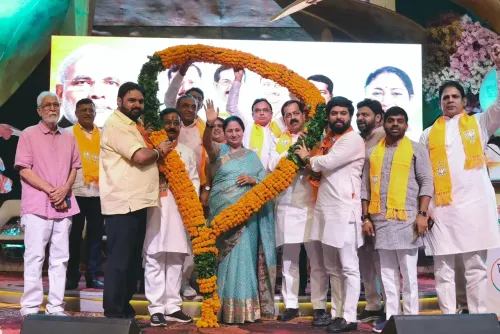
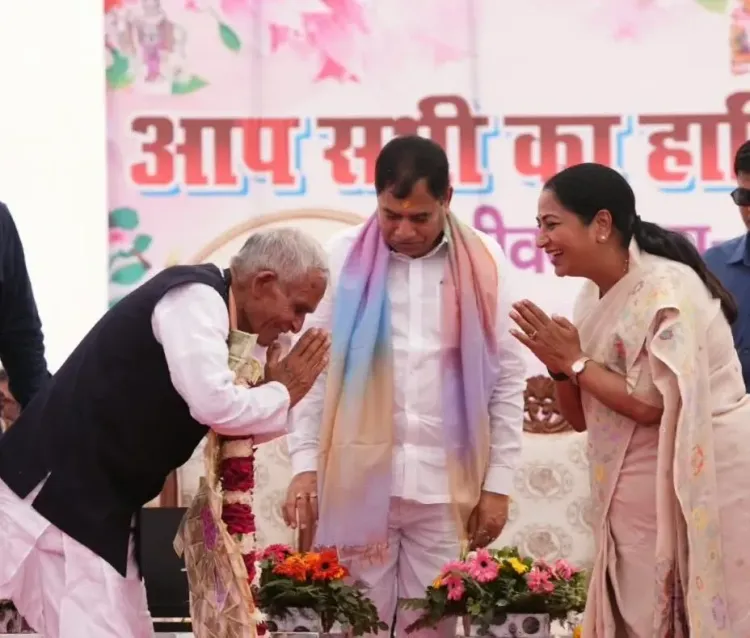
Tradition and governance converged in Palam on Sunday, 25 October 2026, when Delhi Chief Minister Rekha Gupta joined the Palam 360 Khap for its Pavan Jeevan Jag (Dharm Yagya-Ghoga) and turban-honour ceremony — and used the occasion to reaffirm the BJP government's commitment to transforming Delhi's villages.
Addressing the gathering, CM Gupta praised the Khap for its centuries-long role in preserving social unity and cultural traditions. 'Palam 360 Khap has played an important role across generations in maintaining social harmony, mutual brotherhood, and our glorious traditions,' she said. 'Its tradition of binding society together and keeping values alive is commendable.'
Modi's 'Vikas bhi, Virasat bhi' Mandate in the Capital
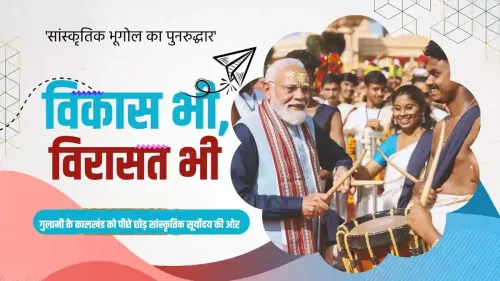
The Chief Minister anchored her remarks in Prime Minister Narendra Modi's signature governance philosophy — Vikas bhi, Virasat bhi (Development as well as Heritage) — which has framed BJP policy since 2014, positioning cultural preservation and infrastructure growth not as opposites but as inseparable goals. Gupta invoked the slogan directly, saying the Delhi government walks the same path in its approach to the capital's rural belt.
That path, she indicated, now has a concrete milestone: the government has recently granted urban status to 48 villages in Delhi, a step she described as accelerating the pace of holistic development. The move, if implemented, would bring these villages under the civic framework of the city — meaning better access to planned infrastructure, municipal services, and land-use recognition long demanded by residents caught between rural designation and urban reality.
Who Was on the Stage at Palam
The ceremony drew a notable cross-section of political and community leadership. MP Yogendra Chandolia was present alongside MLA Raj Karan Khatri. From the Khap, Palam 360 Khap President Chaudhary Surendra Solanki, Deepak Bhardwaj, and Dinesk Bhardwaj shared the stage with the Chief Minister — a visible signal of the coordination between the ruling party's elected representatives and traditional community institutions in this pocket of southwest Delhi.
Why Delhi's Villages Are a Political Flashpoint
Delhi's 'lal dora' villages — settlements that predate planned urban development — have long occupied an uneasy space: physically surrounded by the metropolis yet administratively classified as rural, leaving residents without full access to urban amenities or clear property rights. Successive governments have promised resolution; the BJP has increasingly framed Khap bodies and traditional panchayats as partners, not relics, in that process. CM Gupta's appearance at a Khap ceremony, combined with the urban-status announcement, signals this framing is being pushed forward with electoral as well as administrative intent.
With Delhi's village electorate watching both the pace of ground-level development and the government's regard for their customs, how quickly those 48 villages see tangible civic change will be the real measure of this Sunday's commitments.
Point of View
Virasat bhi' frame. Granting urban status to 48 villages is a policy lever with real stakes: it promises civic access while simultaneously tightening the party's relationship with influential community institutions in southwest Delhi. The move also signals that the new BJP government in Delhi is moving quickly to convert election promises to visible administrative action in the capital's rural-urban fringe. How that urban transition actually lands on the ground — in services, land rights, and infrastructure — will determine whether the political dividend holds.
NationPress
25 Oct 2026
Frequently Asked Questions
What is the Palam 360 Khap and why is it significant?
Palam 360 Khap is a traditional community organisation based in Delhi's Palam area. It has historically played a role in maintaining social unity, resolving community disputes, and preserving cultural traditions among residents of the Palam region across generations.
What did Delhi CM Rekha Gupta announce at the Palam Khap event?
CM Rekha Gupta announced that the Delhi government has granted urban status to 48 villages , calling it a significant step toward accelerating holistic development in Delhi's rural pockets.
What does 'Vikas bhi, Virasat bhi' mean and why did CM Gupta invoke it?
'Vikas bhi, Virasat bhi' translates to 'Development as well as Heritage.' It is PM Narendra Modi's governance philosophy that frames infrastructure growth and cultural preservation as complementary goals. CM Gupta cited it to position the urban-village upgrade as consistent with this national vision.
Which Delhi villages have been given urban status in 2026?
CM Gupta referenced the grant of urban status to 48 Delhi villages , though the specific names of those villages were not listed in her statement at the ceremony.
Who attended the Palam 360 Khap ceremony with CM Rekha Gupta?
The event was attended by MP Yogendra Chandolia , MLA Raj Karan Khatri , Palam 360 Khap President Chaudhary Surendra Solanki , Deepak Bhardwaj , and Dinesh Bhardwaj , among other dignitaries.