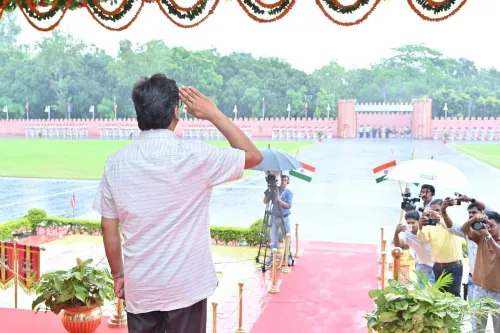
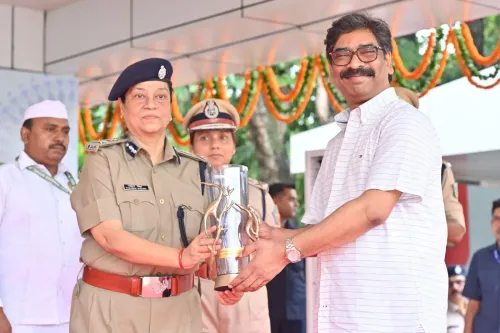
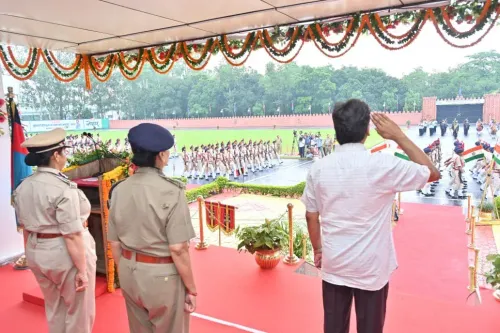
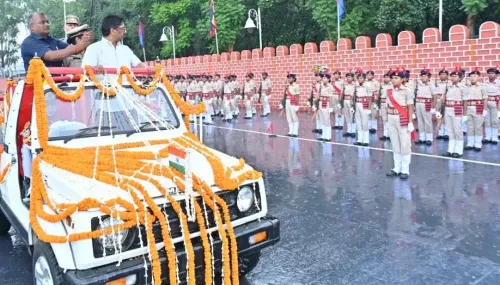
CM Hemant Soren attends Jharkhand Police passing-out parade
Synopsis
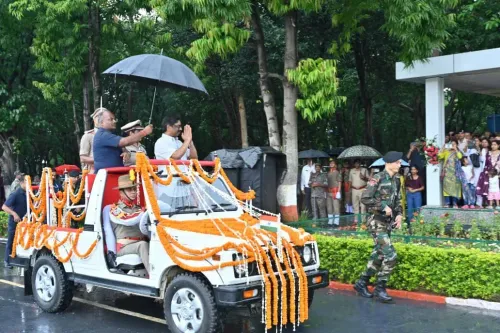
Jharkhand CM Hemant Soren attended the state police passing-out parade on 25 June 2026, praising recruits who completed 30 weeks of training and highlighting that around 25 percent of the batch are women — a milestone he called a symbol of an empowered Jharkhand.
Key Takeaways
Jharkhand Chief Minister Hemant Soren attended the passing-out parade of newly trained state police personnel on 25 June 2026 .
Recruits completed approximately 30 weeks of rigorous training before the parade.
Around 25 percent of the graduating batch are women, a figure Soren described as a symbol of an empowered Jharkhand.
Soren reaffirmed the government's commitment to equal participation of men and women across all sectors of the state.
The development fits a broader national trend of Indian states raising women's representation in police recruitment.
The next recruitment cycle and any formal revision of gender-reservation norms in Jharkhand's uniformed services will be closely watched.
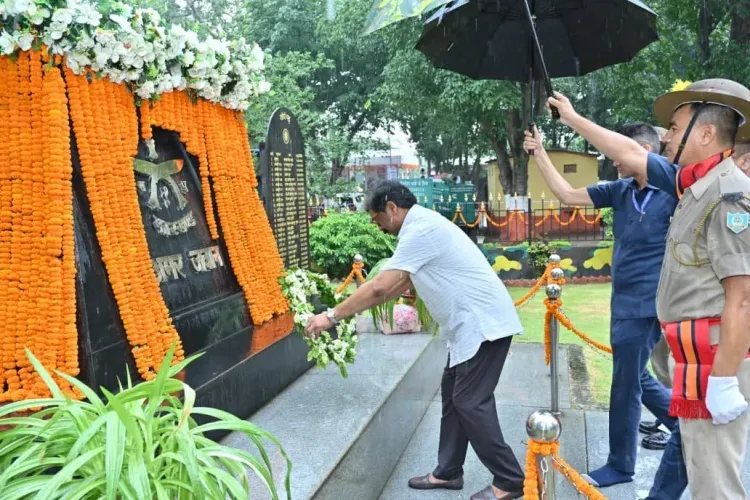
Jharkhand Chief Minister Hemant Soren attended the passing-out parade of newly trained Jharkhand Police personnel on Thursday, 25 June 2026, expressing pride in the recruits and highlighting that approximately 25 percent of the graduating batch comprises women. Soren described their choice of service as a commitment to public welfare and national interest, not merely a job or a salary.
Context
Posting on X, the Chief Minister wrote in Hindi: 'आज झारखंड पुलिस के नवप्रशिक्षित जवानों एवं अधिकारियों की पारण परेड में शामिल होकर अत्यंत प्रसन्नता हुई' ('I was extremely pleased to attend the passing-out parade of newly trained Jharkhand Police jawans and officers today'). He noted that after approximately 30 weeks of rigorous training, the recruits had chosen a path of service, discipline and dedication. Soren extended warm wishes to all newly trained personnel for a bright future.
The parade marks the formal induction of a fresh batch of constables and officers into the state police force. Jharkhand has conducted periodic recruitment and training cycles since attaining statehood in November 2000 to build and reinforce its own security apparatus.
Policy Backdrop
Soren singled out the women's participation figure as a matter of 'special joy', calling it a symbol of 'सशक्त झारखंड की बदलती और मजबूत होती तस्वीर' — 'the changing and strengthening image of an empowered Jharkhand'. He reaffirmed that the Jharkhand government is committed to ensuring equal and proportionate participation of men and women across every sector of the state.
Indian states have incrementally raised the share of women in police recruitment over the past decade to improve gender balance in law-enforcement and enhance public trust. Jharkhand's reported 25 percent women participation in this batch mirrors similar targets adopted by several other states, reflecting a broader national push to expand women's presence across uniformed public institutions.
Stakeholders and Impact
The most immediate beneficiaries are the newly inducted police personnel — both men and women — who complete roughly 30 weeks of structured training before being deployed across the state. For women recruits in particular, their inclusion at scale signals an institutional shift in how the force is being built.
For citizens, a more gender-diverse police force is widely associated with improved responsiveness to crimes against women and greater community trust. The Jharkhand Mukti Morcha-led government has framed gender parity in public employment as a pillar of its broader governance agenda, making this parade a visible data point in that narrative.
What's Next
Attention will now turn to the next Jharkhand Police recruitment advertisement and whether the government formalises revised gender-reservation norms in state uniformed services. A sustained upward trend in women's share — beyond this single batch — would indicate a structural policy shift rather than a one-time outcome.
With the Soren administration having made women's empowerment a recurring theme across departments, the police force's composition will likely remain a benchmark by which the government measures and communicates its own progress on gender equity.
Point of View
His administration is weaving law-enforcement reform into its broader women's empowerment narrative ahead of future electoral cycles. The move also aligns with a national pattern where state governments use police recruitment data to demonstrate inclusive governance credentials. Whether this translates into sustained structural change will depend on whether the 25 percent benchmark is institutionalised in future recruitment cycles rather than remaining a one-batch achievement.
NationPress
25 Jun 2026
Frequently Asked Questions
What is a police passing-out parade in India?
A passing-out parade, also called a paran parade, is the formal graduation ceremony held at the end of basic training for newly recruited police constables and officers, after which they are officially inducted into the force and eligible for deployment.
How long is Jharkhand Police basic training?
According to Chief Minister Hemant Soren's statement at the June 2026 parade, the newly inducted batch completed approximately 30 weeks of rigorous training before their passing-out ceremony.
What percentage of the new Jharkhand Police batch are women?
Around 25 percent of the graduating batch are women, a figure CM Soren highlighted as a symbol of an empowered and evolving Jharkhand.
What is Jharkhand government's policy on women in police?
The Jharkhand government, led by CM Hemant Soren, has stated its commitment to ensuring equal and proportionate participation of men and women across every sector of the state, including the police force.
Who is Hemant Soren?
Hemant Soren is the Chief Minister of Jharkhand and the executive president of the Jharkhand Mukti Morcha (JMM), the regional political party that leads the state government.