CM Hemant Soren Meets SC/ST Welfare Officials and PanIIT-PREJHA Reps
Synopsis
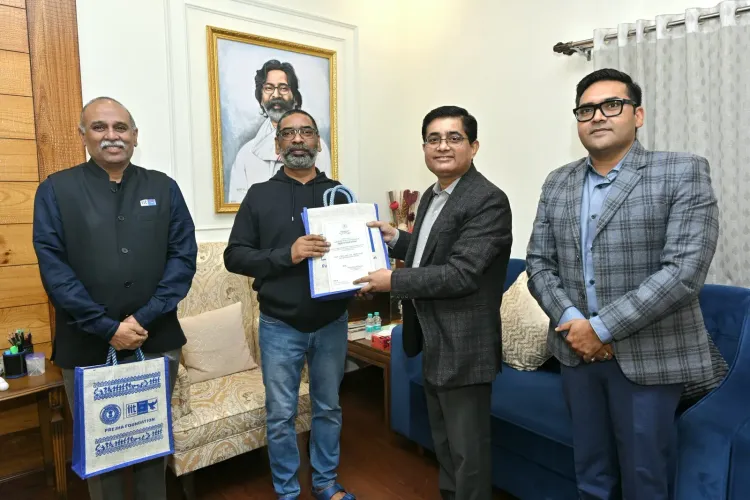
Chief Minister Hemant Soren held a courtesy meeting with SC/ST welfare secretary Kripanand Jha, minority welfare commissioner Kuldeep Chaudhary, and PanIIT-PREJHA representatives in Ranchi on 21 November 2026, signalling a possible state push on education access for marginalised communities.
Key Takeaways
CM Hemant Soren received a courtesy call from senior welfare officials and PanIIT-PREJHA representatives on 21 November 2026 .
Kripanand Jha , Secretary of the SC/ST, Minorities and Backward Classes Welfare Department, was among the visitors.
Kuldeep Chaudhary , Commissioner for Minority Welfare, also attended the meeting.
PanIIT-PREJHA , a PanIIT-linked coaching and education initiative for Jharkhand students, was represented at the meeting.
The meeting signals a potential collaboration between state welfare machinery and IIT alumni networks to expand educational access for tribal and backward-class communities.
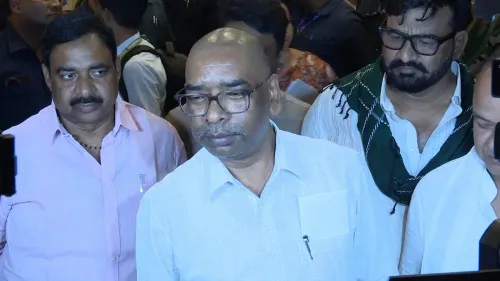
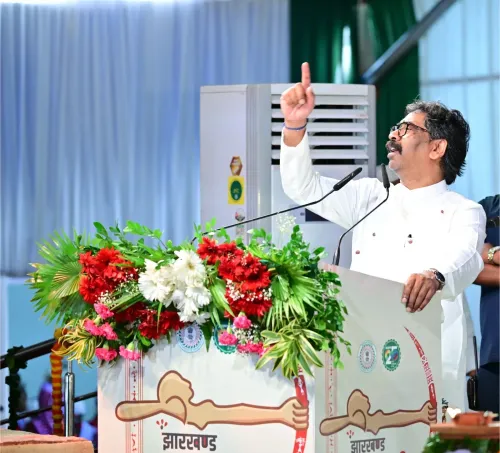
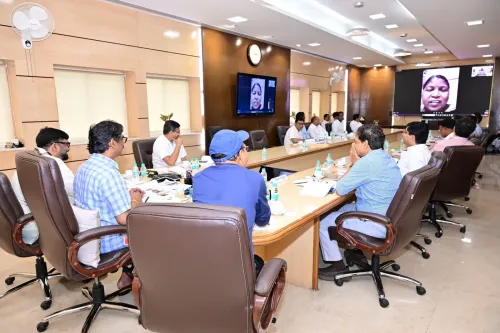
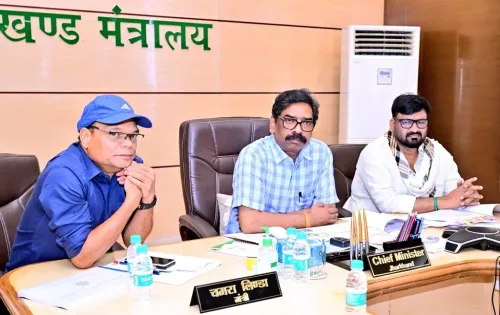
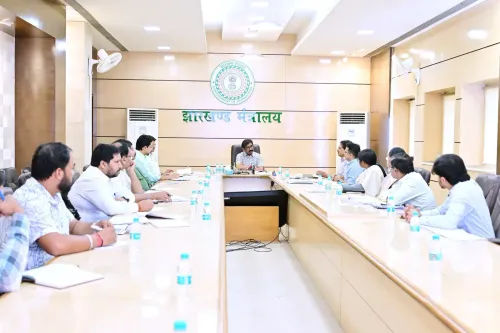
A delegation of senior welfare officials and education advocates walked into the Chief Minister's office in Ranchi on Saturday, 21 November 2026 — a meeting that placed Jharkhand's most marginalised communities squarely at the top of the state's agenda. The Chief Minister's Office of Jharkhand confirmed that Chief Minister Hemant Soren received a courtesy call from key figures in the state's social welfare architecture.
The visitors included Kripanand Jha, Secretary of the Department of Scheduled Tribes, Scheduled Castes, Minorities and Backward Classes Welfare; Kuldeep Chaudhary, Commissioner for Minority Welfare; and representatives of PanIIT-PREJHA, a PanIIT-linked initiative focused on coaching and educational preparation for students from Jharkhand.
Who Is PanIIT-PREJHA and Why This Meeting Matters
PanIIT-PREJHA is part of a broader ecosystem of alumni-driven programmes that channel IIT networks toward expanding access to competitive exam coaching — particularly for first-generation aspirants from tribal and backward-class backgrounds. Jharkhand, home to one of India's largest Scheduled Tribe populations, has long sought institutional partnerships to bridge the gap between marginalised communities and elite technical education pathways.
The presence of both the SC/ST welfare secretary and the minority welfare commissioner alongside a PanIIT body signals a potential convergence: state administrative muscle meeting structured technical coaching infrastructure. That combination has the makings of a programme with real reach.
Hemant Soren's Welfare-First Governance Track
Chief Minister Hemant Soren of the Jharkhand Mukti Morcha has consistently positioned tribal and backward-class welfare as the cornerstone of his administration. His government has pursued a range of education and livelihood initiatives targeting SC, ST, minority, and OBC communities — the same groups represented in this meeting's departmental lineup.
Coordinating directly with welfare department leadership and an external education partner at the Chief Minister's level reflects a governance style that keeps high-stakes social-sector decisions close to the top of the executive. Any follow-up announcement — a new coaching scheme, a scholarship expansion, or a formal partnership agreement — would flow naturally from a meeting at this level.
Jharkhand is watching to see whether this courtesy call translates into a concrete programme for the state's most underserved students. The IIT network's reach, combined with government welfare funding, could move the needle — if the political will holds.
Point of View
Keeping such coordination at the Chief Minister's level is a deliberate signal: tribal and backward-class advancement is not delegated, it is owned at the top. The PanIIT-PREJHA angle is particularly significant; if formalised, it could mark a shift from ad hoc coaching initiatives to a structured, institutionally-backed pipeline for first-generation competitive exam aspirants. Watch for a formal scheme announcement — that is where this meeting's real weight will be measured.
NationPress
21 Nov 2026
Frequently Asked Questions
Who met CM Hemant Soren at the Jharkhand CMO on 21 November 2026?
CM Hemant Soren met Kripanand Jha, Secretary of the SC/ST and Minority Welfare Department, Kuldeep Chaudhary, Commissioner for Minority Welfare, and representatives of PanIIT-PREJHA on 21 November 2026.
What is PanIIT-PREJHA?
PanIIT-PREJHA is a PanIIT alumni-linked initiative that supports competitive exam coaching and educational preparation for students from Jharkhand, particularly from marginalised backgrounds.
Why did welfare officials meet the Jharkhand Chief Minister?
The meeting was a courtesy call combining state welfare department leadership with a technical education partner, likely to discuss educational and welfare schemes for SC, ST, minority, and backward-class communities in Jharkhand.
What could come out of the CM Soren and PanIIT-PREJHA meeting?
Potential outcomes include a new coaching scheme, scholarship programme, or formal government partnership with PanIIT-PREJHA to expand access to competitive exam preparation for Jharkhand's marginalised students.
Who is Hemant Soren?
Hemant Soren is the Chief Minister of Jharkhand and the leader of the Jharkhand Mukti Morcha (JMM), known for prioritising tribal and backward-class welfare in his administration.