CM Hemant Soren Vows Original Tech Governance Model for Jharkhand
Synopsis
Chief Minister Hemant Soren has declared that Jharkhand will develop its own original technology governance model, rejecting a copy-paste approach and building on the state's World Economic Forum engagement. The move signals Jharkhand's ambition to become a distinct sub-national technology policy actor in India.
Key Takeaways
The Chief Minister's Office of Jharkhand posted the statement on 8 July 2026 , quoting CM Hemant Soren directly.
Soren said Jharkhand will pursue its own 'original model' of technology governance — not a copy of existing frameworks.
The announcement follows the state's engagement at the World Economic Forum , a global platform for political and business leaders.
Jharkhand's youth, local startups, and state administration are the primary stakeholders of the proposed model.
Formal policy details — including pilot projects or legislative steps — are yet to be announced and may come in upcoming budget or investor sessions.
The Chief Minister's Office of Jharkhand announced on Wednesday, 8 July 2026 that the state is ready to advance a homegrown model of technological governance, with Chief Minister Hemant Soren declaring that Jharkhand will chart its own path rather than replicate approaches from elsewhere — a statement that follows the state's engagement at the World Economic Forum.
Context
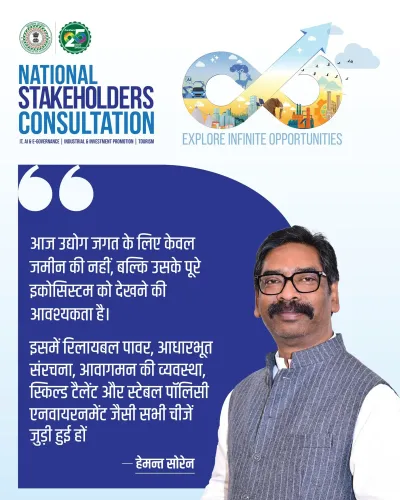
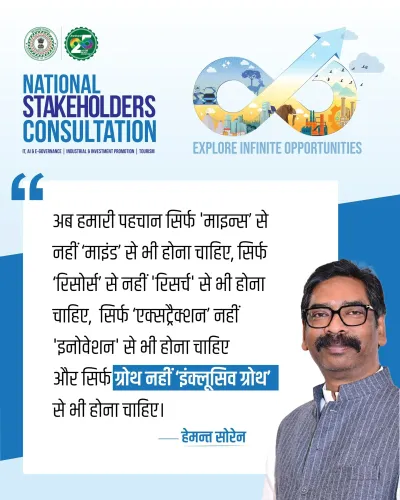
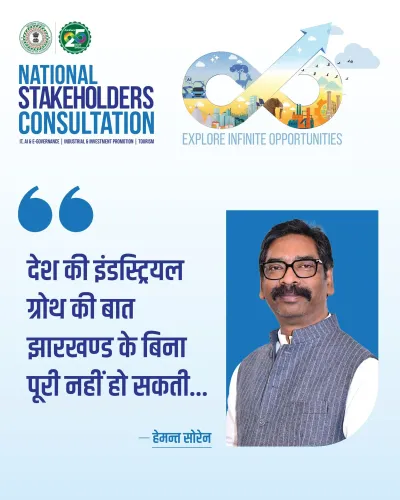
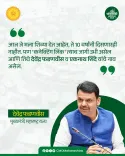
Posting on behalf of the Chief Minister, the official CMO account quoted Soren as saying: 'वर्ल्ड इकोनॉमिक फोरम में दस्तक देने के बाद अब झारखण्ड तकनीकी क्रांति और टेक्नोलॉजी गवर्नेंस के अपने मौलिक मॉडल के साथ आगे बढ़ने को तैयार है' — translated: 'After making its mark at the World Economic Forum, Jharkhand is now ready to move forward with a technological revolution and its own original model of technology governance.' He added: 'We will not copy-paste — we will forge a new path with our own intellect.'
The remarks signal an intent to distinguish Jharkhand's digital and governance agenda from generic national templates, positioning the mineral-rich eastern state as an independent technology policy actor on both domestic and international stages.
Policy Backdrop
India's Digital India programme, launched in 2015, created a common federal framework for e-governance and digital infrastructure that states have largely implemented in uniform fashion. Several states have since begun articulating region-specific technology and data governance strategies that build on the national baseline while claiming distinct local character.
Jharkhand, home to a significant tribal population and an economy historically anchored in mining and natural resources, has been seeking to diversify. A state-specific technology governance model, if formalised, would represent a meaningful shift in how the administration delivers public services and attracts investment.
Stakeholders and Impact
Jharkhand's youth, local startup ecosystem, and state bureaucracy stand to be the most immediate stakeholders of any new technology policy framework. A homegrown governance model could shape how digital services reach tribal and rural communities who remain underserved by standardised national platforms.
At the international level, the state's engagement with the World Economic Forum — a body that convenes heads of government and global business leaders — lends visibility to Soren's pitch, potentially drawing investor attention to Jharkhand as an emerging sub-national innovation hub.
What's Next
Concrete details of the proposed technology governance model — including any pilot projects, legislative framework, or institutional structure — are expected to emerge in forthcoming Jharkhand budget sessions or investor summits. The Chief Minister's strong public framing suggests a formal policy announcement may be in the pipeline.
Whether Jharkhand can translate this ambition into a replicable and measurable governance model will be closely watched, particularly as other Indian states compete to define their own digital identities in an increasingly federalised technology landscape.
Point of View
So far, a domestic aspiration. This fits a broader pattern of opposition-ruled states using international forums to project credibility independent of New Delhi. The real test will come when Jharkhand must translate this rhetoric into a concrete, funded, and measurable governance framework that delivers for its tribal and rural majority.
NationPress
8 Jul 2026
Frequently Asked Questions
What did CM Hemant Soren say about Jharkhand's technology model?
Soren said Jharkhand will build its own original model of technology governance and will not copy-paste approaches from elsewhere, forging a new path using the state's own intellect and capabilities.
What is Jharkhand's connection to the World Economic Forum?
The Chief Minister's Office referenced the state's engagement at the World Economic Forum as a springboard for its technology governance ambitions, though specific details of that engagement have not yet been formally confirmed.
How is Jharkhand's tech model different from Digital India?
India's Digital India programme provides a common national framework; Soren's statement signals that Jharkhand intends to develop a distinct, state-specific model rather than simply implementing the centralised template.
Who benefits from Jharkhand's proposed technology governance model?
The primary beneficiaries are expected to be Jharkhand's youth, local startups, and citizens — particularly tribal and rural communities — who could gain better-tailored digital public services.
When will Jharkhand announce details of its technology policy?
No formal date has been set, but details are expected to emerge in upcoming Jharkhand budget sessions or investor summits following the Chief Minister's public commitment.