CM Himanta Activates Whole-of-Govt Response to Upper Assam Floods
Synopsis
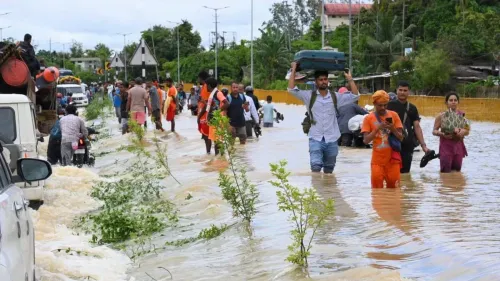
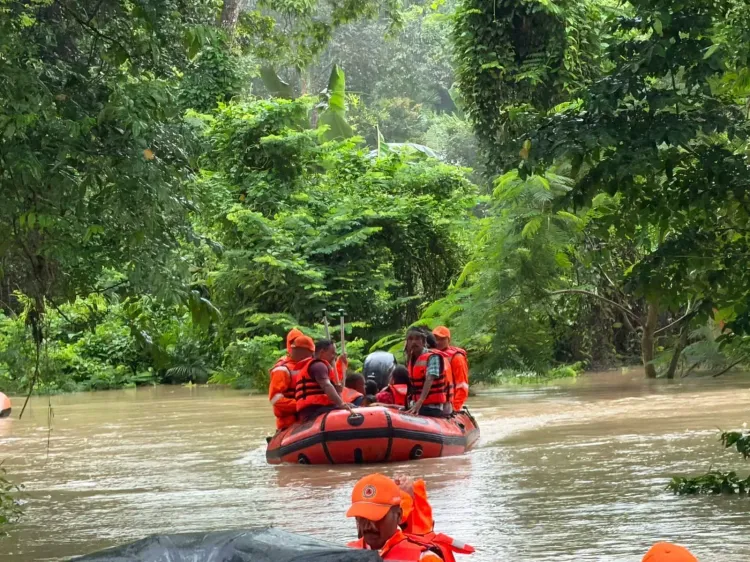
Assam Chief Minister Himanta Biswa Sarma has activated a whole-of-government response to severe flooding in Upper Assam after the Jaji, Dikhow, and Dichang rivers breached danger levels, inundating Jorhat, Sivasagar, Charaideo, Dibrugarh, and nearby districts on 20 July 2026.
Key Takeaways
Assam CM Himanta Biswa Sarma announced a whole-of-government flood response on 20 July 2026 .
The Jaji, Dikhow, and Dichang rivers are flowing above danger levels due to unprecedented rainfall.
Districts affected include Jorhat, Sivasagar, Charaideo , and Dibrugarh in Upper Assam.
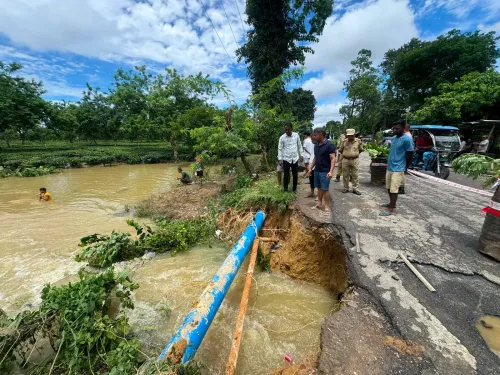
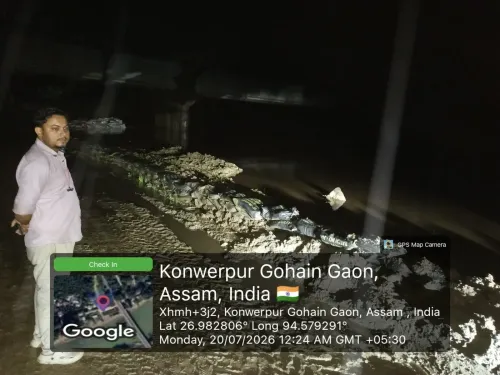
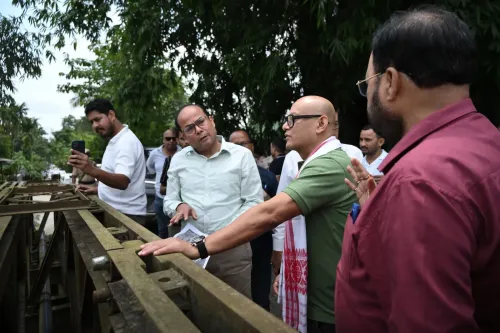
Ground teams are fortifying embankments using sandbags, controlled piping, and additional defensive layers.
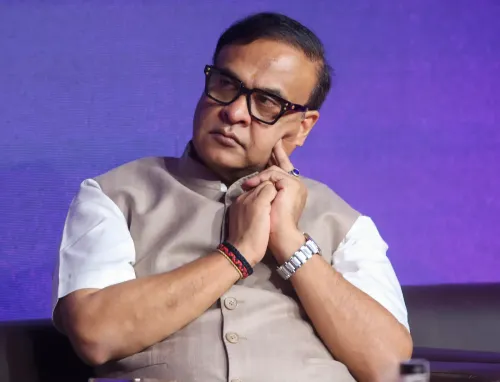
CM Sarma stated he is personally monitoring the situation to ensure timely relief and rehabilitation.
All departments and officials are directed to remain on the ground until the situation normalises.
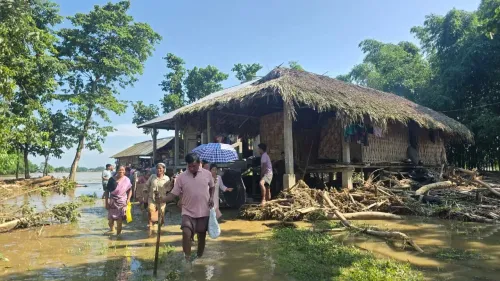
Assam Chief Minister Himanta Biswa Sarma on Monday, 20 July 2026, announced a whole-of-government response to severe flooding across large parts of Upper Assam, with the Jaji, Dikhow, and Dichang rivers flowing above danger levels and inundating multiple districts.
Context
Unprecedented monsoon rainfall has pushed the Jaji, Dikhow, and Dichang rivers beyond their danger marks, triggering flooding across Jorhat, Sivasagar, Charaideo, Dibrugarh, and adjoining districts in Upper Assam. The Chief Minister confirmed he is personally monitoring the situation to ensure relief and rehabilitation efforts reach affected communities on time.
Sarma stated: 'The safety of people is our utmost priority and I am personally monitoring the situation to ensure that all required relief and rehabilitation efforts are reaching them on time.' He added that all departments and officials would remain on ground until conditions normalise.
Policy Backdrop
Assam has operated an annual embankment fortification and flood relief programme under state disaster management protocols since the 1950s, with major reinforcement drives following the 2004 and 2012 floods. The current response follows that established framework, deploying sandbagging, controlled piping, and additional defensive embankment layers.
The state's vulnerability stems from the Brahmaputra river system and its tributaries, whose channels run through low-lying terrain across Upper Assam. Peak monsoon months routinely trigger multi-department coordination under the state disaster management authority, a pattern that has defined governance in the region for decades.
Stakeholders and Impact
Residents across Jorhat, Sivasagar, Charaideo, and Dibrugarh districts face immediate displacement and property damage risks. Ground teams are actively working to fortify embankments and deploy sandbags to protect lives and infrastructure in these areas.
Dibrugarh is a major commercial hub in Upper Assam, making economic disruption a significant concern alongside the humanitarian impact. Sivasagar and Charaideo, historically significant districts, face inundation that can damage both settlements and heritage sites in the region.
What's Next
Observers will watch for the potential deployment of central National Disaster Response Force (NDRF) teams and the possible release of additional state relief funds if the flood situation worsens. The trajectory of the ongoing monsoon over Upper Assam will be the primary determinant of how long the whole-of-government posture must be sustained.
Chief Minister Sarma's commitment to keep all departments and officials on the ground signals that the administration is treating this as an active emergency rather than a routine seasonal event, with relief and rehabilitation operations expected to continue until river levels recede to safe thresholds.
Point of View
Where flood response is a high-visibility governance test repeated every monsoon season. The 'whole-of-government' framing signals administrative seriousness but also pre-empts criticism of departmental silos that have historically slowed relief delivery in the Northeast. The simultaneous flooding of five districts in Upper Assam suggests a rainfall event of above-normal intensity, which, if sustained, could escalate into a demand for central intervention and NDRF deployment. How quickly embankment fortification translates into reduced inundation will determine whether this response is remembered as effective crisis management or routine seasonal firefighting.
NationPress
21 Jul 2026
Frequently Asked Questions
Which districts in Assam are flooded in July 2026?
Jorhat, Sivasagar, Charaideo, and Dibrugarh districts in Upper Assam are currently experiencing flooding due to the Jaji, Dikhow, and Dichang rivers flowing above danger levels.
What is the Assam government doing about the floods?
The Assam government has adopted a whole-of-government approach, with teams on the ground fortifying embankments, deploying sandbags, and using controlled piping to protect lives and property.
Is CM Himanta Biswa Sarma personally involved in flood relief?
Yes, Chief Minister Himanta Biswa Sarma has stated he is personally monitoring the flood situation to ensure relief and rehabilitation efforts reach affected people on time.
Which rivers are causing flooding in Upper Assam?
The Jaji, Dikhow, and Dichang rivers are flowing above the danger level and are the primary cause of the current flooding in Upper Assam.
What is the whole-of-government approach in Assam flood management?
It refers to coordinated deployment of all state departments and officials on the ground simultaneously, rather than relying on a single agency, to manage relief, embankment protection, and rehabilitation during a flood emergency.