CM Himanta Calls Assam's Last Decade a Transformation Era

Synopsis
Assam Chief Minister Himanta Biswa Sarma declared on 19 November 2026 that the past decade has been a period of transformation for Assam, citing an end to unrest and stagnation, while signalling that the state's growth trajectory is only just beginning.
Key Takeaways
CM Himanta Biswa Sarma described the last 10 years as a 'decade of transformation' for Assam in a post dated 19 November 2026 .
The 2020 Bodo Peace Accord ended decades of insurgency in Bodoland territorial areas and created new autonomous governance structures.
Central schemes including Bharatmala have accelerated highway, bridge, and rail projects across the Northeast since 2014 .
Sarma has led Assam as Chief Minister since May 2021 and convenes the North-East Democratic Alliance (NEDA) across the region.
The Assam assembly elections will be the critical test of whether the transformation narrative converts into electoral endorsement.
After years of insurgency, ethnic unrest, and economic drift that defined Assam for much of its modern history, Assam Chief Minister Himanta Biswa Sarma declared on Thursday, 19 November 2026 that the state has 'found its mojo' — and is nowhere near finished.
A decade that rewrote Assam's story
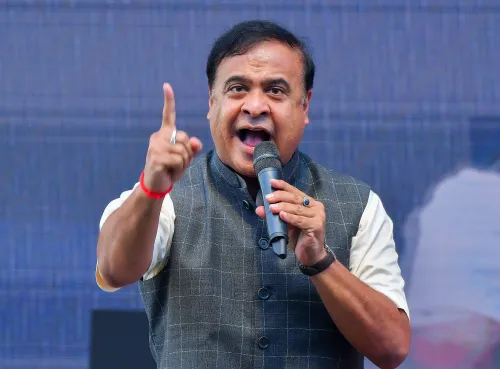
Sarma's post cuts to the heart of a political argument his party has pressed since 2016: that BJP-led governance broke a cycle of stagnation that neither peace accords nor earlier administrations could fully crack. 'As I have said time and again, the last 10 years has been a decade of transformation for Assam,' he wrote. 'After years of unrest, uncertainty and growth stagnation, Assam has found its mojo and we are not stopping anytime soon. This is just the beginning.'
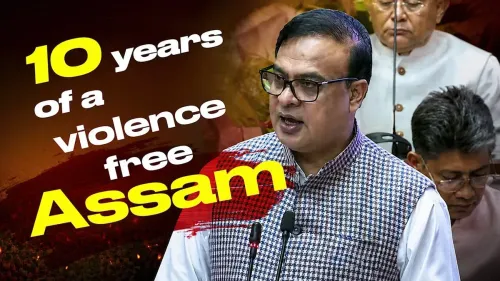
The claim carries real historical weight. Assam spent decades scarred by the Bodo insurgency, unresolved disputes from the 1985 Assam Accord on illegal immigration, and persistent underinvestment in infrastructure. The 2020 Bodo Peace Accord was a watershed — it reduced violence in the Bodoland territorial areas and created new autonomous governance structures, closing a chapter that had cost thousands of lives over three decades.
Bridges, highways, and the connectivity push
Beyond the peace process, the central government's Bharatmala highway programme and broader Act East Policy have funnelled significant infrastructure spending into the Northeast since 2014. New bridges across the Brahmaputra, expanded rail links, and improved road connectivity have begun stitching Assam into national and regional trade networks in ways that were aspirational a decade ago.
Sarma, who became Chief Minister in May 2021 after serving as state finance minister, has positioned himself as the face of this transformation narrative. As convenor of the North-East Democratic Alliance (NEDA), he has worked to consolidate BJP-aligned governments across the region, amplifying Assam's story into a template for Northeast governance.
What 'just the beginning' signals ahead of 2026 elections
The timing of the post is pointed. Assam assembly elections loom as the defining test of whether voters accept the transformation argument or demand a reckoning. The government's ability to deliver on promised industrial corridors and attract private investment will determine whether the momentum Sarma describes translates into tangible employment and income gains for ordinary Assamese families.
The opposition will contest the narrative, pointing to unresolved questions around the National Register of Citizens, land rights, and economic inequality across ethnic communities. The coming months will force that debate into the open.
Sarma's confidence is unambiguous — and the electorate will soon deliver its verdict on whether the decade of transformation was real, partial, or still a promise in progress.
Point of View
Reinforcing a BJP narrative that frames 2016–2026 as a clean break from Congress-era instability and insurgency. The 'just the beginning' framing is strategically forward-looking — it pre-empts accountability questions by repositioning the government as a work in progress rather than a completed term. The reference to 'mojo' is deliberate: it is emotive and personal, designed to cut through policy jargon and speak to a pride-of-place sentiment among Assamese voters. Whether the narrative holds will depend on how credibly the government can link macro infrastructure gains to household-level economic improvement before votes are cast.
NationPress
19 Nov 2026
Frequently Asked Questions
What did Himanta Biswa Sarma say about Assam's development?
Sarma declared that the last 10 years have been a 'decade of transformation' for Assam, saying the state has 'found its mojo' after years of unrest, uncertainty, and growth stagnation, and that this is 'just the beginning.'
What is the Bodo Peace Accord and why does it matter for Assam?
The 2020 Bodo Peace Accord ended a prolonged insurgency in Assam's Bodoland territorial areas, creating new autonomous governance structures and significantly reducing violence — widely cited as a turning point in the state's stability.
How has infrastructure development changed Assam in the last decade?
Under central schemes like Bharatmala and the Act East Policy , Assam has seen major investments in highways, bridges over the Brahmaputra, and rail connectivity since 2014 , improving links within the Northeast and toward Southeast Asia.
When are the next Assam assembly elections?
The next Assam assembly elections are due in 2026 and will serve as the key electoral test of whether voters endorse the BJP government's decade-long transformation claims under CM Sarma.
What is NEDA and what role does Himanta Biswa Sarma play in it?
The North-East Democratic Alliance (NEDA) is a BJP-led regional political alliance that consolidates non-Congress governments across Northeast India. Sarma serves as its convenor, making him a central figure in regional political strategy beyond Assam alone.