CM Himanta: Assam to ease land norms for private schools, universities

Synopsis
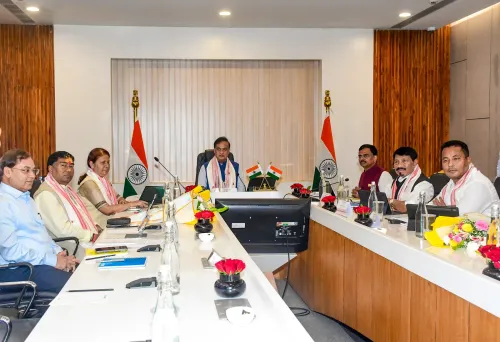
The Assam Cabinet, chaired by CM Himanta Biswa Sarma, has cleared amendments to reduce minimum land requirements for private universities and schools, to be introduced in the upcoming Budget Session, while approving ₹9.75 crore for ATCL's VRS proceedings.
Key Takeaways
The Assam Cabinet has approved amendments to land norms for private educational institutions, to be introduced in the upcoming Budget Session .
CM Himanta Biswa Sarma confirmed the changes will reduce the minimum land requirement for both private universities and private schools .
Strict safety and infrastructure standards will be maintained despite the reduction in land requirements.
The Cabinet approved ₹9.75 crore for ATCL to facilitate Voluntary Retirement Scheme (VRS) proceedings for its executives.
The land-norm amendments align with Assam's broader policy of incremental deregulation to attract private investment in education since 2021 .
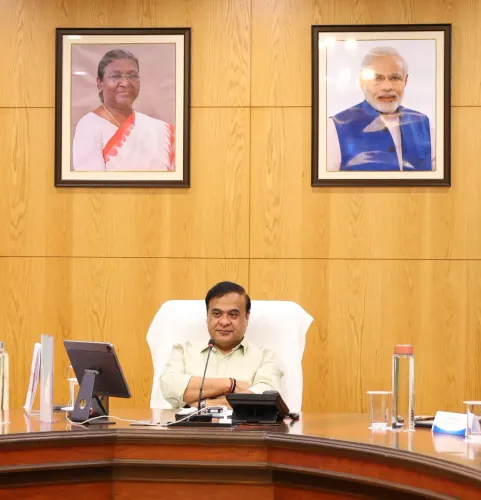
The Chief Minister's Office of Assam announced on Tuesday, 23 June 2026 that Chief Minister Dr. Himanta Biswa Sarma addressed the media following a state Cabinet meeting, revealing two significant decisions: amendments to land norms for private educational institutions and a financial outlay for voluntary retirement proceedings at a state-linked entity.
Context
Speaking after the Assam Cabinet meeting, CM Himanta Biswa Sarma stated that amendments to land norms for private educational institutions will be introduced in the upcoming Budget Session of the Assam Legislative Assembly. The proposed changes will reduce the minimum land requirement for both private universities and private schools, while maintaining strict safety and infrastructure standards. The Cabinet also approved ₹9.75 crore for ATCL to facilitate Voluntary Retirement Scheme (VRS) proceedings for its executives.
Policy Backdrop
Since 2021, the Assam government under CM Himanta Biswa Sarma has periodically reviewed regulatory requirements to facilitate private investment in higher education. The state has pursued incremental deregulation of land and infrastructure norms aimed at expanding private educational capacity, while simultaneously retaining quality controls to protect student welfare. This approach mirrors a broader pattern across Indian states that have revised establishment rules for private universities and schools in recent years to attract institutional investment and improve educational access.
The move to ease land requirements is significant in a state like Assam, where land availability and cost can pose barriers to establishing new educational campuses, particularly in semi-urban and rural areas. By lowering the minimum land threshold, the government signals its intent to widen the private sector's role in education without compromising on safety or infrastructure benchmarks.
Stakeholders and Impact
The proposed amendments are expected to directly benefit private school operators, university promoters, and educational trusts seeking to establish or expand institutions in Assam. Reduced land requirements could lower the capital barrier for new entrants, potentially increasing the number of private educational institutions across the state and improving access to schooling and higher education for students, especially in underserved regions.
On the financial restructuring front, the Cabinet's approval of ₹9.75 crore for ATCL to support VRS proceedings for its executives reflects the government's parallel effort to rationalise the workforce of state-linked entities. Voluntary retirement schemes are a recognised tool for managed workforce reduction, allowing organisations to restructure without resorting to forced retrenchment.
What's Next
The land-norm amendments will be formally tabled during the upcoming Assam Budget Session, where they will be subject to legislative debate and passage. Stakeholders in the private education sector will watch closely for the specific numerical changes to minimum land requirements and any accompanying notifications on implementation timelines. The government has indicated that safety and infrastructure standards will remain non-negotiable, so the precise contours of the amended norms will be critical for prospective institution operators.
The disbursement of ₹9.75 crore to ATCL and the subsequent progress of VRS proceedings will also be monitored as an indicator of the state's broader approach to restructuring public-sector enterprises. Together, these decisions underscore Assam's dual strategy of opening space for private participation in education while managing legacy obligations in state-linked organisations.
Point of View
CM Himanta Biswa Sarma ensures legislative legitimacy while signalling policy intent to investors ahead of time. The concurrent approval of VRS funding for ATCL suggests the administration is managing both the supply side of education reform and the fiscal liabilities of legacy state entities in the same policy cycle. The real test will be whether the amended norms translate into a measurable increase in institutional capacity on the ground.
NationPress
23 Jun 2026
Frequently Asked Questions
What changes is Assam making to land norms for private schools and universities?
The Assam government plans to reduce the minimum land requirement for private universities and schools through amendments to be introduced in the upcoming Budget Session, while keeping safety and infrastructure standards intact.
When will the Assam land norm amendments for private educational institutions be introduced?
The amendments will be introduced during the upcoming Assam Budget Session of the state legislative assembly, as announced by CM Himanta Biswa Sarma after the Cabinet meeting on 23 June 2026.
What is ATCL and why did Assam approve ₹9.75 crore for it?
The Assam Cabinet approved ₹9.75 crore for ATCL to facilitate Voluntary Retirement Scheme (VRS) proceedings for its executives, as part of the state's effort to restructure state-linked entities.
How will reducing land requirements benefit private educational institutions in Assam?
Lower minimum land thresholds reduce the capital barrier for establishing new schools and universities, potentially enabling more private operators to set up institutions, especially in semi-urban and rural areas of Assam.
Will quality standards be compromised with the new land norms in Assam?
No. CM Himanta Biswa Sarma explicitly stated that strict safety and infrastructure standards will be maintained even as the minimum land requirement is reduced for private educational institutions.