CM Himanta Backs Mission-Mode Push for Solar, Food Schemes
Synopsis
Assam Chief Minister Himanta Biswa Sarma has affirmed that the state is working in mission mode to expand PM Surya Ghar rooftop solar coverage and achieve full saturation of PMGKAY food scheme beneficiaries, following an exchange with Union Minister Pralhad Joshi.
Key Takeaways
CM Himanta Biswa Sarma publicly acknowledged Union Minister Pralhad Joshi's inputs on welfare scheme implementation on 11 July 2026 .
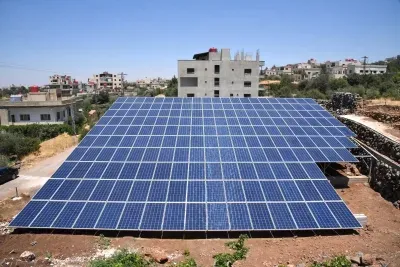
Assam is pursuing mission-mode expansion of PM Surya Ghar Muft Bijli Yojana , which targets free rooftop solar for one crore households nationally.
PMGKAY , launched in March 2020 , provides free food grain to priority and Antyodaya households; Assam aims for full beneficiary saturation.
The coordination between Assam and the Union Ministry reflects a cooperative federalism model common to BJP-governed states on central welfare delivery.
Progress on solar installations and food scheme audits in Assam will be a key indicator of whether mission-mode targets translate into measurable outcomes.
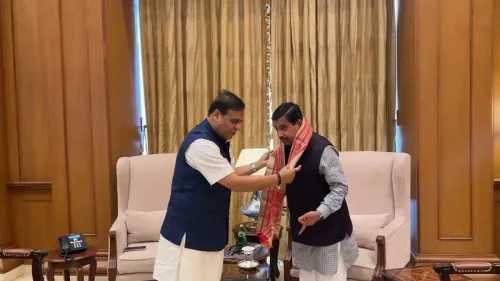
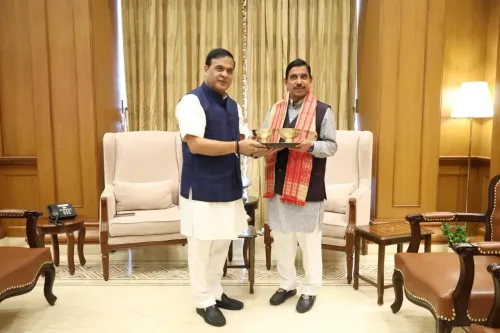
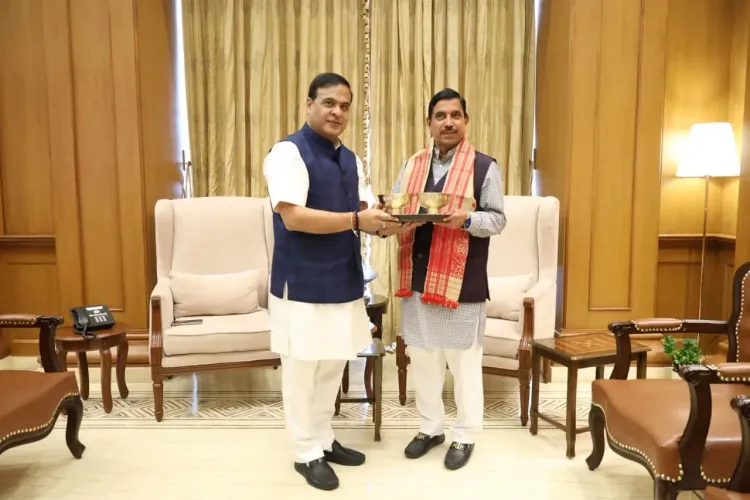
Assam Chief Minister Himanta Biswa Sarma on Saturday, 11 July 2026, acknowledged Union Minister Pralhad Joshi for his inputs on central welfare schemes, affirming that Assam is pursuing mission-mode implementation to expand PM Surya Ghar coverage and achieve saturation of PMGKAY beneficiaries across the state.
Context
Chief Minister Sarma's post, directed at Union Minister Pralhad Joshi — who holds charge of the Ministry of Consumer Affairs, Food and Public Distribution — signals active coordination between the Assam government and the Centre on two flagship welfare programmes. The Chief Minister stated, 'Assam is working on a mission mode to expand PM Surya Ghar coverage and attain saturation of PMGKAY beneficiaries,' underscoring the state's intent to maximise last-mile delivery.
The exchange reflects the cooperative federalism framework that has characterised BJP-governed states' approach to central scheme implementation, particularly in the Northeast where infrastructure and outreach challenges make saturation targets more demanding.
Policy Backdrop
PM Surya Ghar Muft Bijli Yojana, announced in 2024, aims to install free rooftop solar units in one crore households across India, offering substantial electricity savings to beneficiary families through central financial support. The scheme is positioned as a cornerstone of the government's push for household-level clean energy adoption.
Pradhan Mantri Garib Kalyan Anna Yojana (PMGKAY) was originally launched in March 2020 as pandemic-era food relief, providing free grain to priority and Antyodaya households. It has since been extended multiple times and remains one of the largest food security interventions in the country. Assam's stated goal of achieving saturation of PMGKAY beneficiaries means ensuring every eligible household in the state is enrolled and receiving entitlements without gaps.
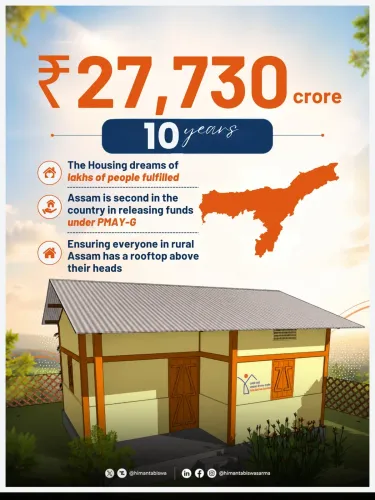
BJP-led states have increasingly adopted 'saturation' as a governing metric — a pattern seen earlier in drives for full coverage under schemes such as PM Ujjwala Yojana and Pradhan Mantri Awas Yojana (PMAY), where state-union coordination was used to close last-mile delivery gaps.
Stakeholders and Impact
The primary beneficiaries are poor and rural households in Assam — families enrolled or eligible under PMGKAY for subsidised food grain, and those who stand to gain from rooftop solar installations that can reduce electricity bills substantially. In a state with significant rural population and pockets of energy poverty, both schemes carry direct livelihood implications.
Union Minister Pralhad Joshi's ministry oversees food distribution logistics nationally, making his engagement with state-level implementation critical for resolving supply chain and beneficiary identification bottlenecks. The Chief Minister's public acknowledgement of Joshi's 'valuable insights' suggests the interaction went beyond routine protocol, pointing to substantive policy-level discussion.
What's Next
Attention will now turn to Assam's state-level progress reports on PM Surya Ghar installations and PMGKAY beneficiary audits in the coming months. Mission-mode declarations typically precede formal targets and public dashboards, and observers will watch whether Assam translates this commitment into measurable coverage milestones.
If Assam achieves or approaches saturation in both schemes, it could serve as a Northeast model for other states still working through beneficiary identification and last-mile delivery challenges — reinforcing the region's role in the broader national welfare architecture.
Point of View
The other a legacy food security programme, together covering the two most politically resonant welfare domains. Framing both under 'mission mode' and 'saturation' borrows the vocabulary of earlier scheme drives like Ujjwala and PMAY, where full coverage became a political deliverable rather than merely an administrative target. For Assam, which sits at the intersection of Northeast development politics and BJP's welfare-centric electoral strategy, hitting saturation in these schemes ahead of future electoral cycles carries significant strategic weight.
NationPress
11 Jul 2026
Frequently Asked Questions
What is PM Surya Ghar Muft Bijli Yojana?
PM Surya Ghar Muft Bijli Yojana is a central government scheme announced in 2024 to provide free rooftop solar installations to one crore households across India, helping families reduce electricity bills through clean energy.
What is PMGKAY and who benefits from it?
PMGKAY, or Pradhan Mantri Garib Kalyan Anna Yojana, is a central scheme that provides free food grain to priority and Antyodaya households. It was launched in March 2020 as pandemic relief and has been extended multiple times.
What did Assam CM Himanta Biswa Sarma say about welfare schemes?
CM Himanta Biswa Sarma said Assam is working in mission mode to expand PM Surya Ghar coverage and attain saturation of PMGKAY beneficiaries, following an interaction with Union Minister Pralhad Joshi.
Who is Pralhad Joshi and what is his role in these schemes?
Pralhad Joshi is the Union Minister of Consumer Affairs, Food and Public Distribution, with oversight responsibility for food security programmes including PMGKAY, and is involved in coordination with states on scheme implementation.
What does 'saturation' mean in the context of welfare schemes in India?
'Saturation' in welfare scheme delivery means ensuring that every eligible beneficiary is enrolled and receiving entitlements, with no gaps in last-mile coverage — a target increasingly used by BJP-governed states as a governance benchmark.