CM Himanta calls for peace as 52 Assam-Arunachal villages await border fix
Synopsis
Assam Chief Minister Himanta Biswa Sarma on 13 August 2026 declared that only 52 villages remain unresolved in the Assam-Arunachal Pradesh border dispute, urging both states to maintain peace while dialogue continues under central facilitation.
Key Takeaways
52 villages remain unresolved in the Assam-Arunachal Pradesh boundary dispute, down from an original caseload of 123 villages covered under the April 2023 MoU .
Assam CM Himanta Biswa Sarma publicly reaffirmed that both state governments will continue discussions 'in the same spirit' to achieve full resolution.
The post tagged Union Home Minister Amit Shah , Arunachal CM Pema Khandu , and Union Minister Kiren Rijiju , signalling coordinated political messaging.
The dispute dates to 1972 , when Arunachal Pradesh was separated from Assam, leaving a contested frontier that has generated local tensions for decades.
Sarma appealed directly to border residents for 'peace and harmony', indicating that ground-level anxieties persist even as the political process advances.
The next milestone to watch is the joint boundary committee's scheduled meetings and any formal report to the Union Home Ministry on the outstanding villages.
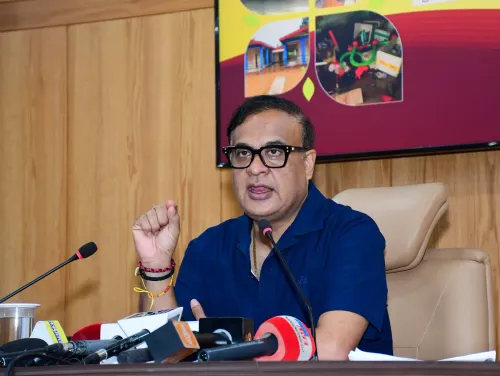
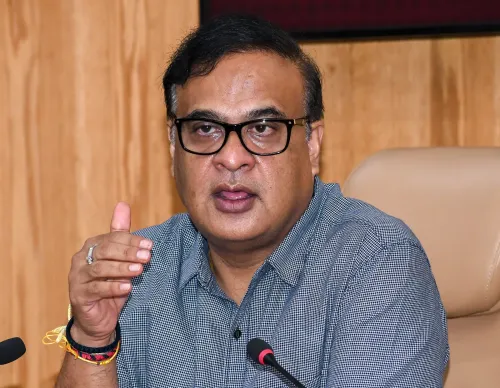
Fifty-two villages sit at the heart of one of Northeast India's longest-running boundary disputes — and Assam Chief Minister Himanta Biswa Sarma wants the people on both sides to know that the governments are not done yet. On Thursday, 13 August 2026, Sarma took to X to reaffirm the shared resolve of Assam and Arunachal Pradesh to settle their remaining border differences through dialogue, tagging Union Home Minister Amit Shah, Arunachal Pradesh Chief Minister Pema Khandu, and Union Minister Kiren Rijiju in the process.
From 123 villages to 52 — the arc of a long negotiation
The Assam-Arunachal boundary dispute stretches back to 1972, when Arunachal Pradesh was carved out as a Union Territory from Assam, leaving behind a contested frontier that would simmer for decades. A landmark moment came in April 2023, when both states signed a Memorandum of Understanding committing to resolve disputes across 123 villages through a joint committee process — a framework that has since chipped away at the list. Sarma's post places the remaining tally at 52 villages, a figure that, if accurate, would represent meaningful progress on more than half the original caseload.
'In recent years, we have resolved most of our border differences through dialogue and friendship,' Sarma wrote. 'Only 52 villages remain, and both Governments will continue discussions in the same spirit to resolve the dispute completely.' The appeal was direct and personal: 'I appeal to the people of Assam and Arunachal to maintain peace and harmony. Boundaries may define our States, but they can never divide our hearts.'
Shah, Khandu, Rijiju — why the tag list matters
The choice of handles is deliberate. Amit Shah, as Union Home Minister, oversees interstate coordination across the Northeast and has been the central government's point person on boundary settlements in the region. Pema Khandu, Arunachal's Chief Minister, is the counterpart whose buy-in is essential for any final agreement. Kiren Rijiju, a Union Minister and Arunachal native, carries political weight in the state's public discourse. Looping all three into a single public statement signals that this is not a unilateral gesture — it is a coordinated message aimed at residents of border villages who watch these signals closely.
The move also fits a wider BJP playbook in the Northeast: use bilateral dialogue, backed by central facilitation through the Ministry of Home Affairs and the North-East Democratic Alliance (NEDA) — which Sarma himself convenes — to defuse disputes that colonial-era and post-reorganisation boundary demarcations left unresolved.
What the remaining 52 villages represent
Border villages in this belt are not abstract administrative units. They are communities where land rights, forest access, and civic services hinge on which state's jurisdiction applies — questions that have historically generated local tension. Sarma's public appeal for 'peace and harmony' suggests that ground-level anxieties remain even as the political process moves forward. The next concrete milestone to watch: scheduled meetings of the joint boundary committee and any formal report submitted to the Union Home Ministry on the outstanding villages.
The political calendar adds urgency. With the dispute now in its final stretch — at least by Sarma's count — a complete resolution before the next electoral cycle would be a significant governance win for both state governments and for the Centre's Northeast integration narrative.
Point of View
Sidestepping courts and commissions. A clean resolution of the remaining 52 villages would hand both state governments a durable governance credential ahead of future electoral cycles, reinforcing the Centre's broader narrative of a 'transformed Northeast.'
NationPress
13 Aug 2026
Frequently Asked Questions
How many villages are still disputed between Assam and Arunachal Pradesh?
According to Assam CM Himanta Biswa Sarma's statement on 13 August 2026 , 52 villages remain unresolved in the boundary dispute between the two states.
When did Assam and Arunachal Pradesh sign a border agreement?
The two states signed a Memorandum of Understanding in April 2023 to resolve boundary disputes across 123 villages through a joint committee process.
Why does Assam share a border dispute with Arunachal Pradesh?
The dispute originates from 1972 , when Arunachal Pradesh was carved out as a Union Territory from Assam, leaving behind an imprecisely demarcated frontier that has been contested ever since.
What is Amit Shah's role in the Assam-Arunachal border talks?
Union Home Minister Amit Shah oversees interstate coordination in the Northeast and serves as the central government's key facilitator for boundary settlement talks between the two states.
What is NEDA and what is Himanta Biswa Sarma's role in it?
NEDA, the North-East Democratic Alliance , is a BJP-led political coalition of Northeast parties. Himanta Biswa Sarma serves as its convenor, making him a central figure in regional political coordination.