Kishan Reddy Hails MMDR Amendment Bill Passage in Rajya Sabha
Synopsis
The Rajya Sabha has passed the Mines and Minerals (Development and Regulation) Amendment Bill, 2026. Union Mines Minister G. Kishan Reddy says it will create a unified national mineral market, ensure fiscal predictability, attract investment, and strengthen India's mineral and energy security under the Viksit Bharat vision.
Key Takeaways
The Rajya Sabha passed the Mines and Minerals (Development and Regulation) Amendment Bill, 2026 on August 13, 2026 .
The Bill aims to create a unified national mineral market and a predictable fiscal framework for the mining sector.
Kishan Reddy said the legislation will catalyse private investment and expand domestic mineral production.
The reform builds on the MMDR Act of 1957 and the auction-based transparency overhaul introduced by the 2015 amendment .
The Bill is positioned as critical to India's energy security and its Viksit Bharat infrastructure and manufacturing goals.
Key next steps include notification of rules, new mineral block auctions, and finalisation of revised royalty and fiscal terms.
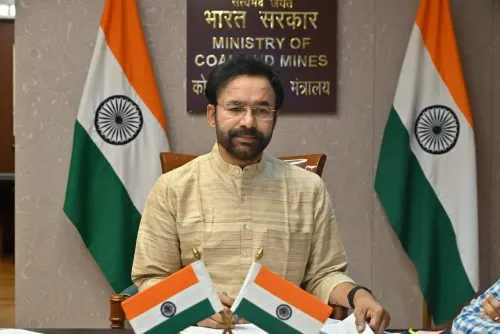
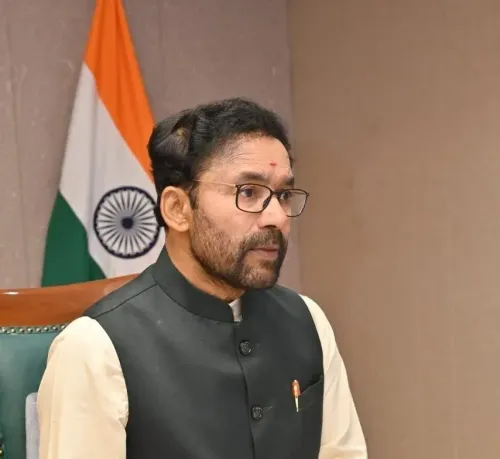
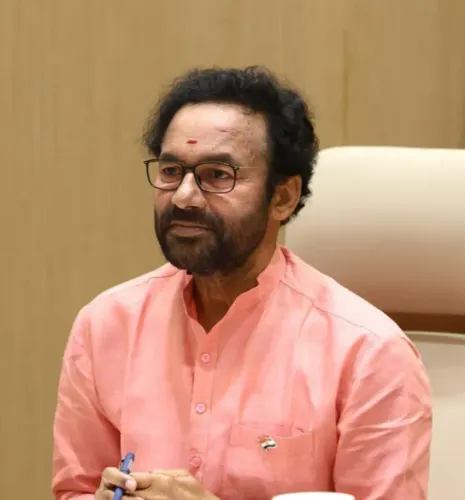
A unified national mineral market, a predictable fiscal framework, and a single legislative sweep — Union Coal and Mines Minister G. Kishan Reddy welcomed the passage of the Mines and Minerals (Development and Regulation) Amendment Bill, 2026 by the Rajya Sabha on Thursday, August 13, calling it a structural reset for India's mining sector.
What the Bill promises: one market, one framework
Reddy framed the legislation around a three-part promise: a single national mineral market, a unified fiscal regime, and the kind of regulatory predictability that private capital has long demanded before committing to large-scale mining projects. 'These reforms will bring greater certainty and predictability to the mining sector, catalyse investment, expand domestic mineral production and strengthen India's mineral security,' he said.
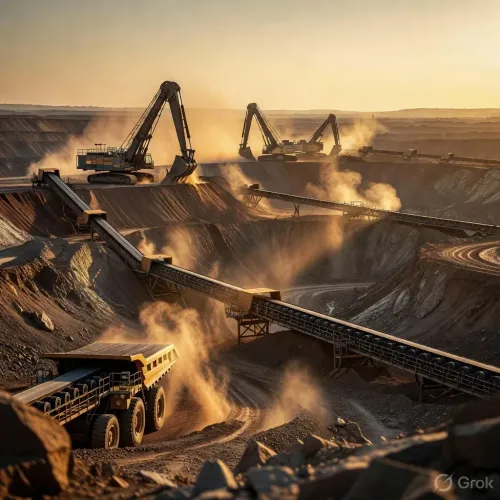
The ambition is not incremental. A unified mineral market would, in principle, dissolve the patchwork of state-level pricing signals and royalty structures that have historically made cross-border investment planning difficult. Predictable fiscal terms — the second pillar — directly address a complaint that has dogged the sector for decades: that shifting royalty regimes and ad hoc levies make long-term project financing near-impossible.
Six decades of reform, and why 2026 matters
The Mines and Minerals (Development and Regulation) Act was first enacted in 1957, when India's mining policy was built around administrative allocation and state control. The MMDR Amendment Act of 2015 was the first major structural break — it replaced discretionary allotments with competitive auctions, injecting transparency into a sector notorious for opaque deals. The 2026 amendment is framed as the next leap: from transparent allocation to a genuinely integrated, investment-ready national market.
The stakes are high. India's dependence on imported critical minerals — lithium, cobalt, nickel — for its clean energy and electronics manufacturing ambitions has made domestic mining reform a matter of economic security, not just industrial policy. Reddy made the link explicit, saying the Bill would 'reinforce energy security and contribute to sustained economic growth.'
Infrastructure, manufacturing, and the Viksit Bharat thread
The minister tied the legislation directly to Prime Minister Narendra Modi's 'Viksit Bharat' — developed India — vision, arguing that unlocking domestic mineral potential is a prerequisite for the infrastructure and manufacturing scale that vision demands. 'By unlocking our vast mineral potential, the Bill will support infrastructure and manufacturing,' Reddy said, positioning mining reform not as a sector-specific fix but as foundational economic architecture.
The Ministry of Mines has been the operational engine behind this push, and what comes next will test the legislation's real-world impact: notification of rules under the amended law, the pace of subsequent mineral block auctions, and whether revised fiscal terms actually shift the calculus for private investors — or merely shift it on paper.
India's mineral reform story is, at its core, a race against import dependence. The 2026 bill is the latest bet that the finish line is reachable.
Point of View
And its framing around a 'one nation, one mineral market' principle signals a deliberate centralisation of regulatory architecture. For the Modi government, this is both an economic and a geopolitical play — reducing import dependence on critical minerals is increasingly inseparable from India's clean energy transition and its manufacturing competitiveness. The real test will come in implementation: whether the unified fiscal framework genuinely narrows the gap between centre and state revenue interests, and whether mineral block auctions accelerate at the pace investors need. If it does, it reshapes India's position in the global critical minerals supply chain; if it stalls in rule-making, it joins a long list of well-intentioned mining reforms that never cleared the last mile.
NationPress
13 Aug 2026
Frequently Asked Questions
What is the MMDR Amendment Bill 2026?
The Mines and Minerals (Development and Regulation) Amendment Bill, 2026 is a legislation passed by the Rajya Sabha that aims to create a unified national mineral market, a predictable fiscal framework, and attract greater private investment into India's mining sector.
Why was the MMDR Amendment Bill 2026 passed?
The Bill was passed to reform India's mining sector by reducing regulatory fragmentation, improving fiscal predictability for investors, boosting domestic mineral production, and strengthening India's mineral and energy security.
What did G. Kishan Reddy say about the MMDR Amendment Bill?
Union Mines Minister G. Kishan Reddy welcomed the Bill's passage, stating it will bring certainty to the mining sector, catalyse investment, expand domestic production, reinforce energy security, and support the Viksit Bharat vision under PM Narendra Modi.
How does the 2026 MMDR amendment differ from the 2015 amendment?
The 2015 MMDR amendment introduced auction-based allocation of mineral blocks for transparency. The 2026 amendment goes further, aiming to create a single national mineral market and a unified, predictable fiscal regime across the sector.
What happens next after the MMDR Amendment Bill is passed?
The key next steps are notification of rules under the amended law, fresh mineral block auctions, and finalisation of revised royalty and fiscal terms — which will determine the Bill's real-world impact on investment and production.