CM Himanta Credits DBT for Assam Cutting Poverty to 14.47%
Synopsis
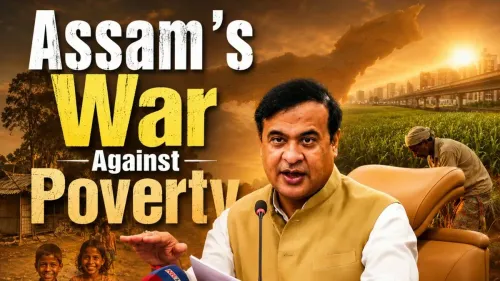
The Chief Minister's Office of Assam announced on July 16, 2026 that the state has cut poverty to 14.47 per cent. CM Himanta Biswa Sarma credits Direct Benefit Transfer and schemes like Orunodoi for eliminating leakages and delivering welfare directly to rural households.
Key Takeaways
Assam has reduced its poverty rate to 14.47 per cent , according to the Chief Minister's Office.
CM Himanta Biswa Sarma attributes the decline primarily to Direct Benefit Transfer (DBT) , which routes welfare funds directly into beneficiaries' bank accounts.
The state's Orunodoi scheme , launched in 2020 , provides monthly cash transfers to eligible women-headed households and is a flagship DBT initiative.
The national DBT framework was introduced in 2013 and expanded post- 2014 to cover LPG, food subsidies, and other welfare programmes.
NITI Aayog's Multidimensional Poverty Index is the key independent benchmark that will be watched to validate Assam's poverty figures.
If independently confirmed, Assam's model could influence welfare delivery design across other northeastern Indian states.
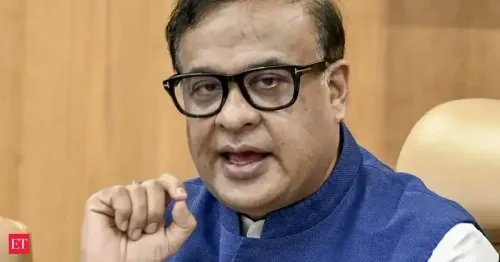
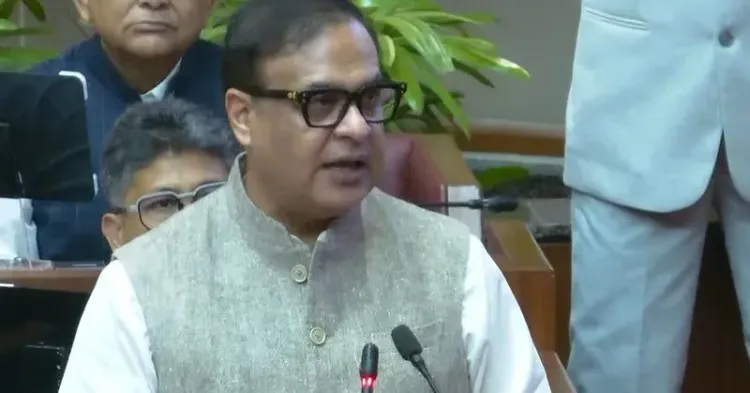
The Chief Minister's Office of Assam shared on Thursday, July 16, 2026 how the northeastern state has reduced its poverty rate to 14.47 per cent, with Chief Minister Himanta Biswa Sarma pointing to Direct Benefit Transfer (DBT) as the primary driver of the decline.
Context
Assam's poverty figure of 14.47 per cent represents a significant drop for a state that has historically ranked among India's more economically vulnerable regions. CM Himanta Biswa Sarma has publicly attributed this reduction to the targeted routing of welfare payments directly into beneficiaries' bank accounts, bypassing intermediaries that previously siphoned off public funds.
The post shared by the CMO amplifies the Chief Minister's position that administrative reform — rather than additional spending alone — has been the decisive factor in lifting households above the poverty line.
Policy Backdrop
The Direct Benefit Transfer framework was introduced nationally in 2013 and substantially expanded after 2014 to cover LPG subsidies, food support, and a range of central welfare schemes. The system relies on Aadhaar-linked bank accounts to ensure payments reach intended recipients without leakage.
Within Assam, the state government launched the Orunodoi scheme in 2020, providing monthly cash transfers directly to eligible women-headed households. That programme has been cited by the administration as a flagship example of DBT-driven financial inclusion at the last mile.
NITI Aayog's Multidimensional Poverty Index has tracked state-level poverty trends across India, and northeastern states have shown varying trajectories depending on scheme coverage, banking penetration, and the speed of last-mile delivery improvements.
Stakeholders and Impact
Rural households and welfare beneficiaries across Assam are the primary beneficiaries of the shift to direct transfers. By eliminating middlemen, the government argues that each rupee allocated reaches its target, compressing the gap between policy intent and ground-level outcome.
Broader financial inclusion drives — including the Pradhan Mantri Jan Dhan Yojana, which opened bank accounts for millions of previously unbanked Indians — created the infrastructure that made large-scale DBT feasible in states like Assam. Women beneficiaries under Orunodoi have been a visible face of this approach in the state.
The poverty reduction claim, if sustained by independent surveys, would also carry political weight for the BJP-led state government ahead of future electoral cycles and in ongoing debates about welfare delivery models across India's northeastern states.
What's Next
The next update to NITI Aayog's Multidimensional Poverty Index, along with forthcoming state-level household consumption surveys, will be closely watched to independently validate or revise the 14.47 per cent figure. Any corroboration from a neutral national body would significantly strengthen the government's narrative around DBT-led poverty alleviation.
If Assam's model is validated at scale, it could influence how other Indian states — particularly in the northeast — design and prioritise their own welfare delivery architectures in the years ahead.
Point of View
Positioning DBT not merely as an administrative tool but as the ideological cornerstone of the BJP-led state government's welfare approach. It fits a broader national pattern in which ruling parties at the state and central levels use direct-transfer metrics to demonstrate efficiency gains over the older, intermediary-heavy public distribution model. The 14.47 per cent figure, however, will carry full political and policy weight only once corroborated by an independent national survey — making the next NITI Aayog MPI release a pivotal moment for the Sarma administration's credibility on poverty alleviation. Until then, the claim is a government assertion that invites scrutiny rather than settles the debate.
NationPress
16 Jul 2026
Frequently Asked Questions
What is Assam's current poverty rate?
According to the Chief Minister's Office of Assam, the state's poverty rate stands at 14.47 per cent . This figure has been cited by CM Himanta Biswa Sarma in the context of welfare delivery reforms, though it awaits independent validation from national surveys.
How did Assam reduce poverty?
CM Himanta Biswa Sarma credits Direct Benefit Transfer (DBT) as the primary mechanism, which routes subsidies and welfare payments directly into beneficiaries' bank accounts, eliminating middlemen and reducing leakages. State schemes like Orunodoi have been central to this approach.
What is the Orunodoi scheme in Assam?
The Orunodoi scheme was launched by the Assam government in 2020 . It provides monthly cash transfers directly to eligible women-headed households and is one of the state's flagship Direct Benefit Transfer programmes aimed at financial inclusion.
What is Direct Benefit Transfer (DBT) in India?
Direct Benefit Transfer (DBT) is a central government system introduced in 2013 that routes subsidies — covering LPG, food, and other welfare payments — directly into Aadhaar-linked bank accounts of beneficiaries, bypassing intermediaries to reduce leakages.
Which body tracks poverty rates in Indian states?
NITI Aayog , India's national policy think tank, publishes the Multidimensional Poverty Index (MPI) which tracks state-level poverty trends across multiple dimensions including health, education, and living standards. Its next update will be key to independently validating Assam's claimed poverty figures.