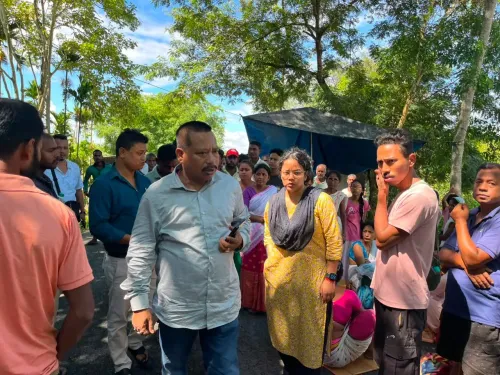
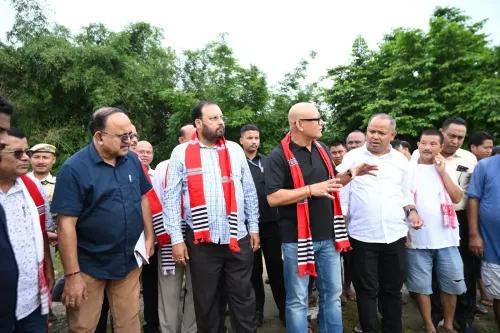
CM Himanta Expands Assam Flood Relief to 71,000 People
Synopsis
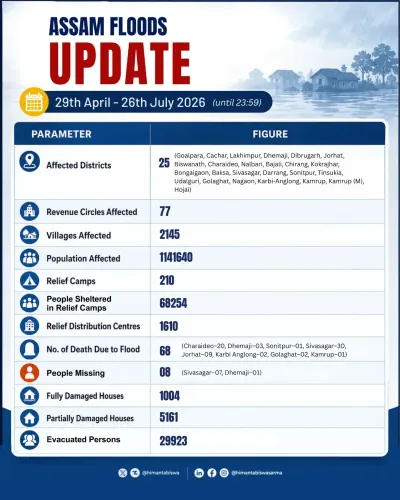
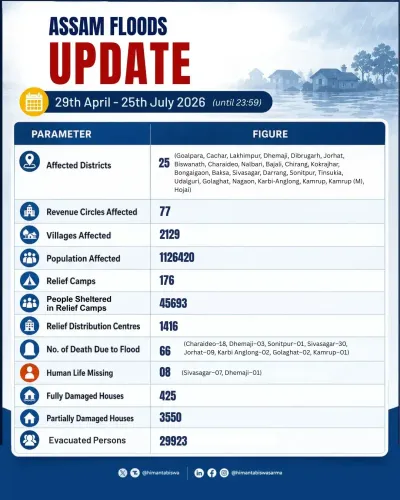
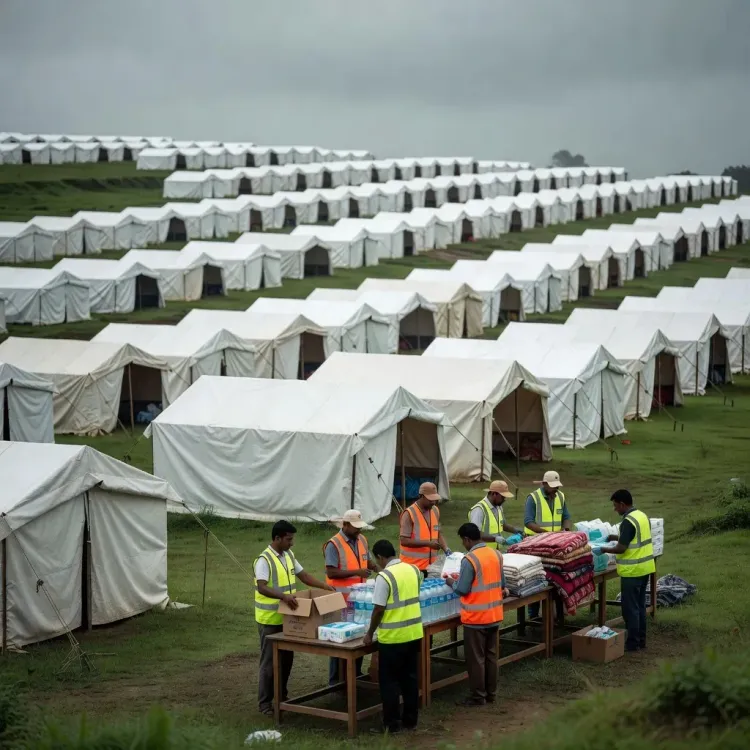
Assam Chief Minister Himanta Biswa Sarma on 28 July 2026 announced that over 71,000 flood-affected residents are sheltered in relief camps and 1,690 distribution centres are running round the clock, marking an expansion of the state's monsoon flood response.
Key Takeaways
Over 71,000 people are safely sheltered in state-run relief camps across Assam as of 28 July 2026 .
1,690 relief distribution centres are functioning round the clock to provide essential supplies.
CM Himanta Biswa Sarma confirmed that relief efforts have been expanded to cover more people and more areas.
Assam is one of India's most flood-prone states, with the Brahmaputra and Barak rivers causing recurrent annual displacement.
The state's relief camp and distribution network follows a decades-old disaster-response framework maintained by successive Assam governments.
Post-monsoon rehabilitation, crop-loss compensation, and embankment projects are expected to follow as the next phase of the response.
Assam Chief Minister Himanta Biswa Sarma on Tuesday, 28 July 2026, announced a significant expansion of the state's flood relief operations, with more than 71,000 people now sheltered in relief camps across the state and 1,690 relief distribution centres functioning round the clock.
Context
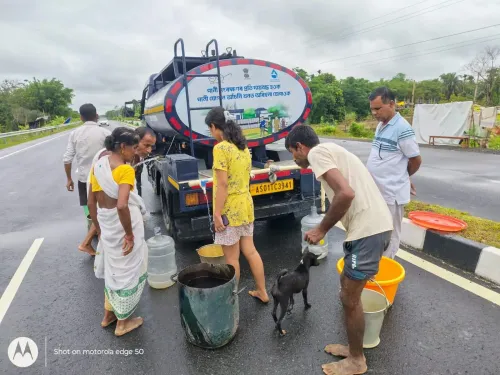
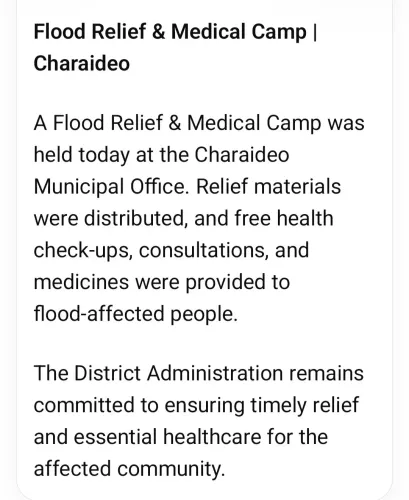
In his update shared on X (formerly Twitter), CM Sarma stated that relief efforts have been expanded to cover more people and areas, with over 71,000 flood-affected residents safely accommodated in state-run relief camps. The 1,690 distribution centres are operating continuously to provide food, water, and essential supplies to those displaced by the monsoon flooding.
Assam, traversed by the Brahmaputra and Barak rivers, experiences large-scale seasonal flooding almost every monsoon, making it one of India's most flood-prone states. The scale of the current response — with camps and distribution centres operating simultaneously — reflects the breadth of displacement this season.
Policy Backdrop
The relief camp network and distribution centre system deployed this season follow a disaster-response framework that Assam governments have maintained for decades. State administrations have consistently combined immediate camp-based shelter with material distribution as the first line of response to annual Brahmaputra floods.
Successive governments have also pursued longer-term embankment strengthening and river-dredging projects alongside these immediate measures, though implementation and outcomes have varied across administrations. The Sarma government, in office since 2021, has continued this dual-track approach of emergency relief paired with infrastructure investment in flood-vulnerable districts.
Stakeholders and Impact
The most immediate beneficiaries are the more than 71,000 residents currently housed in relief camps, drawn from flood-inundated villages and low-lying areas across multiple districts. The 1,690 distribution centres extend the state's reach to people who remain in partially affected zones and have not been fully evacuated.
Local administration, State Disaster Response Force (SDRF) personnel, and civil society volunteers form the operational backbone of the relief network. Farmers, daily-wage workers, and fishing communities in the Brahmaputra floodplains typically bear the heaviest economic losses during such events, with livelihoods disrupted for weeks beyond the flood peak.
What's Next
As the monsoon season continues, the state government is expected to monitor water levels and adjust camp capacities in response to further rainfall. Attention will turn in the coming weeks to post-flood rehabilitation packages, including compensation for crop loss, housing damage assessments, and any new embankment or river-management tenders announced by the Assam government.
The scale and speed of the relief rollout will also be a key metric as CM Sarma, who also serves as convenor of the North-East Democratic Alliance (NEDA), positions the state's disaster management capacity as a governance benchmark in the region.
Point of View
Using real-time social media disclosures to signal administrative responsiveness. The figures — over 71,000 people sheltered and 1,690 centres active — underscore the sheer scale of annual flood displacement in Assam, a structural challenge that successive governments have managed but not resolved. The emphasis on expansion of coverage suggests the flood is still at or near its peak, with relief logistics still scaling up rather than winding down. For NEDA's convenor, effective flood governance in Assam also carries a broader political signal to partner states in the northeast about the BJP-led coalition's administrative competence.
NationPress
28 Jul 2026
Frequently Asked Questions
How many people are in Assam flood relief camps in July 2026?
As of 28 July 2026 , over 71,000 people are safely sheltered in relief camps set up by the Assam government in response to the monsoon floods.
How many relief distribution centres are active in Assam floods 2026?
1,690 relief distribution centres are functioning round the clock across Assam to provide food, water, and essential supplies to flood-affected residents.
What is Assam CM Himanta Biswa Sarma doing about the 2026 floods?
CM Himanta Biswa Sarma announced on 28 July 2026 that the state has expanded its relief operations, sheltering over 71,000 people in camps and running 1,690 distribution centres round the clock.
Why does Assam flood every year?
Assam floods almost every monsoon because it is traversed by the Brahmaputra and Barak rivers, which swell significantly during the June-September monsoon season, inundating low-lying districts and displacing hundreds of thousands of residents annually.
What happens after Assam floods recede?
After flood waters recede, the Assam government typically announces post-flood rehabilitation packages covering crop-loss compensation, housing damage assessments, and longer-term embankment and river-management infrastructure projects.