CM Himanta Highlights Bhutanese Students at Nalbari Medical College
Synopsis
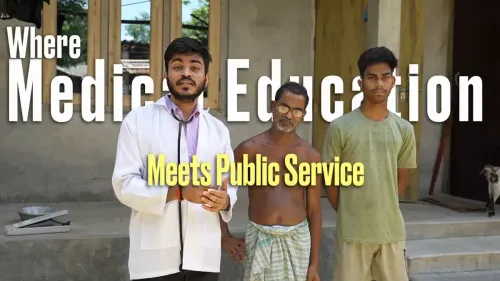
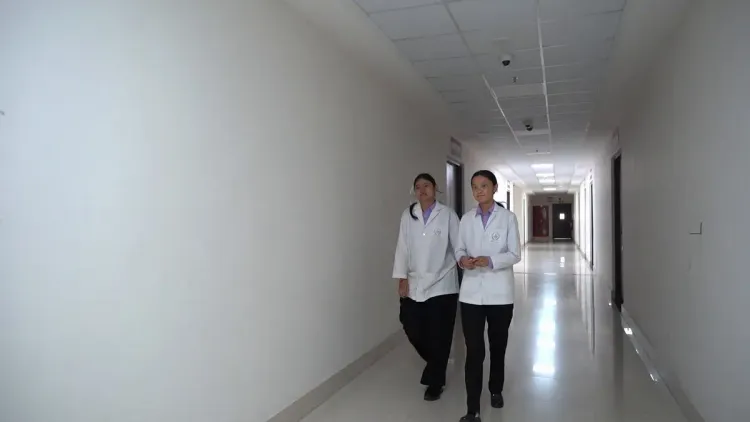
Assam Chief Minister Himanta Biswa Sarma on 18 July 2026 shared a video of Bhutanese students studying medicine at Nalbari Medical College, highlighting Assam's role in India's medical education outreach to neighbouring countries and the long-standing India-Bhutan educational partnership.
Key Takeaways
Assam CM Himanta Biswa Sarma posted a video on 18 July 2026 featuring Bhutanese students enrolled at Nalbari Medical College .
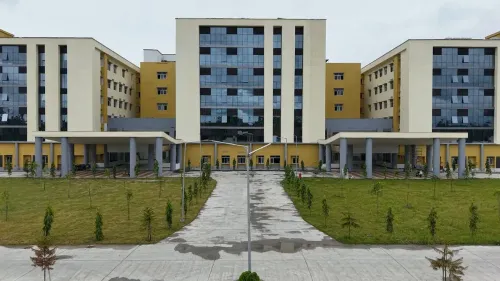
Nalbari Medical College is part of Assam's expanded network of medical institutions built to increase MBBS seat capacity in the northeastern region.
Bhutanese nationals have studied in Indian medical colleges under bilateral government-supported arrangements for several decades.
India uses medical education access as a component of its neighbourhood diplomacy, attracting students from Bhutan , Nepal , and Bangladesh .
The post reinforces CM Sarma's positioning of Assam as a regional hub for health and higher education.
Possible future developments include new MoUs on student quotas and faculty exchange between Assam health universities and Bhutanese authorities.
Assam Chief Minister Himanta Biswa Sarma on Saturday, 18 July 2026 spotlighted the presence of Bhutanese medical students at Nalbari Medical College, sharing a video of the students describing their experience of pursuing a medical degree in Assam. The post underscored India's standing as a destination for medical education in the neighbourhood and highlighted Assam's growing role within that framework.
Context
Chief Minister Sarma stated that 'India provides one of the most robust medical education frameworks in the world and Assam is an important contributor in this field.' The accompanying video features young students from Bhutan who are enrolled at Nalbari Medical College, speaking about their aspirations to become doctors and serve society. The post is notable for its people-centric framing — letting the students' own voices carry the message rather than citing policy figures.
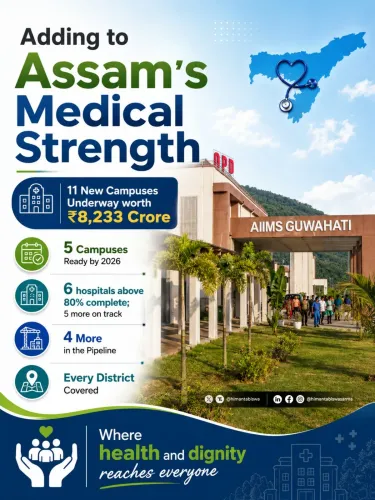
Nalbari Medical College is part of a cluster of institutions that Assam has established or upgraded over the past decade to expand its annual MBBS seat capacity and extend access to medical training across the northeastern region.
Policy Backdrop
India and Bhutan share one of South Asia's closest bilateral relationships, and educational cooperation has been a long-standing pillar of that partnership. Bhutanese nationals have studied in Indian medical colleges under government-supported seats and scholarship arrangements for decades, a practice that predates the current administrations in both countries.
The Assam government has prioritised health infrastructure since 2016, adding multiple medical colleges to raise the state's annual intake of medical students. This expansion positions northeastern states as meaningful contributors to India's broader goal of improving the national doctor-to-population ratio — a persistent public-health challenge that policymakers at both the state and central levels have flagged repeatedly.
Stakeholders and Impact
For Bhutan, access to quality medical education in a neighbouring country with cultural and linguistic proximity reduces the cost and logistical burden of sending students abroad to more distant destinations. Graduates who train in Assam return to Bhutan with clinical exposure to disease profiles and patient demographics similar to those they will encounter at home, making the arrangement practically valuable beyond its diplomatic symbolism.
For Assam, the presence of international students at institutions such as Nalbari Medical College signals growing institutional credibility and supports the state's ambition to be recognised as a regional hub for higher education. It also reinforces Chief Minister Sarma's broader narrative of northeastern India as an economically and educationally dynamic zone rather than a peripheral region.
What's Next
Observers will watch for possible new memoranda of understanding between Assam's health universities and Bhutanese authorities covering student quotas or faculty exchange programmes. Updated seat-allocation data for foreign students across Assam's medical colleges, if released, would provide a clearer picture of the scale of this bilateral educational engagement. As India continues to position medical education as a tool of neighbourhood diplomacy — drawing students from Bhutan, Nepal, and Bangladesh — the northeastern states are likely to see greater emphasis in future bilateral education agreements.
Point of View
It validates Assam's investment in medical infrastructure by showcasing international demand, and diplomatically, it reinforces India's image as the natural partner of choice for Bhutan's human-resource development. The choice to lead with student voices rather than policy statistics reflects a communications strategy aimed at emotional resonance over bureaucratic detail. This fits a broader pattern in which northeastern states are being repositioned — both in national politics and foreign policy — as active participants in India's Act East agenda rather than passive recipients of central largesse. The post signals that education diplomacy, long dominated by central-government frameworks, is increasingly being narrated at the state level.
NationPress
16 Oct 2026
Frequently Asked Questions
Are Bhutanese students allowed to study MBBS in India?
Yes, Bhutanese nationals have been eligible to pursue medical education in Indian colleges under long-standing bilateral government arrangements and scholarship schemes between India and Bhutan.
What is Nalbari Medical College?
Nalbari Medical College is a medical institution in Assam that is part of the state's expanded network of colleges established to increase MBBS seats and improve access to medical training in northeastern India.
Why did CM Himanta Biswa Sarma post about Bhutanese students?
CM Sarma shared the video to highlight Assam's contribution to India's medical education framework and to showcase the bilateral educational ties between India and Bhutan through the experiences of students at Nalbari Medical College.
How many medical colleges does Assam have?
Assam has added or upgraded multiple medical colleges since 2016 as part of a state government drive to raise annual MBBS intake, though precise current figures for total operational colleges were not specified in this post.
What is India's role in Bhutan's education sector?
India has been a primary destination for Bhutanese students pursuing higher education, including medicine, under decades-old bilateral cooperation arrangements that provide government-supported seats and scholarships in Indian institutions.