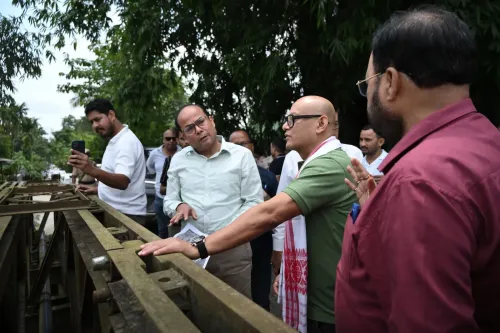
CM Himanta Flags Phased Power Restoration Across Flood-Hit Assam
Synopsis
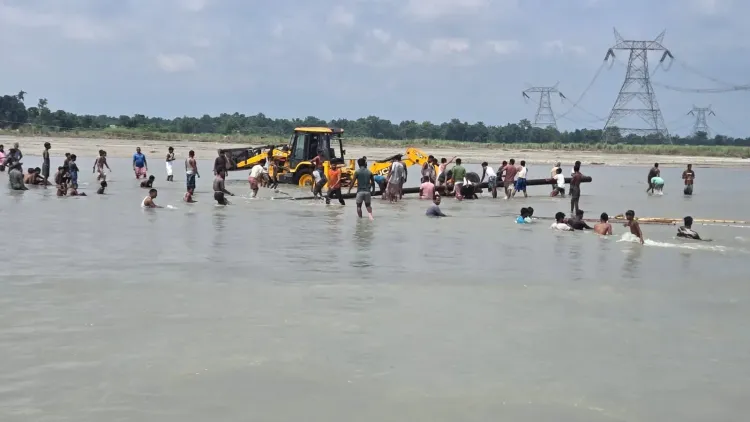
Assam Chief Minister Himanta Biswa Sarma announced on July 26, 2026 that APDCL teams are conducting safety inspections and restoring electricity in phases across flood-hit districts including Sivasagar, Jorhat, Charaideo, Dhubri, and Bongaigaon as the state recovers from monsoon flooding.
Key Takeaways
Assam CM Himanta Biswa Sarma announced phased power restoration across flood-affected districts on July 26, 2026 .
APDCL teams are conducting comprehensive safety inspections before restoring electricity supply.
Districts covered include Sivasagar , Jorhat , Charaideo , Dhubri , and Bongaigaon .
Electricity was suspended as a precautionary measure during the peak of the floods to prevent safety hazards.
No specific deadline for full restoration has been announced; the process remains phased and safety-dependent.
Assam faces recurring annual flooding from the Brahmaputra river system, making post-flood power restoration a repeated state priority.
Assam Chief Minister Himanta Biswa Sarma on Sunday, July 26, 2026, announced that power restoration efforts are under way across flood-affected districts of the state, with teams from the Assam Power Distribution Company Limited (APDCL) conducting safety inspections before resuming electricity supply in a phased manner.
Context
Sarma confirmed that districts including Sivasagar, Jorhat, Charaideo, Dhubri, and Bongaigaon are among the areas where restoration work is actively progressing. Electricity supply had been suspended as a precautionary measure during the peak of the floods to prevent electrocution hazards and infrastructure damage. The Chief Minister stated that the government remains 'committed to restoring essential services at the earliest and ensuring every affected community returns to normalcy.'
Policy Backdrop
Precautionary suspension of electricity supply during monsoon flooding is a standard protocol that Assam has followed across flood-prone districts for several years. APDCL, the state-owned distribution utility, is responsible for coordinating these shutdowns and managing post-flood restoration, including mandatory safety inspections of substations, lines, and distribution points before power is switched back on. This approach aligns with India's broader national framework for flood management and infrastructure resilience in the Northeast region.
Assam faces recurring annual floods driven by the Brahmaputra river and its tributaries during the monsoon season, which repeatedly disrupt power supply and other essential services across both upper and lower Assam districts. The scale of disruption typically requires phased, district-by-district restoration rather than a simultaneous statewide reconnection.
Stakeholders and Impact
Flood-affected households across the named districts — spanning upper Assam districts such as Sivasagar, Jorhat, and Charaideo, and lower Assam districts including Dhubri and Bongaigaon — are the primary beneficiaries of the restoration drive. Access to electricity is critical not only for domestic use but also for water pumps, health facilities, and communication infrastructure in rural and semi-urban areas. Prolonged outages in flood-hit zones can compound humanitarian challenges, making timely restoration a key metric of disaster response effectiveness.
APDCL field teams are carrying out what the Chief Minister described as 'comprehensive safety inspections,' suggesting a systematic rather than rushed approach to reconnection — a necessary precaution given the risk of damaged underground cables and waterlogged substations in inundated areas.
What's Next
The government has not announced a specific deadline for completing restoration across all affected districts, framing the process as phased and contingent on safety clearances. Attention will now focus on how quickly the remaining districts are brought back online and whether the state will outline investments in flood-resilient power infrastructure — such as elevated substations or underground cabling — ahead of the next monsoon cycle. CM Sarma's public communication on the restoration effort signals that power supply normalisation remains a visible priority for the state administration in the post-flood recovery phase.
Point of View
Safety-first framing is consistent with standard utility protocol but also insulates the government from criticism should restoration take longer than expected. Assam's recurring flood-power disruption cycle underscores a structural infrastructure gap — the absence of flood-resilient grid design — that annual reactive responses alone cannot resolve. Whether this communication is followed by capital commitments to harden power infrastructure will be the more consequential policy question.
NationPress
27 Jul 2026
Frequently Asked Questions
Which districts in Assam are getting power restored after the 2026 floods?
Power is being restored in phases across Sivasagar , Jorhat , Charaideo , Dhubri , Bongaigaon , and other flood-affected districts, according to CM Himanta Biswa Sarma's update on July 26, 2026.
Why was electricity cut off in Assam during the floods?
Electricity supply was suspended as a precautionary safety measure during the peak of the floods to prevent electrocution risks and protect power infrastructure from flood damage — a standard protocol followed in Assam's flood-prone districts.
What is APDCL doing during the Assam flood recovery?
The Assam Power Distribution Company Limited (APDCL) is carrying out comprehensive safety inspections of substations and distribution lines before restoring power in a phased manner across affected districts.
When will power be fully restored in flood-hit Assam?
No specific deadline has been announced. CM Sarma has indicated that restoration is progressing in a phased manner, with reconnection contingent on safety clearances district by district.
How often do Assam floods disrupt power supply?
Assam faces recurring annual flooding from the Brahmaputra river and its tributaries during the monsoon season, which regularly disrupts electricity supply across multiple districts, making phased post-flood restoration a repeated state exercise.