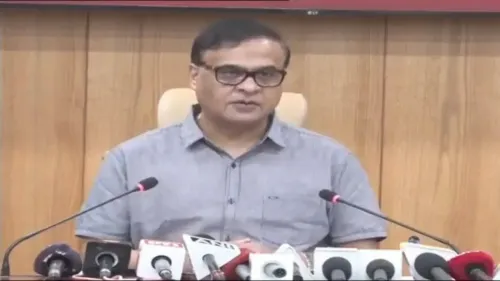
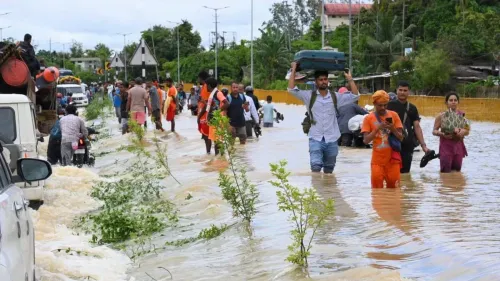
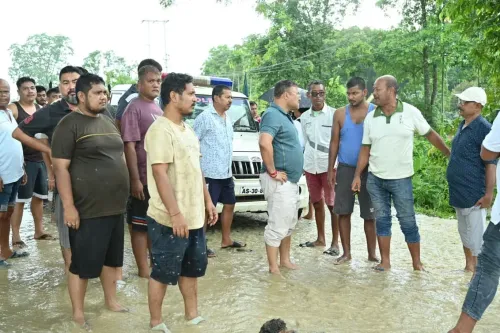
CM Himanta flags unprecedented scale of Assam Floods 2026
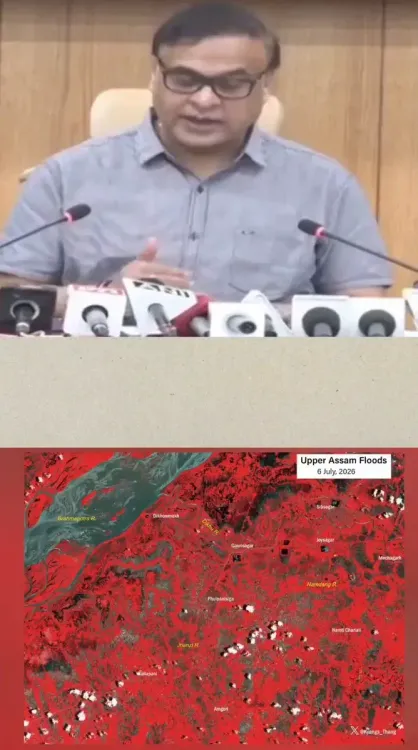
Synopsis
Assam Chief Minister Himanta Biswa Sarma on 25 July 2026 called the ongoing Assam floods unprecedented, citing a sudden 400 per cent or more excess rainfall — not conventional monsoon flooding — as the cause of large-scale devastation across the state's villages and towns.
Key Takeaways
CM Himanta Biswa Sarma described the 2026 Assam floods as unprecedented in scale on 25 July 2026 .
He attributed the disaster to a sudden 400 per cent or more excess rainfall , distinct from conventional seasonal flooding.
Villages and towns across Assam have suffered large-scale devastation according to the Chief Minister.
Assam has previously received central relief under the NDRF and SDRF during major flood years including 2017 , 2020 , and 2022 .
Extreme short-duration rainfall events in Northeast India have been increasing in frequency over the past decade.
Central government announcements on additional relief packages and NDRF coordination are expected in the coming days.
Assam Chief Minister Himanta Biswa Sarma on Saturday, 25 July 2026, described the ongoing Assam floods as unprecedented in scale, attributing the devastation not to conventional monsoon flooding but to a sudden surge of 400 per cent or more excess rainfall that has battered villages and towns across the state.
Context
Posting on X, CM Sarma said the floods this year were categorically different from past events: 'The scale of #AssamFloods this time is unprecedented — it was not the conventional flooding, but a sudden 400%+ excess rainfall which led to the large scale devastation in our villages and towns.' The statement signals that standard disaster-response frameworks built around predictable seasonal inundation may be inadequate for the intensity of the 2026 event.
Assam sits at the confluence of the Brahmaputra and Barak river systems and is among India's most flood-prone states. However, the Chief Minister's framing of this year's event as a departure from 'conventional flooding' points to a rainfall anomaly of an exceptional order rather than the usual riverine overflow driven by sustained monsoon accumulation.
Policy Backdrop
The state has a well-documented history of seeking and receiving central assistance under the National Disaster Response Force (NDRF) and the State Disaster Response Fund (SDRF) during major flood years, including 2017, 2020, and 2022. Each of those events prompted deployment of NDRF teams, emergency relief packages, and post-flood reconstruction funding from New Delhi.
Over the past decade, climate scientists and the India Meteorological Department (IMD) have documented a rise in extreme short-duration rainfall events across the Northeast, a trend that has pushed state governments to prioritise embankment reinforcement, river dredging, and early-warning infrastructure. The 2026 episode, if the rainfall excess figure cited by the Chief Minister is borne out by official IMD data, would represent a significant escalation of that trend.
CM Sarma, who also serves as convenor of the North-East Democratic Alliance (NEDA), has in previous flood seasons coordinated with both central agencies and neighbouring state governments on relief logistics, a role that positions him as a key interlocutor between Dispur and New Delhi during the current crisis.
Stakeholders and Impact
The primary victims are residents of flood-affected villages and towns across Assam, whose homes, crops, and livelihoods are at risk. Sudden extreme-rainfall events of this magnitude can overwhelm embankments, displace large populations in hours, and damage infrastructure that takes months to restore.
Central agencies including the NDRF, the National Disaster Management Authority (NDMA), and the IMD are key institutional stakeholders whose response speed and resource allocation will shape the relief outcome. Farmers, daily-wage workers, and small traders in the Brahmaputra valley are among the most economically vulnerable groups in such events.
What's Next
Attention will now turn to whether the central government announces an additional relief package beyond the standard SDRF and NDRF provisions, and whether a formal assessment team is dispatched to Assam. Parliamentary and inter-ministerial coordination meetings on disaster relief could follow in the coming days.
The Chief Minister's public framing of the 2026 floods as qualitatively different from past events is likely a strategic signal ahead of formal requests for enhanced central assistance. How quickly relief reaches affected villages — and whether the state's early-warning systems are upgraded ahead of the remaining monsoon weeks — will define the longer-term political and humanitarian narrative around this disaster.
Point of View
Chief Minister Sarma is doing more than describing a disaster — he is building a political and administrative case for exceptional central intervention beyond routine SDRF and NDRF allocations. The language of 'unprecedented' is a well-established signal in Indian disaster politics, typically preceding formal requests for enhanced central packages or special category relief. For Sarma, who straddles the roles of state executive and Northeast BJP convenor, the post also serves to shape the early public narrative before damage assessments are formalised. The broader implication is that if extreme rainfall events of this magnitude become more frequent in the Northeast, existing disaster-response architecture — calibrated for seasonal riverine flooding — will require a structural rethink rather than incremental funding top-ups.
NationPress
25 Jul 2026
Frequently Asked Questions
What caused the Assam floods in 2026?
According to Assam Chief Minister Himanta Biswa Sarma , the 2026 Assam floods were caused by a sudden excess rainfall of 400 per cent or more , which he described as distinct from conventional monsoon flooding that the state typically experiences.
How bad are the Assam floods in 2026?
CM Sarma called the scale of the 2026 Assam floods unprecedented, stating they caused large-scale devastation in villages and towns across the state. Official damage assessments are expected to follow in the coming days.
What relief is available for Assam flood victims?
Assam has historically received central assistance through the National Disaster Response Force (NDRF) and the State Disaster Response Fund (SDRF) during major flood events. Announcements on additional central relief for the 2026 floods are anticipated.
Why does Assam flood every year?
Assam is situated along the Brahmaputra and Barak river systems and experiences annual monsoon inundation between June and September. Extreme rainfall events in the Northeast have increased in frequency over the past decade, worsening flood severity.
Who is responsible for flood relief in Assam?
Flood relief in Assam is coordinated between the state government led by Chief Minister Himanta Biswa Sarma , the NDRF , the NDMA , and the central government, which provides financial assistance through the SDRF and special packages during major disasters.