CM Himanta Wishes Jharkhand on Its 26th Foundation Day
Synopsis
Assam CM Himanta Biswa Sarma marked Jharkhand's 26th Foundation Day on 15 November 2026 by honouring the legacy of Birsa Munda, the spiritual significance of Baba Baidyanath Dham, and the deep cultural bonds between Assam and Jharkhand.
Key Takeaways
Jharkhand Foundation Day falls on 15 November , the birth anniversary of tribal icon Birsa Munda , and marks the state's creation in 2000 as India's 28th state.
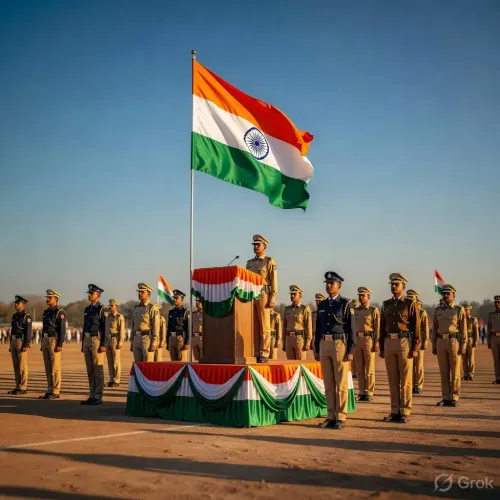
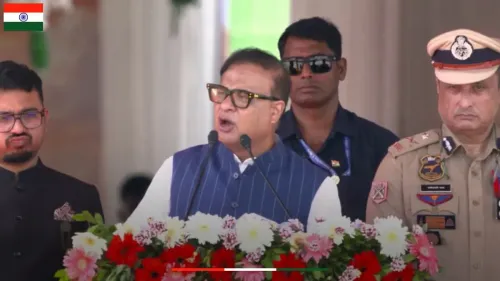
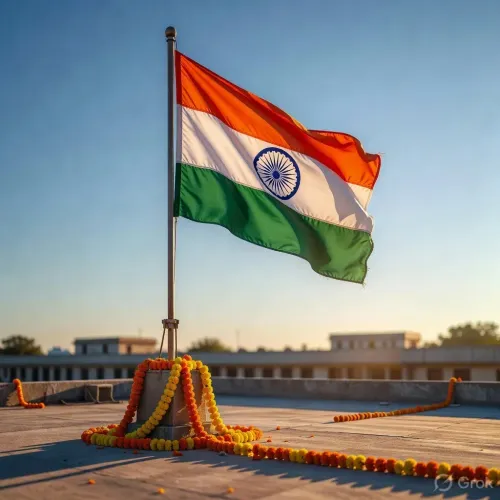
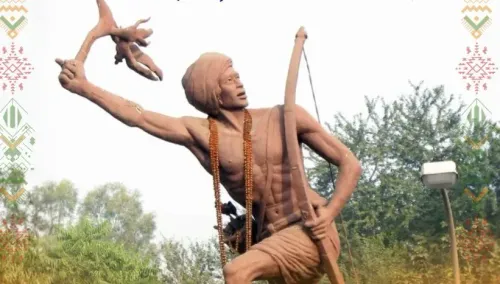
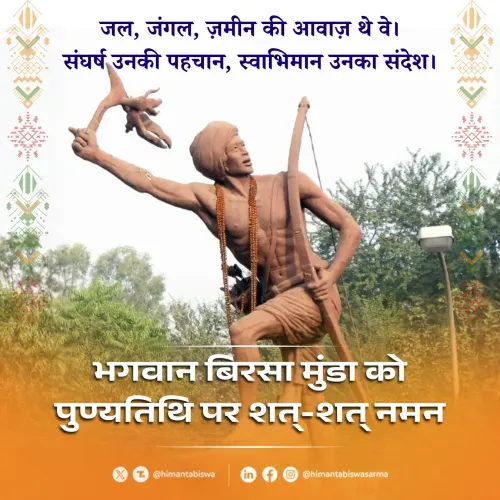
Assam CM Himanta Biswa Sarma posted greetings in Hindi on 15 November 2026 , accompanied by four images.
The message highlighted Jharkhand's rich tribal heritage, natural wealth, and the sacred Baba Baidyanath Dham Jyotirlinga shrine in Deoghar .
Sarma specifically acknowledged 'deep cultural and historical ties' between Assam and Jharkhand , rooted in shared tribal histories and migrations.
Birsa Munda's Ulgulan movement against British rule underpins his revered status as Dharti Aaba — Father of the Earth — across tribal communities.
Twenty-six years after a decades-long tribal autonomy movement finally drew a new map of India, Assam Chief Minister Himanta Biswa Sarma extended greetings to the people of Jharkhand on Sunday, 15 November 2026 — the state's Foundation Day — invoking the land's tribal heritage, its sacred geography, and the shared cultural bonds between Assam and Jharkhand.
Writing in Hindi, CM Sarma offered, 'झारखंड स्थापना दिवस की समस्त झारखंडवासियों को हार्दिक बधाई एवं शुभकामनाएँ' ('Heartfelt congratulations and best wishes to all the people of Jharkhand on Jharkhand Foundation Day'). He described the state as the sacred land of Dharti Aaba Bhagwan Birsa Munda — a title meaning 'Father of the Earth' — and saluted its rich tribal heritage, glorious culture, and natural wealth.
Birsa Munda's land and the making of a state
Jharkhand was carved out of Bihar on 15 November 2000 under the Bihar Reorganisation Act, becoming India's 28th state. The date was chosen deliberately — it is the birth anniversary of Birsa Munda, the 19th-century tribal leader whose Ulgulan ('Great Tumult') movement against British colonial rule made him an enduring symbol of indigenous rights across the Chotanagpur plateau. For Jharkhand's tribal communities, Foundation Day is therefore a double commemoration.
CM Sarma also highlighted the spiritual gravity of Baba Baidyanath Dham in Deoghar — one of the twelve Jyotirlinga shrines in India — calling its sacred aura a defining feature of the state's cultural identity and an attraction that draws pilgrims from across the country every year.
Assam-Jharkhand: a thread across geography
Perhaps the most pointed line in Sarma's message was his acknowledgement of the 'deep cultural and historical ties' between Assam and Jharkhand. The two states share documented histories of tribal migration and cultural exchange — Santali, Munda, and Oraon communities have historically moved between the Chotanagpur belt and Assam's tea-garden districts, weaving a connective tissue across geographies that official discourse rarely spotlights. Sarma's message, accompanied by four images, brings that quiet connection into the public frame.
He closed with a wish that Jharkhand 'establish new dimensions of development, prosperity, and happiness' — a standard federal courtesy, but one freighted here with the weight of a state still navigating the promises that animated its birth: tribal rights, mineral equity, and cultural preservation.
Point of View
But its content signals something more deliberate. By centring Birsa Munda and tribal heritage — themes the BJP has invested heavily in nationally — the message aligns with the party's broader strategy of reclaiming tribal identity as a cultural and political constituency. The explicit mention of Assam-Jharkhand ties is also notable: it stitches northeastern India into a pan-Indian civilisational narrative that NEDA's convenor has an institutional interest in weaving. Whether it translates into concrete bilateral cultural programming remains to be seen, but the rhetorical groundwork is being laid publicly.
NationPress
15 Nov 2026
Frequently Asked Questions
When was Jharkhand formed and why?
Jharkhand was formed on 15 November 2000 under the Bihar Reorganisation Act, becoming India's 28th state, to fulfil long-standing demands for tribal autonomy from the Chotanagpur and Santhal Parganas regions.
Why is Jharkhand Foundation Day celebrated on 15 November?
The date marks the birth anniversary of Birsa Munda , the revered 19th-century tribal leader who led the Ulgulan uprising against British rule, making 15 November a doubly significant occasion for the state's tribal communities.
Who is Birsa Munda and why is he called Dharti Aaba?
Birsa Munda was a tribal freedom fighter from the Chotanagpur plateau who organised the Munda people against colonial exploitation in the late 1890s. He is revered as Dharti Aaba — 'Father of the Earth' — and is recognised as a national hero with his portrait displayed in the Indian Parliament.
What is Baba Baidyanath Dham?
Baba Baidyanath Dham in Deoghar, Jharkhand is one of the twelve Jyotirlinga shrines of Lord Shiva. It is among the most visited Hindu pilgrimage sites in India and a central part of Jharkhand's cultural and spiritual identity.
What is the connection between Assam and Jharkhand?
The two states share historical and cultural ties rooted in tribal migrations — communities such as the Santali, Munda, and Oraon have historically moved between Jharkhand's Chotanagpur belt and Assam's tea-garden districts, creating lasting demographic and cultural links.