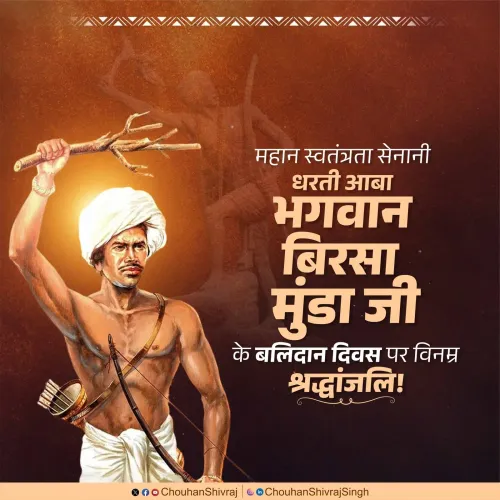
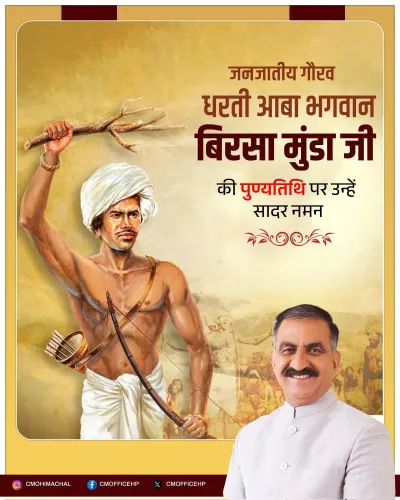
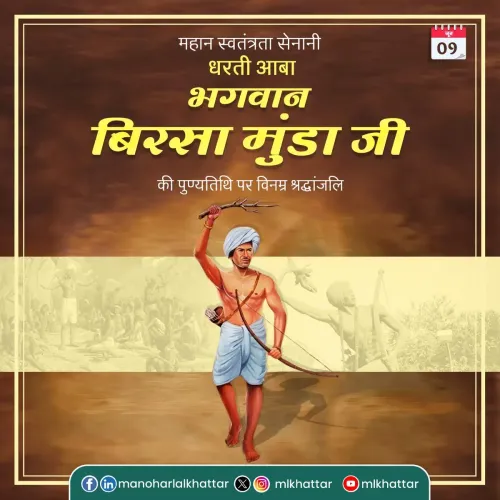
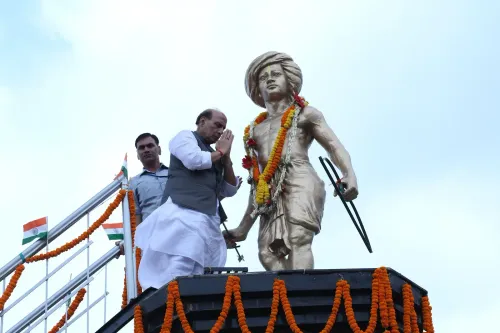
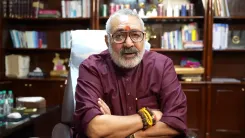
CM Himanta pays tribute to Birsa Munda on death anniversary
Synopsis
Assam Chief Minister Himanta Biswa Sarma paid tribute to tribal icon Birsa Munda on his death anniversary on 9 June 2026, calling him an unparalleled example of struggle against injustice, tribal pride, and national service. The homage reflects the BJP's sustained effort to foreground 19th-century tribal icons in its inclusive nationalism narrative.
Key Takeaways
CM Himanta Biswa Sarma paid tribute to Birsa Munda on his death anniversary, 9 June 2026 .
Munda, known as Dharti Aaba (Father of the Earth), led the Munda Rebellion against British land-alienation policies in the late 19th century.
He died on 9 June 1900 in colonial custody at the age of 25 .
The Government of India declared Janjatiya Gaurav Diwas on 15 November — Munda's birth anniversary — in 2021 to honour tribal contributions to the freedom struggle.
As convenor of NEDA , CM Sarma's tribute carries significance across multiple northeastern states with large Scheduled Tribe populations.
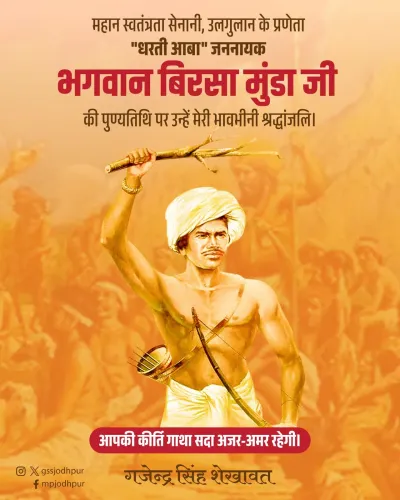
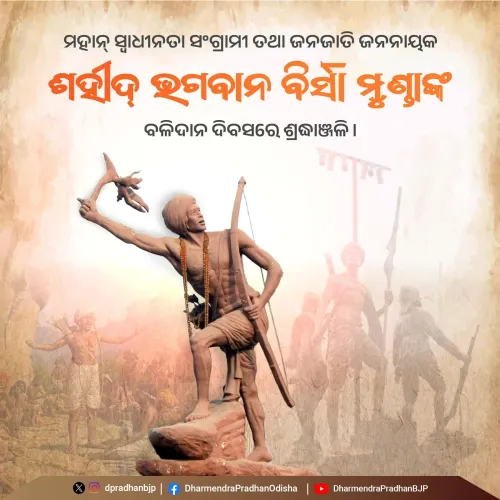
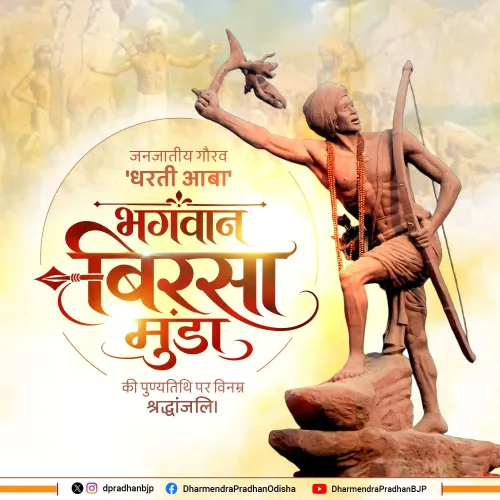
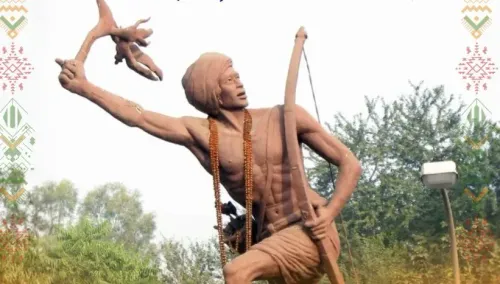
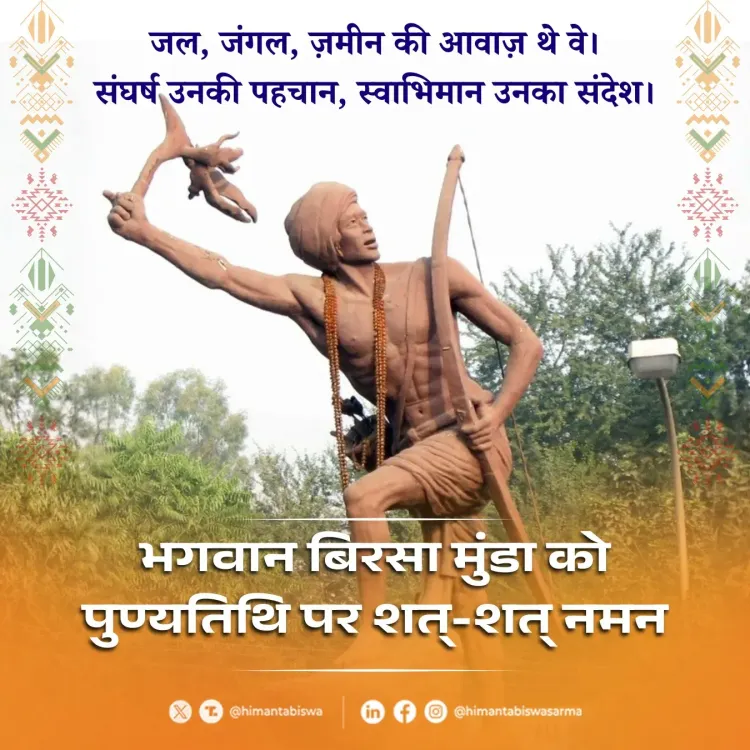
Assam Chief Minister Himanta Biswa Sarma on Tuesday, 9 June 2026 paid homage to tribal icon Birsa Munda on his death anniversary, honouring the 19th-century leader's legacy of resistance against injustice and service to the nation.
Posting in Hindi on X, CM Sarma described Birsa Munda — reverentially addressed as Dharti Aaba (Father of the Earth) — as an unparalleled example of struggle against injustice, tribal pride, and national service. He wrote that Munda's life and sacrifice 'will always inspire us to move forward on the path of social justice, self-respect, and public welfare.'
Context
Birsa Munda was born on 15 November 1875 in present-day Jharkhand and died on 9 June 1900 in colonial custody at the age of 25. He led the Munda Rebellion — known as the Ulgulan (Great Tumult) — against British land-alienation policies that had dispossessed tribal communities of their forest rights. His death anniversary is observed each year as a moment of reflection by tribal communities and political leaders across the country.
The title Dharti Aaba, meaning 'Father of the Earth,' was conferred on him by his own community and has since become the most widely used honorific for the leader across Jharkhand, Odisha, and the tribal belts of northeastern India.
Policy Backdrop
In November 2021, the Government of India declared Janjatiya Gaurav Diwas — observed on 15 November, Birsa Munda's birth anniversary — as a national day to honour the contributions of tribal communities to India's freedom struggle. The declaration was a formal acknowledgement of tribal icons who had long remained outside mainstream historical narratives.
The BJP-led government has since made Birsa Munda a central figure in its outreach to Scheduled Tribe communities, commissioning museum projects, renaming the Ranchi airport after him, and integrating his legacy into school curricula. This broader commemorative effort has been visible in states including Jharkhand, Odisha, and across the Northeast.
Stakeholders and Impact
Tribal communities — who constitute a significant share of the population in Assam and the broader Northeast — are the primary audience for such tributes. Assam is home to a large Scheduled Tribe population, and political messaging around tribal icons carries both cultural and electoral weight in the region.
As convenor of the North-East Democratic Alliance (NEDA), CM Sarma holds influence across multiple northeastern states, amplifying the reach of such commemorations beyond Assam's borders. His tribute reflects a consistent pattern of BJP-aligned leaders foregrounding 19th-century tribal resistance figures to build an inclusive nationalism narrative.
What's Next
The next major institutional observance of Birsa Munda's legacy will be Janjatiya Gaurav Diwas on 15 November 2026, when state governments are expected to announce tribal welfare initiatives and development scheme milestones. Observers will watch for any specific policy announcements or scheme launches tied to tribal development in Assam and the Northeast in the months ahead.
Point of View
Self-respect, and public welfare, the message is calibrated to resonate with Scheduled Tribe communities in Assam and the Northeast — regions that are both politically competitive and culturally significant. The institutionalisation of Janjatiya Gaurav Diwas in 2021 gave this commemorative impulse an official scaffold, and state-level tributes like this one reinforce it between annual observances. The pattern signals that tribal identity politics will remain a structural feature of BJP electoral and governance strategy in the Northeast.
NationPress
23 Oct 2026
Frequently Asked Questions
Who was Birsa Munda and why is he important?
Birsa Munda was a tribal leader born on 15 November 1875 in present-day Jharkhand who led the Munda Rebellion against British land-alienation policies. Revered as Dharti Aaba (Father of the Earth), he is a symbol of Adivasi resistance and died in colonial custody on 9 June 1900 at just 25 years of age.
Why is 9 June observed in connection with Birsa Munda?
9 June marks the death anniversary of Birsa Munda, who died on this date in 1900 in British colonial custody. Political leaders and tribal communities across India pay tribute to him on this day each year.
What is Janjatiya Gaurav Diwas?
Janjatiya Gaurav Diwas is a national observance declared by the Government of India in November 2021, held every year on 15 November — Birsa Munda's birth anniversary — to honour the contributions of tribal communities to India's freedom struggle.
What did Himanta Biswa Sarma say about Birsa Munda?
CM Sarma described Birsa Munda as an unparalleled example of struggle against injustice, tribal pride, and national service, and said his life and sacrifice would always inspire people to pursue social justice, self-respect, and public welfare.
Why does Himanta Biswa Sarma's tribute to Birsa Munda matter for the Northeast?
As Assam Chief Minister and convenor of the North-East Democratic Alliance (NEDA), CM Sarma's tribute reaches tribal communities across multiple northeastern states. Assam has a significant Scheduled Tribe population, making such commemorations politically and culturally significant in the region.